Miami, FL Charter Flights
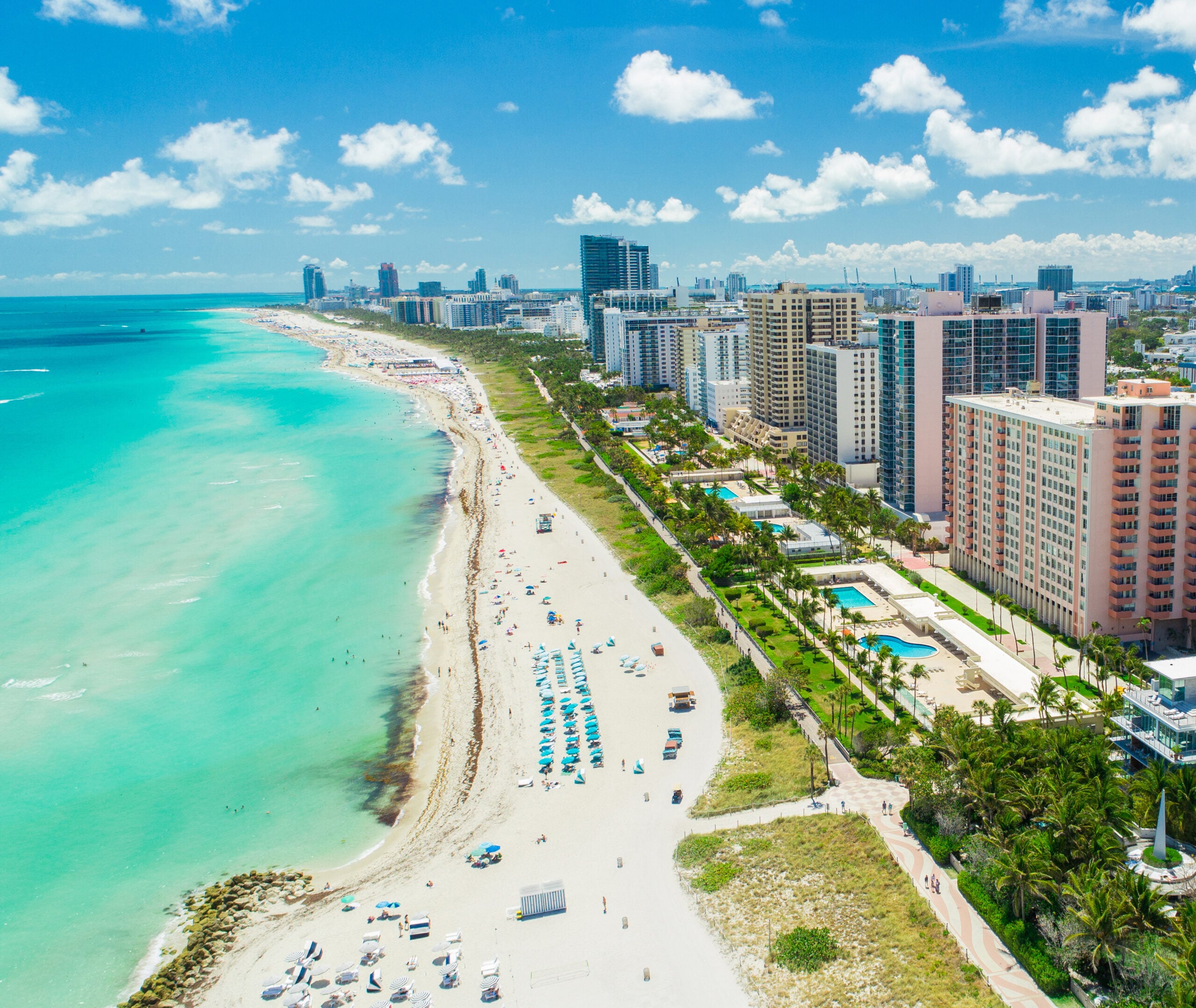
Tailored access to South Florida and beyond
Private Charter Flights to Miami
Miami has three charter airports spread across a 20-mile corridor, each with different customs hours, different runway capabilities, and different parts of the county they serve best. Add a year-round event calendar and steady Caribbean and Latin American traffic, and the logistics get complicated fast. Picking the wrong airport or the wrong arrival window can cost half a day or more.
AvSky builds the routing around your full itinerary, sourcing aircraft from a network of more than 12,000 worldwide. If the trip includes an international leg (like Miami to Nassau or Miami to Grand Cayman), we sequence the customs timing so the connection works. If it's a domestic arrival for meetings in Brickell or a week on Key Biscayne, we match the airport to where you're headed.
You tell us where you need to be — we handle the rest.
From
Aircraft
Passengers
Pax
Estimate
Nashville (BNA)
PC-12 NGX
8 max
$32,600
(Round Trip)
Austin, TX (AUS)
Phenom 300E
8 max
$40,100
(Round Trip)
Boston (BED)
Citation CJ3+
7 max
$52,400
(Round Trip)
Minneapolis (FCM)
Hawker 800XP
8 max
$67,200
(Round Trip)
Scottsdale (SDL)
Citation XLS+
8 max
$83,300
(Round Trip)
We fly to Miami from any airport in the world. These estimated prices are for some of the most popular charters into OPF and TMB. All estimates are based on a round-trip, Friday through Sunday itinerary. Actual quotes vary depending on factors like season, available aircraft and more. Your quoted price may be more or less than the estimates on this page.
Miami's event calendar drives some of the sharpest demand spikes in private aviation.
AvSky delivers, even when Miami's calendar is at its tightest.
Art Basel in December, the Boat Show in February, and the Formula 1 Grand Prix in May each compress aircraft availability and FBO parking across South Florida. Pricing moves weeks before the events start, and the best departure windows go first. AvSky tracks the calendar and locks in positioning early. If your dates overlap a demand window, reach out sooner rather than later — the difference between booking three weeks out and one week out can be significant. Contact us and let our team plan your perfect itinerary.
Join Our Miami Charter Flights Email List
Get notified when deeply discounted empty legs to Miami become available.
The Best Airports for Miami Charter Flights
Most Miami charter traffic flows through Opa-locka Executive (OPF), a dedicated general aviation airport north of downtown with five FBOs, no landing fees, and customs available from 9 AM to midnight. It's the default for good reason — an 8,002-foot runway handles everything from light jets to large-cabin aircraft, and it puts you 20-35 minutes from Brickell or Miami Beach.
For trips headed to Coral Gables, Pinecrest, or the Keys, Miami Executive (TMB) is closer and quieter, though its 6,000-foot runway limits it to light and midsize jets and customs hours that vary depending on the day of the week.
Miami International (MIA) comes into play for ultra-long-range departures — transatlantic routes, South American legs, or VIP-configured airliners that need 13,000 feet of runway and 24/7 customs.

Miami Executive Airport (TMB/KTMB)
Arriving Miami, FL
Miami-Opa Locka Executive Airport (OPF/KOPF)
14201 NW 42nd Ave, Opa-locka, FL 33054
Miami Executive Airport (TMB/KTMB)
12800 SW 145th Ave, Miami, FL 33186
Miami International Airport (MIA/KMIA)
5700 NW 36th St, Miami, FL 33122
What to know about chartering to Miami
Destination Highlights
Miami is a financial gateway to Latin America, a medical hub anchored by Jackson Memorial and the University of Miami Health System, and a year-round event market — Art Basel in December, the Miami Grand Prix in May, the Boat Show in February. PortMiami is one of the busiest cruise ports in the world, and a steady share of charter traffic connects to embarkation days. Between November and April, seasonal residents push the market to its peak, but Miami doesn't have a true off-season the way most of Florida does.
Getting Around
Traffic to Miami Beach crosses several causeways — the MacArthur, the Venetian, the Julia Tuttle, and the JFK (79th Street) — and all congest during rush hours and event days. If your schedule is tight, arrival timing matters as much as airport choice. Clients headed to the Keys should know that US-1 and Card Sound Road back up Friday afternoons year-round, and a morning departure from TMB avoids the worst of it.
Aircraft Considerations
Miami charters range from 45-minute hops within Florida to five-hour nonstops from the Northeast or Midwest, and the aircraft should match the mission. A light jet like a Phenom 300 or Citation CJ3 covers most in-state trips and short Southeast routes efficiently, and fits at both OPF and TMB without restriction. From New York, Chicago, or Dallas, a midsize Citation XLS or Challenger 350 adds stand-up headroom, real luggage capacity, and nonstop range. Larger groups or West Coast departures call for a heavy-cabin Challenger 604 or Gulfstream G-IV — OPF's 8,002-foot runway handles both easily, though TMB's 6,000 feet limits it to light and midsize types.
Customs Timing Across the Three Airports
International arrivals clear customs differently at each airport. OPF's facility runs 9 AM to midnight, which covers most Caribbean and Latin American routings without issue. TMB handles customs during standard business hours — fine for morning arrivals from the Bahamas, but tight for anything later. MIA runs 24/7 and is the only option for overnight international arrivals or ultra-long-range flights landing outside normal hours. AvSky sequences the routing around these windows.
Key facts to keep in mind...
4 Insider Tips for Miami Charters

Summer Storms Shift the Schedule
From June through September, afternoon thunderstorms roll through Miami-Dade almost daily between 2 and 5 PM, and they can ground departures for an hour or more. Morning departure and arrival slots are far more reliable during summer months. AvSky builds the buffer into your itinerary so a passing storm doesn't ripple into a missed connection.

TMB Is the Shortcut to South Dade
If your trip is focused on Coral Gables, Coconut Grove, or Pinecrest, Miami Executive cuts 20 to 30 minutes off the drive compared to Opa-Locka. It also puts you directly on the Florida Turnpike for Key Largo and the Upper Keys — a route that starts backing up at Card Sound Road on Friday afternoons.

OPF Has Five FBOs
Opa-Locka's five FBOs are spread across different parts of the field, and which one you use affects your arrival time, parking, and proximity to ground transport pickup. AvSky selects the FBO based on your aircraft type and which side of the airport puts you closest to where you're going.

Summer Is Miami's Off-Season for Charter
From May through October, seasonal residents leave, event traffic drops, and FBO parking opens up across the county. Aircraft pricing and availability are at their most favorable during this window. If your travel dates are flexible, summer and early fall are when Miami charters are easiest and most cost-effective to book.
Miami Charter Flight FAQs
Should I fly into Opa-Locka or Miami Executive if my meetings are in Coral Gables?
Miami Executive (TMB) is about 10 minutes from Coral Gables compared to 30 to 40 minutes from Opa-Locka depending on I-95 conditions. TMB's runway is 6,000 feet, which handles light and midsize jets. If your aircraft needs more runway — anything super-midsize or larger — AvSky will route you through OPF or MIA.
Can a heavy jet like a Gulfstream G450 use Opa-Locka?
Yes. OPF's main runway is 8,002 feet at near-sea-level elevation, which accommodates virtually all business jets including the G450, Challenger 650, and most ultra-long-range types. The aircraft that typically need MIA are VIP-configured airliners and certain heavy jets departing at maximum weight for intercontinental routes.
I'm flying in for a cruise out of PortMiami — which airport and what timing works best?
Opa-Locka is the most direct route to the port, about 20 minutes in normal traffic. For embarkation-day arrivals, plan to land by late morning — afternoon causeway traffic into downtown and the port area slows significantly. If you're disembarking and flying out the same day, AvSky can have the aircraft positioned and ready at OPF.
Can I use Miami as a fuel stop on a longer international routing?
Yes, and it's common. OPF's no-landing-fee policy and extended customs hours make it a practical technical stop for Caribbean, Central American, and South American routings. MIA works for larger aircraft that need the runway length or 24/7 customs for overnight arrivals. AvSky coordinates fuel, handling, and customs clearance for positioning stops even when Miami isn't the final destination.
What if I need to switch aircraft in Miami — arrive domestic and depart international?
A common setup. A client might fly a light jet from the Northeast to OPF, spend a few days in Miami, then depart on a larger aircraft from MIA for a transatlantic or South American leg. AvSky coordinates both aircraft and handles customs prefiling for the international departure. The two aircraft don't need to come from the same operator.