Charter Flights to Barbuda
Touch down at Burton–Nibbs International with AvSky, steps from Princess Diana Beach and exclusive oceanfront suites.
Photo: Cocoa Point Beach, BarbudaExperience Untouched Luxury on Barbuda
Rising barely above sea level 29 nautical miles north of Antigua, this 62-square-mile coral island remains defined by profound isolation. Fewer than 2,000 residents share the landscape with wild deer and Codrington Lagoon's world-famous frigatebird sanctuary. Long shielded by collective land stewardship and raw coastal expanse, the island now welcomes an ultra-luxury hospitality era, highlighted by private southern estates and high-profile retreats like Nobu Beach Inn.
Burton–Nibbs International fundamentally transforms access by providing a 6,099-foot paved runway with published customs and immigration services. This infrastructure allows business jets to arrive without traditional inter-island ferry transfers. Operating carriers verify tail-specific performance against current temperatures, passenger payloads, and daytime visual flight hours. Because the airfield maintains no on-site aviation fuel, aircraft incorporate a brief technical refueling stop in neighboring Antigua before commencing return journeys to the United States.
Land on Barbuda on Your Own Schedule
Touching down at Burton–Nibbs demands precise operational coordination. Drawing on an open market of over 12,000 aircraft worldwide, AvSky pairs your travel party with a cabin engineered for the island's 6,099-foot runway. We oversee every logistical prerequisite—securing daytime landing slots, managing local clearances, and pre-arranging your return fuel uplift through Antigua—ensuring uncompromised comfort from departure to arrival.
Sample round-trip estimates to Barbuda, Antigua & Barbuda
Sample estimates reflect popular departure cities, though charter flights into Burton–Nibbs International (BBQ) can originate from any private terminal. Figures represent modeled round-trip estimates rather than binding quotes. Final pricing adjusts based on selected cabin class, passenger count, positioning distances, fuel logistics, and confirmed schedule availability. AvSky provides custom quotes tailored to your exact itinerary.
Price your specific trip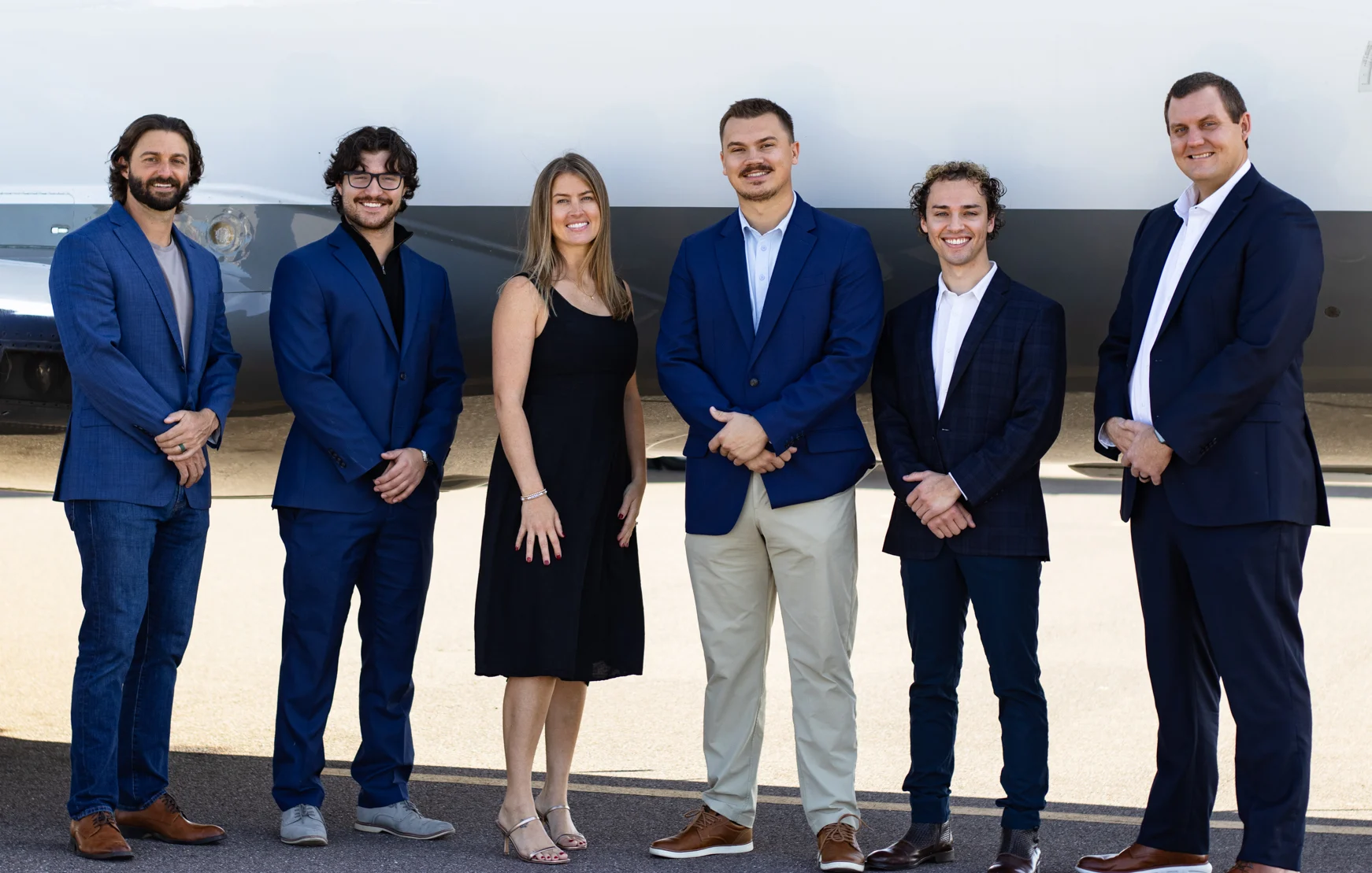 The AvSky Charters Leadership Team
Charter With The Best
AvSky provides comprehensive trip management on every flight, with rigorous operator vetting, route-appropriate aircraft selection, and coordinated ground transport upon request. The result is a seamless, fully white-glove charter experience from first call to wheels down.
Need catering, resort coordination or private security? Our charter advisors have the extensive experience and global partnerships necessary to provide a truly bespoke travel experience.
Inside Burton–Nibbs International
Burton–Nibbs International Airport (BBQ/TAPB) features a 6,099-foot by 98-foot asphalt runway with Category 5 rescue and firefighting coverage at an elevation of 28 feet. Operating carriers evaluate tail-specific runway performance against ambient temperatures, wind conditions, and landing weights prior to flight commitment. With no published instrument approach procedures, arrivals transition from the Antigua VOR to complete visual landings during daytime hours. Operating crews coordinate customs and immigration clearance directly with local authorities in advance of arrival.
Operational planning accounts for daylight operating limits and on-field fuel realities. Because Burton–Nibbs maintains no aviation fuel, aircraft arrive carrying tankered Jet-A, coordinating a technical refueling stop at V.C. Bird International in Antigua before northbound return legs. Flight operations operate strictly between sunrise and sunset. Flights requiring night landings, heavy-cabin performance, or extended fuel reserves utilize Antigua's 9,967-foot runway, located 29 nautical miles south, arranging regional boat or helicopter transfers onward. St. Kitts and St. Maarten serve as secondary alternates.
Aircraft that can land at Burton–Nibbs International Airport
1,859 m asphalt (~6,099 ft), elevation 28 ft — daylight ops, no fuel, arranged border services.
Coastal Sanctuaries Beyond the Beaten Path
Barbuda's appeal centers entirely on pristine nature and profound coastal stillness. Along the western shore, crushed coral tints an 11-mile sweep of sand pale pink, culminating at sheltered Princess Diana Beach on Coco Point. Across the water, Codrington Lagoon National Park protects extensive mangrove wetlands harboring the Caribbean's largest Magnificent Frigatebird nesting colony, accessible via guided boat excursions. Further inland, prehistoric petroglyphs line limestone caves at Two Foot Bay, while Darby Sinkhole reveals lush subterranean vegetation. Expansive sand flats provide world-class bonefishing, offering an undisturbed sanctuary free from commercial tourism.
Island Navigation via Rugged Coastal Tracks
Travel across Barbuda reflects its raw, undeveloped character. Codrington serves as the sole commercial settlement, situated just northwest of the airport across the lagoon. Resort chauffeurs and private transfers meet incoming flights, while exploring remote coastal stretches requires a rugged four-wheel-drive vehicle to navigate unpaved sand tracks alongside free-roaming fallow deer and horses. Vehicles travel on the left side of the road in the British tradition. While the Eastern Caribbean dollar is the official currency, US dollars are widely accepted by local guides, drivers, and private villas throughout the island.
Matching Aircraft to Remote Payload Requirements
Payload capacity is a vital operational consideration for Barbuda charter flights. Because local commercial inventory is minimal, travelers frequently fly in with private provisions, alongside specialized sporting gear like bonefishing rods, diving equipment, and golf bags for the Ocean Club. Operating without on-island fueling means arriving aircraft often carry sufficient fuel for the outbound journey, which factors into useful load limits. On short Florida routes, light jets manage standard passenger luggage comfortably. For larger parties departing northern cities with substantial sporting equipment, midsize or super-midsize cabins provide essential hold volume and unrestricted range.
Understanding Barbuda's Evolving Coastal Landscape
Barbuda offers an authentic, raw counterpoint to overdeveloped resort corridors. Following full community restoration after major hurricane damage, the island retains its rugged, unmanicured character. Its historic system of communal land ownership is currently transitioning to include leasehold luxury enclaves, bringing discreet developments like the Barbuda Ocean Club and Nobu Beach Inn to southern shores alongside ongoing infrastructure improvements. For travelers seeking genuine seclusion, the island's pristine emptiness, thriving wildlife sanctuaries, and sweeping pink-sand coastline provide unmatched tranquility, rewarding those who appreciate an untouched Caribbean environment.
Discover Sister Leeward Sanctuaries
Antigua ANU
The developed southern sister island, pairing Nelson's Dockyard and vibrant yachting harbors with heavy-jet runway fueling.
St Kitts & Nevis SKB
A lush volcanic landscape crowned by Mount Liamuiga, featuring historic Brimstone Hill Fortress and superyacht anchorages at Christophe Harbour.
St. Barts SBH
The glamorous French West Indies retreat, celebrated for Gustavia's designer boutiques, Michelin-caliber waterfront bistros, and ultra-private cliffside villas.
Anguilla AXA
A culinary sanctuary of thirty-three pristine white-sand beaches, renowned for five-star coastal dining and tranquil luxury resorts.
Barbuda Charter Flight FAQs
Yes. Burton–Nibbs International (BBQ/TAPB) features a 6,099-foot paved runway with Category 5 rescue coverage, enabling business jets to land on the island without an Antigua layover. Operating carriers evaluate tail-specific performance against current temperatures, passenger payloads, and runway surface conditions before confirming flight feasibility. Because the airfield has no published instrument approach procedures, flight crews track the Antigua VOR and complete the final miles visually in daylight conditions.
No. Burton–Nibbs maintains no on-field aviation fuel. Arriving aircraft carry tankered Jet-A sufficient for inbound travel, coordinating a brief technical refueling stop at V.C. Bird International in Antigua, located 29 nautical miles south, before embarking on return flights to the United States. Operating carriers integrate this repositioning leg and fuel uplift directly into your initial flight plan and quote, ensuring complete operational transparency.
Burton–Nibbs operates strictly during daylight visual hours from sunrise to sunset. Although runway lighting is installed, night landings are not authorized under published aerodrome regulations. On-island customs, immigration, and ground handlers maintain scheduled daytime attendance coordinated around confirmed flight arrivals. Scheduling flights with generous daylight margins ensures smooth touchdowns, while itineraries requiring evening arrivals route through 24-hour facilities at Antigua with local onward transfers.
Border clearance occurs on Barbuda when scheduled in advance with local authorities. Because official publications contain conflicting guidance regarding port-of-entry designations between civil aviation and immigration departments, AvSky confirms on-island customs staffing in writing with airport handlers before departure. If written clearance is unavailable, flights clear at Antigua before completing a brief transfer to Barbuda. US citizens enter visa-free with a valid passport, clearing US customs upon mainland return.
Operating carriers manage all required aviation filings directly. Every charter landing at Burton–Nibbs requires an official permit from the Antigua and Barbuda Air Transport Licensing Board, mandatory ground-handling dispatch, and applicable air-navigation weight assessments. Your flight crew oversees these regulatory submissions upon booking confirmation. Passengers need only ensure their passports meet current entry validity rules and complete the national digital immigration declaration form prior to departure.
Flights requiring heavy-cabin performance, night arrivals, or specialized instrument approaches route into V.C. Bird International in Antigua, situated 29 nautical miles south. Operating a 9,967-foot runway with full instrument landing systems and 24-hour customs, Antigua accommodates long-range aircraft at all hours. After clearing customs on Antigua, passengers complete the short crossing to Barbuda via chartered helicopter, private water taxi, or regional aircraft transfer.
Barbuda's appeal centers on unspoiled wildlife and natural landmarks. Beyond its sweeping pink-sand coastlines, the island features guided boat tours through Codrington Lagoon's world-famous frigatebird sanctuary. Active pursuits include shallow-water bonefishing, reef diving across historic shipwrecks, and exploring indigenous Amerindian petroglyphs inside Two Foot Bay caves. Evenings revolve around refined dining at exclusive coastal enclaves like the Barbuda Ocean Club and Nobu Beach Inn.
The Frigatebird Sanctuary rests within protected mangroves inside Codrington Lagoon, accessible solely by small watercraft departing from the Codrington jetty. Licensed local boatmen guide visitors directly through the nesting grounds, which host thousands of Magnificent Frigatebirds year-round. Prime viewing occurs during autumn mating displays, when males inflate vivid crimson gular sacs. Private villas and luxury resorts coordinate half-day guided boat excursions seamlessly upon request.
Charter pricing reflects departure distance, chosen cabin category, and aircraft repositioning requirements. Light jets offer economical pricing on Florida routes, while super-midsize cabins provide essential range from the Northeast and Midwest. Quotes account for Barbuda's unique operational profile, including landing permits, ground handling, mandatory passenger taxes, weight-based air-navigation charges, and the technical refueling stop in Antigua on outbound legs. AvSky itemizes every operational and government expense transparently prior to booking.
Empty legs to Barbuda surface infrequently due to lower overall flight volume and daylight operating constraints. While repositioning sectors offer substantial savings when matching your schedule, departure timing and aircraft selection remain strictly bound to the primary traveler's itinerary. For flyers with open departure windows, empty legs present occasional opportunities, while dedicated round-trip charters provide guaranteed scheduling for locked villa and resort stays.
Yes. Private charter holds accommodate bulky sporting cargo and private provisions that remote island markets do not stock. Bonefishing rods, diving equipment, golf bags, and food supplies travel securely once aircraft selection accounts for total payload weight. Because arriving aircraft carry tankered fuel, useful load calculations balance passenger baggage against fuel reserves. Midsize and super-midsize cabins offer dedicated external cargo holds ideal for heavily equipped traveling parties.
Private flights operate to Barbuda throughout the year, with weather monitoring active during the June-to-November tropical season. Operating carriers assess regional forecasts, aerodrome status, and maritime conditions, proactively shifting flight timing to avoid convective systems. Antigua's 24-hour international airport serves as a secure regional alternate just 29 nautical miles south. Drier winter and spring months bring consistently calm seas, ideal conditions for coastal flats fishing and frigatebird viewing.
Charter Flights to Barbuda
Sample round-trip estimates to Barbuda, Antigua & Barbuda
Sample estimates reflect popular departure cities, though charter flights into Burton–Nibbs International (BBQ) can originate from any private terminal. Figures represent modeled round-trip estimates rather than binding quotes. Final pricing adjusts based on selected cabin class, passenger count, positioning distances, fuel logistics, and confirmed schedule availability. AvSky provides custom quotes tailored to your exact itinerary.
Get Instant EstimateExperience Untouched Luxury on Barbuda
Rising barely above sea level 29 nautical miles north of Antigua, this 62-square-mile coral island remains defined by profound isolation. Fewer than 2,000 residents share the landscape with wild deer and Codrington Lagoon's world-famous frigatebird sanctuary. Long shielded by collective land stewardship and raw coastal expanse, the island now welcomes an ultra-luxury hospitality era, highlighted by private southern estates and high-profile retreats like Nobu Beach Inn.
Burton–Nibbs International fundamentally transforms access by providing a 6,099-foot paved runway with published customs and immigration services. This infrastructure allows business jets to arrive without traditional inter-island ferry transfers. Operating carriers verify tail-specific performance against current temperatures, passenger payloads, and daytime visual flight hours. Because the airfield maintains no on-site aviation fuel, aircraft incorporate a brief technical refueling stop in neighboring Antigua before commencing return journeys to the United States.
Land on Barbuda on Your Own Schedule
Touching down at Burton–Nibbs demands precise operational coordination. Drawing on an open market of over 12,000 aircraft worldwide, AvSky pairs your travel party with a cabin engineered for the island's 6,099-foot runway. We oversee every logistical prerequisite—securing daytime landing slots, managing local clearances, and pre-arranging your return fuel uplift through Antigua—ensuring uncompromised comfort from departure to arrival.
Request An All-In QuoteInside Burton–Nibbs International
Burton–Nibbs International Airport (BBQ/TAPB) features a 6,099-foot by 98-foot asphalt runway with Category 5 rescue and firefighting coverage at an elevation of 28 feet. Operating carriers evaluate tail-specific runway performance against ambient temperatures, wind conditions, and landing weights prior to flight commitment. With no published instrument approach procedures, arrivals transition from the Antigua VOR to complete visual landings during daytime hours. Operating crews coordinate customs and immigration clearance directly with local authorities in advance of arrival.
Operational planning accounts for daylight operating limits and on-field fuel realities. Because Burton–Nibbs maintains no aviation fuel, aircraft arrive carrying tankered Jet-A, coordinating a technical refueling stop at V.C. Bird International in Antigua before northbound return legs. Flight operations operate strictly between sunrise and sunset. Flights requiring night landings, heavy-cabin performance, or extended fuel reserves utilize Antigua's 9,967-foot runway, located 29 nautical miles south, arranging regional boat or helicopter transfers onward. St. Kitts and St. Maarten serve as secondary alternates.
Aircraft that can fly to & from Burton–Nibbs International Airport
1,859 m asphalt (~6,099 ft), elevation 28 ft — daylight ops, no fuel, arranged border services.
Barbuda, Antigua & Barbuda details.
Coastal Sanctuaries Beyond the Beaten Path
Barbuda's appeal centers entirely on pristine nature and profound coastal stillness. Along the western shore, crushed coral tints an 11-mile sweep of sand pale pink, culminating at sheltered Princess Diana Beach on Coco Point. Across the water, Codrington Lagoon National Park protects extensive mangrove wetlands harboring the Caribbean's largest Magnificent Frigatebird nesting colony, accessible via guided boat excursions. Further inland, prehistoric petroglyphs line limestone caves at Two Foot Bay, while Darby Sinkhole reveals lush subterranean vegetation. Expansive sand flats provide world-class bonefishing, offering an undisturbed sanctuary free from commercial tourism.
Island Navigation via Rugged Coastal Tracks
Travel across Barbuda reflects its raw, undeveloped character. Codrington serves as the sole commercial settlement, situated just northwest of the airport across the lagoon. Resort chauffeurs and private transfers meet incoming flights, while exploring remote coastal stretches requires a rugged four-wheel-drive vehicle to navigate unpaved sand tracks alongside free-roaming fallow deer and horses. Vehicles travel on the left side of the road in the British tradition. While the Eastern Caribbean dollar is the official currency, US dollars are widely accepted by local guides, drivers, and private villas throughout the island.
Matching Aircraft to Remote Payload Requirements
Payload capacity is a vital operational consideration for Barbuda charter flights. Because local commercial inventory is minimal, travelers frequently fly in with private provisions, alongside specialized sporting gear like bonefishing rods, diving equipment, and golf bags for the Ocean Club. Operating without on-island fueling means arriving aircraft often carry sufficient fuel for the outbound journey, which factors into useful load limits. On short Florida routes, light jets manage standard passenger luggage comfortably. For larger parties departing northern cities with substantial sporting equipment, midsize or super-midsize cabins provide essential hold volume and unrestricted range.
Understanding Barbuda's Evolving Coastal Landscape
Barbuda offers an authentic, raw counterpoint to overdeveloped resort corridors. Following full community restoration after major hurricane damage, the island retains its rugged, unmanicured character. Its historic system of communal land ownership is currently transitioning to include leasehold luxury enclaves, bringing discreet developments like the Barbuda Ocean Club and Nobu Beach Inn to southern shores alongside ongoing infrastructure improvements. For travelers seeking genuine seclusion, the island's pristine emptiness, thriving wildlife sanctuaries, and sweeping pink-sand coastline provide unmatched tranquility, rewarding those who appreciate an untouched Caribbean environment.
Four Operational Protocols for Barbuda Flights
Verify Inbound Clearance Authorizations in Advance
Every flight operating into Burton–Nibbs requires authorization from national civil aviation authorities. On-island customs and immigration services must be scheduled by appointment prior to departure. Operating carriers manage these filings directly, confirming in writing whether border clearance occurs on Barbuda or requires an initial stop in Antigua.
Account for Outbound Refueling in Antigua
Burton–Nibbs maintains no on-field aviation fuel, requiring inbound aircraft to tanker sufficient Jet-A for arrival. Returning flights incorporate a brief technical refueling stop at V.C. Bird International in Antigua, situated 29 nautical miles south. Flight crews integrate this uplift into the initial flight plan, ensuring seamless return routing.
Structure Schedules Around Daylight Operating Limits
Burton–Nibbs operates exclusively during daylight visual hours between sunrise and sunset. Local customs, immigration, and ground handlers maintain scheduled attendance matching confirmed arrival times. Timing your departure with ample daylight margins guarantees smooth touchdown and avoids mandatory diversions to Antigua if delays push arrivals past dusk.
Transport Specialized Provisions on Board
Because Barbuda remains delightfully undeveloped with limited local markets, travelers should arrange specialized supplies, personal provisions, and sporting gear before departing. Dedicated external baggage holds on midsize and super-midsize cabins easily accommodate bulky equipment like bonefishing gear and golf clubs, ensuring you arrive fully equipped for your stay.
Discover Sister Leeward Sanctuaries
Barbuda Charter Flight FAQs
Can private charter flights land directly on Barbuda without stopping in Antigua?
Yes. Burton–Nibbs International (BBQ/TAPB) features a 6,099-foot paved runway with Category 5 rescue coverage, enabling business jets to land on the island without an Antigua layover. Operating carriers evaluate tail-specific performance against current temperatures, passenger payloads, and runway surface conditions before confirming flight feasibility. Because the airfield has no published instrument approach procedures, flight crews track the Antigua VOR and complete the final miles visually in daylight conditions.
Is aviation fuel available at Burton–Nibbs International?
No. Burton–Nibbs maintains no on-field aviation fuel. Arriving aircraft carry tankered Jet-A sufficient for inbound travel, coordinating a brief technical refueling stop at V.C. Bird International in Antigua, located 29 nautical miles south, before embarking on return flights to the United States. Operating carriers integrate this repositioning leg and fuel uplift directly into your initial flight plan and quote, ensuring complete operational transparency.
What are the published operating hours for Burton–Nibbs International?
Burton–Nibbs operates strictly during daylight visual hours from sunrise to sunset. Although runway lighting is installed, night landings are not authorized under published aerodrome regulations. On-island customs, immigration, and ground handlers maintain scheduled daytime attendance coordinated around confirmed flight arrivals. Scheduling flights with generous daylight margins ensures smooth touchdowns, while itineraries requiring evening arrivals route through 24-hour facilities at Antigua with local onward transfers.
Where is international border clearance completed for Barbuda arrivals?
Border clearance occurs on Barbuda when scheduled in advance with local authorities. Because official publications contain conflicting guidance regarding port-of-entry designations between civil aviation and immigration departments, AvSky confirms on-island customs staffing in writing with airport handlers before departure. If written clearance is unavailable, flights clear at Antigua before completing a brief transfer to Barbuda. US citizens enter visa-free with a valid passport, clearing US customs upon mainland return.
Who coordinates landing permits for Burton–Nibbs International?
Operating carriers manage all required aviation filings directly. Every charter landing at Burton–Nibbs requires an official permit from the Antigua and Barbuda Air Transport Licensing Board, mandatory ground-handling dispatch, and applicable air-navigation weight assessments. Your flight crew oversees these regulatory submissions upon booking confirmation. Passengers need only ensure their passports meet current entry validity rules and complete the national digital immigration declaration form prior to departure.
How are night arrivals or heavy-cabin aircraft accommodated?
Flights requiring heavy-cabin performance, night arrivals, or specialized instrument approaches route into V.C. Bird International in Antigua, situated 29 nautical miles south. Operating a 9,967-foot runway with full instrument landing systems and 24-hour customs, Antigua accommodates long-range aircraft at all hours. After clearing customs on Antigua, passengers complete the short crossing to Barbuda via chartered helicopter, private water taxi, or regional aircraft transfer.
What outdoor excursions and activities define Barbuda?
Barbuda's appeal centers on unspoiled wildlife and natural landmarks. Beyond its sweeping pink-sand coastlines, the island features guided boat tours through Codrington Lagoon's world-famous frigatebird sanctuary. Active pursuits include shallow-water bonefishing, reef diving across historic shipwrecks, and exploring indigenous Amerindian petroglyphs inside Two Foot Bay caves. Evenings revolve around refined dining at exclusive coastal enclaves like the Barbuda Ocean Club and Nobu Beach Inn.
How do guided excursions to the Codrington Lagoon frigatebird sanctuary operate?
The Frigatebird Sanctuary rests within protected mangroves inside Codrington Lagoon, accessible solely by small watercraft departing from the Codrington jetty. Licensed local boatmen guide visitors directly through the nesting grounds, which host thousands of Magnificent Frigatebirds year-round. Prime viewing occurs during autumn mating displays, when males inflate vivid crimson gular sacs. Private villas and luxury resorts coordinate half-day guided boat excursions seamlessly upon request.
What operational factors determine private charter pricing to Barbuda?
Charter pricing reflects departure distance, chosen cabin category, and aircraft repositioning requirements. Light jets offer economical pricing on Florida routes, while super-midsize cabins provide essential range from the Northeast and Midwest. Quotes account for Barbuda's unique operational profile, including landing permits, ground handling, mandatory passenger taxes, weight-based air-navigation charges, and the technical refueling stop in Antigua on outbound legs. AvSky itemizes every operational and government expense transparently prior to booking.
How accessible are empty-leg charter flights into Barbuda?
Empty legs to Barbuda surface infrequently due to lower overall flight volume and daylight operating constraints. While repositioning sectors offer substantial savings when matching your schedule, departure timing and aircraft selection remain strictly bound to the primary traveler's itinerary. For flyers with open departure windows, empty legs present occasional opportunities, while dedicated round-trip charters provide guaranteed scheduling for locked villa and resort stays.
Can private charters accommodate extensive sporting equipment and private provisions?
Yes. Private charter holds accommodate bulky sporting cargo and private provisions that remote island markets do not stock. Bonefishing rods, diving equipment, golf bags, and food supplies travel securely once aircraft selection accounts for total payload weight. Because arriving aircraft carry tankered fuel, useful load calculations balance passenger baggage against fuel reserves. Midsize and super-midsize cabins offer dedicated external cargo holds ideal for heavily equipped traveling parties.
How does tropical weather season affect Barbuda flight schedules?
Private flights operate to Barbuda throughout the year, with weather monitoring active during the June-to-November tropical season. Operating carriers assess regional forecasts, aerodrome status, and maritime conditions, proactively shifting flight timing to avoid convective systems. Antigua's 24-hour international airport serves as a secure regional alternate just 29 nautical miles south. Drier winter and spring months bring consistently calm seas, ideal conditions for coastal flats fishing and frigatebird viewing.
Ready when you are.
Charter flights from one of the world leaders in private aviation. Florida-based and on-call 24/7.