Charter Flights to Crooked Island, Bahamas
Access the remote southern Bahamas without commercial connection hurdles, landing right on the doorstep of untouched bonefishing territory.
Dedicated Out Island airstrip · Tailored dispatchThe Bight of Acklins, at the Bahamas' Far Edge
Positioned along the southeastern rim of the Bahamas, Crooked Island, Acklins and Long Cay form a remote triangular sanctuary enclosing the expansive Bight of Acklins. This 1,000-square-mile marine wilderness features endless wadeable marl flats, untouched mangrove creeks and limestone sea cliffs. World-class bonefishing lodges like Crooked Island Lodge at Pittstown Point and intimate fishing camps welcome anglers seeking trophy bonefish and absolute natural solitude.
Private air charter eliminates multi-day ferry journeys and scheduled Out Island airline layovers, flying nonstop from South Florida in ninety minutes. AvSky Charters coordinates private airstrip arrivals with waiting bonefishing lodge guides directly at planeside.
Land on the Bight of Acklins on Your Own Schedule
Reaching the remote flats of Crooked Island and Acklins demands experienced private flight planning and coordinated fuel logistics. AvSky Charters pairs your party with an aircraft tailored for remote island runways, managing all Bahamas clearance permits and coordinating direct dockside transfers to your fishing lodge. Contact our charter team to schedule your expedition.
Sample round-trip estimates to Crooked Island, Bahamas
These estimates price modeled weekend round trips from Florida hubs, including staging through a Bahamas port of entry. Your final rate reflects chosen cabin type, passenger count, fuel logistics for remote airstrips and crew layover times. AvSky Charters provides clear, all-inclusive written quotes covering all permits and handling upfront.
Price your specific trip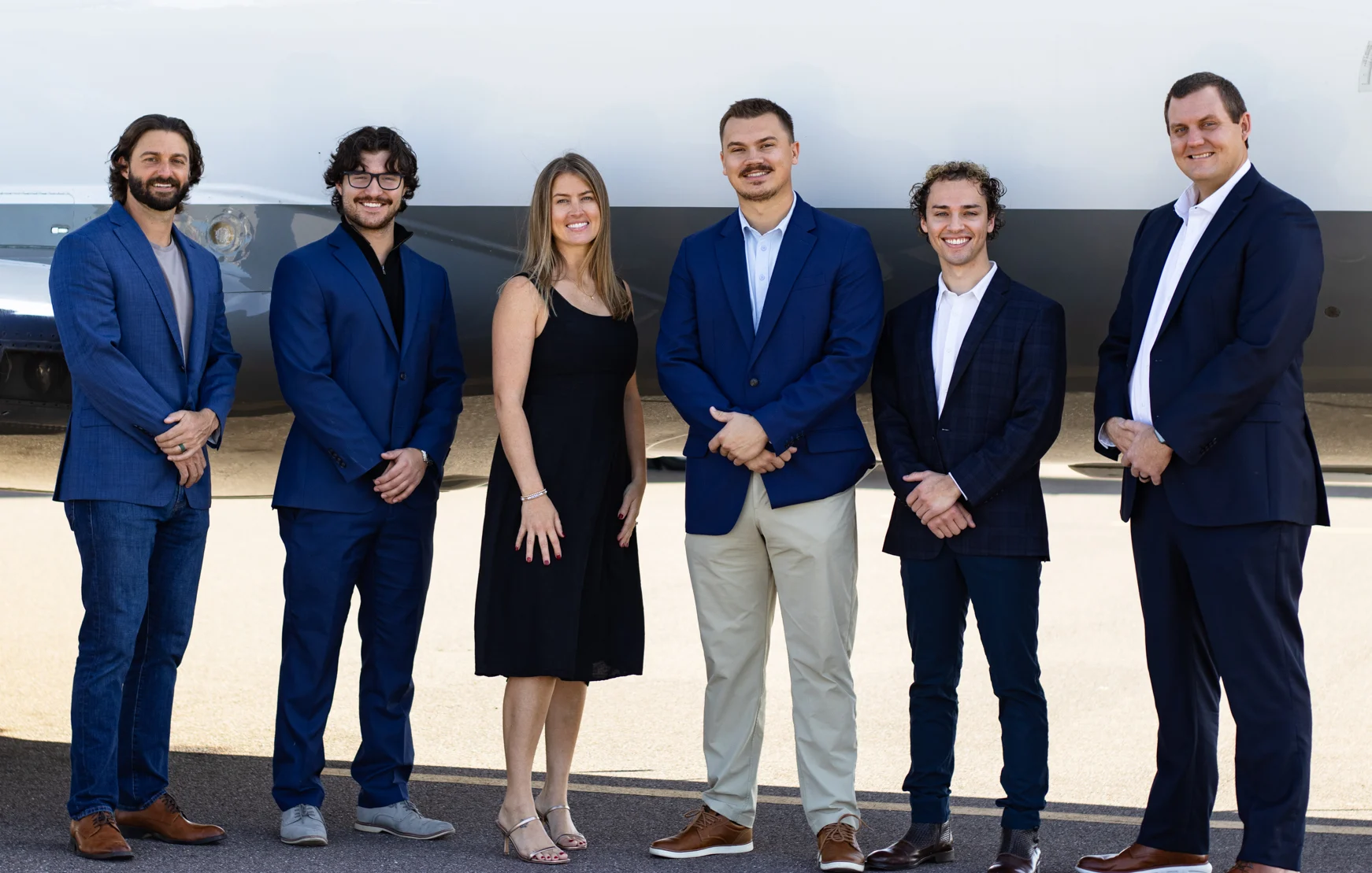 The AvSky Charters Leadership Team
Charter With The Best
AvSky provides comprehensive trip management on every flight, with rigorous operator vetting, route-appropriate aircraft selection, and coordinated ground transport upon request. The result is a seamless, fully white-glove charter experience from first call to wheels down.
Need catering, resort coordination or private security? Our charter advisors have the extensive experience and global partnerships necessary to provide a truly bespoke travel experience.
Airfield Access Across Crooked Island and Acklins
The district provides two primary paved airstrips serving visiting private aircraft: Colonel Hill Airport (CRI/MYCI) on Crooked Island features a 4,031-foot asphalt runway, while Spring Point Airport (AXP/MYAP) on Acklins offers a 5,010-foot asphalt strip. Both airfields operate exclusively during visual daylight hours, welcoming turboprops and select light business jets directly beside regional fishing waters.
Because neither airfield maintains on-site Jet-A fuel or full-time international customs, inbound international charters clear customs at an official Bahamas port of entry—such as Nassau or Exuma—before continuing to the bight with tankered fuel reserves. Nassau's Lynden Pindling International Airport, 227 nautical miles northwest, provides 24-hour runways and full FBO support for heavy aircraft.
Aircraft that can land at Colonel Hill Airport
4,031 × 62 ft asphalt, daylight only — no fuel, no customs.
Trophy Bonefishing Across the Bight of Acklins
The Bight of Acklins ranks among the most coveted saltwater flats destinations on earth. This vast, shallow embayment features endless hard-sand flats where trophy bonefish feed in crystal-clear water. Professional local guides pole skiffs across secluded flats where fish see little pressure, offering anglers heart-pounding opportunities for large double-digit bonefish, permit and elusive tarpon around mangrove channels and coral heads.
Island Navigation Between Crooked Island and Acklins
Local travel across the district is delightfully rustic. A narrow sea channel separates Crooked Island from Acklins, crossed via a short scheduled vehicle ferry or private boat transfer. On land, unpaved coastal roads link settlements to fishing lodges and historic ruins. Lodges typically provide truck transportation for guided fishing trips. AvSky Charters coordinates lodge vehicle pickups directly from the airstrip apron upon landing.
Matching Aircraft to Remote Outpost Runways
Flying into the Crooked Island District favors agile, short-field capable aircraft. High-performance turboprops like the King Air 350 and versatile light jets such as the Citation CJ3 easily handle the 4,000- to 5,000-foot asphalt runways with ample safety margins. Because remote airfields lack aviation fuel, operators plan flights carrying tankered fuel or schedule quick refueling stops in Nassau or Georgetown.
Bird Rock Lighthouse and Pittstown Point
Crooked Island preserves fascinating historical landmarks alongside natural wonders. At the northern tip, historic Pittstown Point features a beachfront lodge where the airstrip ends just steps from the sand. Offshore stands the historic Bird Rock Lighthouse, built in 1876 to guard the Crooked Island Passage, while inland trails lead to limestone bat caves and ruins of 18th-century loyalist plantations.
Uncharted Out Islands and Remote Flats Across the Sound
Long Island LGI
Dean's Blue Hole and more empty bonefish flats a short hop north — the district's nearest neighbor with a bit more to land on.
Mayaguana MYG
The other far-southeastern bonefish outpost, out past everything else, with the same quiet flats and even fewer people.
Great Inagua IGA
Deep in the southern Bahamas, where more West Indian flamingos nest than anywhere else on earth — and the flats hold bonefish too.
Nassau NAS
The gateway that clears you into the country, fuels the trip, and keeps every cabin class and a 24-hour operation behind it.
Questions About Flying to Crooked Island
Charter flights to Crooked Island and Acklins can't touch down there first on arrival in the Bahamas, and the reason is customs rather than runway. Neither field can accept an international first landing, so anything inbound from overseas is processed elsewhere, then flies on domestically. Add that no fuel waits at either strip, and the trip settles into two legs however you slice it: an airplane sized to your party runs up to a gateway — Nassau on the itineraries we quote — for the border and the fuel, then a turboprop leg carries you down to the island. Give us the party and your home airport, and we'll fit the cabin to that routing.
Whichever gateway your charter into the Crooked Island District stops at on the way in, since neither of the district's own strips qualifies as a port of entry. On the routing we price that's Nassau; the nearer George Town in the Exumas does the same job. Either way the domestic leg to Colonel Hill or Spring Point follows the stamp. Travel documents depend on your nationality and residence, so check the current entry rules for everyone aboard before you book. On the operator's side, a paid charter counts as commercial air transport rather than a private pleasure flight: the carrier has to hold the applicable Bahamian licence and file its declarations early, since a late filing draws a stiff penalty. For the trip home, the operator confirms the U.S. arrival airport and clearance procedure with CBP.
At the gateway, every time — no fuel is listed at either public strip in the Crooked Island District, so the answer lives in the routing rather than on the ramp. The airplane tanks up at Nassau or George Town and carries a full round trip's worth for the hop, which the operator works into the weight and payload plan for the specific tail — a leg of only a couple hundred nautical miles makes that manageable, not free. There is simply nothing to buy on Crooked or Acklins. Plan the fuel and the rest of the day falls into place.
Both airports serve the Crooked Island District, and which one finishes your trip comes down to the operator's assessment and where you're headed on the flats. Government register figures give Colonel Hill 4,031 by 62 feet on runway 09/27 and Spring Point 5,010 by 150 on 13/31, both near sea level, both visual fields working from first light to last, and both rated Category 0 for rescue and firefighting. Those dimensions are a starting point, not an approval: declared distances, pavement condition, obstacles, weather, weight and balance, fuel and alternate requirements all feed the carrier's decision for that particular flight. We'll bring you that answer, and the field, before anything is committed.
The Crooked Island District sits at the far southeastern end of the Bahamas, closer to Cuba than to Nassau, though the routings we model don't cross Cuban airspace. From South Florida it's roughly 160 nautical miles up to Nassau, then about 227 more down to Colonel Hill; from the Northeast, plan a jet to Nassau near 960 nautical miles and the same hop beyond. Flight times shift with the tail, the winds, the filed route, air traffic control and any stop, so treat any hour figure as planning rather than schedule. Overflight and navigation requirements follow the route the crew actually files, which dispatch validates for each flight.
The Bight of Acklins is what justifies the journey to Crooked Island: hundreds of square miles of firm, wadeable flats that the country's tourism material and the specialist lodges alike build around bonefish, with permit on the same ground and tarpon appearing once it warms. Fish size, numbers and where they'll be change with wind, tide and water temperature, so any specific claim should come from whoever guides you. Plan for the rules, too — flats fishing is licensed for everyone over 12, a certified Bahamian guide is required when two or more anglers fish the flats from a vessel, and only Bahamian-registered vessels may work them. Bring all your own tackle; there's very little to buy out here.
The cabin flying you as far as the gateway does most of the driving on a Crooked Island charter, since every itinerary here stages through one. A South Florida party is the low end, and often cheapest with a single airplane covering the entire journey rather than a jet plus a separate island shuttle; the figure climbs with the cabin a farther or larger group wants, plus the island leg beyond. After that come the everyday levers — how far the aircraft flies empty to reach you, one night on the island versus two, and the pull of the busy winter weeks. Then there's a real government and airport stack on a trip like this: Bahamian departure and customs fees, the operator's commercial air-transport licence, civil-aviation and airport charges at Nassau, U.S. taxes, and the fees on the return arrival. We itemize all of it in writing so you can see what's included and what isn't.
Realistic but uncommon into the Crooked Island District, given how few charters run this far out. What's on offer is a repositioning flight another party's charter created, sold at a discount — though the date, the aircraft and the routing belong to that trip, and a change on their end can wipe the offer out entirely. Availability, price and protection aren't something anyone can promise in advance. An angler with a week loose enough to move around a match sometimes does very well; one holding a fixed lodge-and-guide booking is safer with a confirmed charter. Give us the spread of dates that would work and we'll keep an eye out for something that lines up.
Fishing gear is the whole question on a Crooked Island charter, since local supply is thin and the outfit has to travel with you. What the airplane will take isn't simply what fits: the operator calculates it from compartment dimensions, total weight and balance, the passenger load, the fuel and diversion plan, and the performance the island strip demands that day, plus the agriculture and customs rules on both ends of an international trip. Rod tubes, reel cases, boot bags and a cooler are all routine — they just have to be declared before we quote. Two anglers and their kit ride comfortably in a light jet or a cabin-class turboprop; a full party wants more room behind the seats. Name the bulky pieces and we'll size the cabin to them.
A few neighbors pair naturally with the Crooked Island District, and each earns its place for an angler. Long Island is closest at about 57 nautical miles and adds Dean's Blue Hole to another stretch of unpressured water; Mayaguana, roughly 69 nautical miles southeast, sits even deeper into the southern corner with fewer residents still; Great Inagua, near 110, is where the West Indian flamingos breed in greater numbers than anywhere on earth; and Nassau, about 227 nautical miles northwest and your customs-and-fuel stop in any case, anchors the trip home. Only 22 nautical miles separate Spring Point from Colonel Hill, so fishing both islands in a week means a quick flight or a boat ride. Any of these will go into one itinerary if you want them.
Plenty, as long as you meet the district for what it is — a wild, history-steeped, all-but-empty place, not a resort. Bird Rock Lighthouse stands alone on its cay off Crooked's northwest tip; construction began in 1866 and it went into service a decade later, and it's reachable only by boat. Castle Island's 1867 lighthouse marks the southern point, again by water. Local tours visit the Marine Farm ruins, a British compound with old cannons on the site, and Crooked Island carries contested Columbus-landfall lore worth reading up on before you come. The nature runs deep too: mangrove creeks, reef walls that fall away into the Crooked Island Passage, iguanas on the offshore cays, and eight-square-mile Long Cay reached by boat or ferry.
A charter answers to no timetable, so the Crooked Island week is yours to pick — and here the calendar is worth thinking through. Lodges point most anglers at the dry, settled stretch between December and April, with the cooler weeks marketed for the heaviest fish and spring for the numbers; October and November pull in people who want unworked water. Treat that as local lore and confirm it with your guide. What isn't up for debate is the Atlantic hurricane season, which runs June 1 to November 30; an island group this low and this far south deserves close attention through it, so leaving a spare day in a summer plan is only prudent. We track the tropics on every booking and move flights ahead of anything bearing down.
Charter Flights to Crooked Island, Bahamas
Sample round-trip estimates to Crooked Island, Bahamas
These estimates price modeled weekend round trips from Florida hubs, including staging through a Bahamas port of entry. Your final rate reflects chosen cabin type, passenger count, fuel logistics for remote airstrips and crew layover times. AvSky Charters provides clear, all-inclusive written quotes covering all permits and handling upfront.
Get Instant EstimateThe Bight of Acklins, at the Bahamas' Far Edge
Positioned along the southeastern rim of the Bahamas, Crooked Island, Acklins and Long Cay form a remote triangular sanctuary enclosing the expansive Bight of Acklins. This 1,000-square-mile marine wilderness features endless wadeable marl flats, untouched mangrove creeks and limestone sea cliffs. World-class bonefishing lodges like Crooked Island Lodge at Pittstown Point and intimate fishing camps welcome anglers seeking trophy bonefish and absolute natural solitude.
Private air charter eliminates multi-day ferry journeys and scheduled Out Island airline layovers, flying nonstop from South Florida in ninety minutes. AvSky Charters coordinates private airstrip arrivals with waiting bonefishing lodge guides directly at planeside.
Land on the Bight of Acklins on Your Own Schedule
Reaching the remote flats of Crooked Island and Acklins demands experienced private flight planning and coordinated fuel logistics. AvSky Charters pairs your party with an aircraft tailored for remote island runways, managing all Bahamas clearance permits and coordinating direct dockside transfers to your fishing lodge. Contact our charter team to schedule your expedition.
Request An All-In QuoteAirfield Access Across Crooked Island and Acklins
The district provides two primary paved airstrips serving visiting private aircraft: Colonel Hill Airport (CRI/MYCI) on Crooked Island features a 4,031-foot asphalt runway, while Spring Point Airport (AXP/MYAP) on Acklins offers a 5,010-foot asphalt strip. Both airfields operate exclusively during visual daylight hours, welcoming turboprops and select light business jets directly beside regional fishing waters.
Because neither airfield maintains on-site Jet-A fuel or full-time international customs, inbound international charters clear customs at an official Bahamas port of entry—such as Nassau or Exuma—before continuing to the bight with tankered fuel reserves. Nassau's Lynden Pindling International Airport, 227 nautical miles northwest, provides 24-hour runways and full FBO support for heavy aircraft.
Aircraft that can fly to & from Colonel Hill Airport
4,031 × 62 ft asphalt, daylight only — no fuel, no customs.
Crooked Island, Bahamas details.
Trophy Bonefishing Across the Bight of Acklins
The Bight of Acklins ranks among the most coveted saltwater flats destinations on earth. This vast, shallow embayment features endless hard-sand flats where trophy bonefish feed in crystal-clear water. Professional local guides pole skiffs across secluded flats where fish see little pressure, offering anglers heart-pounding opportunities for large double-digit bonefish, permit and elusive tarpon around mangrove channels and coral heads.
Island Navigation Between Crooked Island and Acklins
Local travel across the district is delightfully rustic. A narrow sea channel separates Crooked Island from Acklins, crossed via a short scheduled vehicle ferry or private boat transfer. On land, unpaved coastal roads link settlements to fishing lodges and historic ruins. Lodges typically provide truck transportation for guided fishing trips. AvSky Charters coordinates lodge vehicle pickups directly from the airstrip apron upon landing.
Matching Aircraft to Remote Outpost Runways
Flying into the Crooked Island District favors agile, short-field capable aircraft. High-performance turboprops like the King Air 350 and versatile light jets such as the Citation CJ3 easily handle the 4,000- to 5,000-foot asphalt runways with ample safety margins. Because remote airfields lack aviation fuel, operators plan flights carrying tankered fuel or schedule quick refueling stops in Nassau or Georgetown.
Bird Rock Lighthouse and Pittstown Point
Crooked Island preserves fascinating historical landmarks alongside natural wonders. At the northern tip, historic Pittstown Point features a beachfront lodge where the airstrip ends just steps from the sand. Offshore stands the historic Bird Rock Lighthouse, built in 1876 to guard the Crooked Island Passage, while inland trails lead to limestone bat caves and ruins of 18th-century loyalist plantations.
Four Flight Guidelines for Crooked Island Charters
Clear Inbound Customs at a Gateway Airport
Because Colonel Hill and Spring Point lack permanent customs staff, international flights must clear Bahamas customs at an official port of entry like Nassau or Georgetown before landing in the district. AvSky Charters arranges a seamless 20-minute customs turn en route.
Structure Itineraries for Daylight Operations
Both district airstrips operate strictly under visual flight rules without night runway lighting. AvSky Charters schedules departures to touch down comfortably before dusk, ensuring safe visual approaches and smooth daytime boat transfers to your lodge dock.
Manage Round-Trip Fuel Tankering
Because on-field Jet-A fuel is unavailable on Crooked Island or Acklins, charter aircraft arrive carrying sufficient fuel for onward flight or plan brief technical uplifts in Exuma or Nassau. AvSky Charters incorporates all fuel parameters seamlessly into your flight plan.
Bring Specialized Fishing Gear and Spare Tackle
Due to the remote location, fishing tackle shops are unavailable on the islands. Anglers should pack extra fly lines, leaders, flies and backup rods in protective travel tubes. AvSky Charters sizes your aircraft baggage compartment to hold all sporting equipment securely.
Uncharted Out Islands and Remote Flats Across the Sound
Questions About Flying to Crooked Island
Is a nonstop from the mainland into the Crooked Island District ever possible?
Charter flights to Crooked Island and Acklins can't touch down there first on arrival in the Bahamas, and the reason is customs rather than runway. Neither field can accept an international first landing, so anything inbound from overseas is processed elsewhere, then flies on domestically. Add that no fuel waits at either strip, and the trip settles into two legs however you slice it: an airplane sized to your party runs up to a gateway — Nassau on the itineraries we quote — for the border and the fuel, then a turboprop leg carries you down to the island. Give us the party and your home airport, and we'll fit the cabin to that routing.
Which airport stamps us into the Bahamas on a Crooked Island trip?
Whichever gateway your charter into the Crooked Island District stops at on the way in, since neither of the district's own strips qualifies as a port of entry. On the routing we price that's Nassau; the nearer George Town in the Exumas does the same job. Either way the domestic leg to Colonel Hill or Spring Point follows the stamp. Travel documents depend on your nationality and residence, so check the current entry rules for everyone aboard before you book. On the operator's side, a paid charter counts as commercial air transport rather than a private pleasure flight: the carrier has to hold the applicable Bahamian licence and file its declarations early, since a late filing draws a stiff penalty. For the trip home, the operator confirms the U.S. arrival airport and clearance procedure with CBP.
Where does the airplane fuel up if not on Crooked or Acklins?
At the gateway, every time — no fuel is listed at either public strip in the Crooked Island District, so the answer lives in the routing rather than on the ramp. The airplane tanks up at Nassau or George Town and carries a full round trip's worth for the hop, which the operator works into the weight and payload plan for the specific tail — a leg of only a couple hundred nautical miles makes that manageable, not free. There is simply nothing to buy on Crooked or Acklins. Plan the fuel and the rest of the day falls into place.
Which airport will we actually land on, Colonel Hill or Spring Point?
Both airports serve the Crooked Island District, and which one finishes your trip comes down to the operator's assessment and where you're headed on the flats. Government register figures give Colonel Hill 4,031 by 62 feet on runway 09/27 and Spring Point 5,010 by 150 on 13/31, both near sea level, both visual fields working from first light to last, and both rated Category 0 for rescue and firefighting. Those dimensions are a starting point, not an approval: declared distances, pavement condition, obstacles, weather, weight and balance, fuel and alternate requirements all feed the carrier's decision for that particular flight. We'll bring you that answer, and the field, before anything is committed.
How many miles is the trip, and does any of it cross Cuban airspace?
The Crooked Island District sits at the far southeastern end of the Bahamas, closer to Cuba than to Nassau, though the routings we model don't cross Cuban airspace. From South Florida it's roughly 160 nautical miles up to Nassau, then about 227 more down to Colonel Hill; from the Northeast, plan a jet to Nassau near 960 nautical miles and the same hop beyond. Flight times shift with the tail, the winds, the filed route, air traffic control and any stop, so treat any hour figure as planning rather than schedule. Overflight and navigation requirements follow the route the crew actually files, which dispatch validates for each flight.
What makes the Bight of Acklins worth the journey for an angler?
The Bight of Acklins is what justifies the journey to Crooked Island: hundreds of square miles of firm, wadeable flats that the country's tourism material and the specialist lodges alike build around bonefish, with permit on the same ground and tarpon appearing once it warms. Fish size, numbers and where they'll be change with wind, tide and water temperature, so any specific claim should come from whoever guides you. Plan for the rules, too — flats fishing is licensed for everyone over 12, a certified Bahamian guide is required when two or more anglers fish the flats from a vessel, and only Bahamian-registered vessels may work them. Bring all your own tackle; there's very little to buy out here.
Which parts of a Crooked Island charter drive the total?
The cabin flying you as far as the gateway does most of the driving on a Crooked Island charter, since every itinerary here stages through one. A South Florida party is the low end, and often cheapest with a single airplane covering the entire journey rather than a jet plus a separate island shuttle; the figure climbs with the cabin a farther or larger group wants, plus the island leg beyond. After that come the everyday levers — how far the aircraft flies empty to reach you, one night on the island versus two, and the pull of the busy winter weeks. Then there's a real government and airport stack on a trip like this: Bahamian departure and customs fees, the operator's commercial air-transport licence, civil-aviation and airport charges at Nassau, U.S. taxes, and the fees on the return arrival. We itemize all of it in writing so you can see what's included and what isn't.
Are discounted one-way legs realistic this far down the chain?
Realistic but uncommon into the Crooked Island District, given how few charters run this far out. What's on offer is a repositioning flight another party's charter created, sold at a discount — though the date, the aircraft and the routing belong to that trip, and a change on their end can wipe the offer out entirely. Availability, price and protection aren't something anyone can promise in advance. An angler with a week loose enough to move around a match sometimes does very well; one holding a fixed lodge-and-guide booking is safer with a confirmed charter. Give us the spread of dates that would work and we'll keep an eye out for something that lines up.
How does the operator work out what our tackle and bags will weigh?
Fishing gear is the whole question on a Crooked Island charter, since local supply is thin and the outfit has to travel with you. What the airplane will take isn't simply what fits: the operator calculates it from compartment dimensions, total weight and balance, the passenger load, the fuel and diversion plan, and the performance the island strip demands that day, plus the agriculture and customs rules on both ends of an international trip. Rod tubes, reel cases, boot bags and a cooler are all routine — they just have to be declared before we quote. Two anglers and their kit ride comfortably in a light jet or a cabin-class turboprop; a full party wants more room behind the seats. Name the bulky pieces and we'll size the cabin to them.
What other islands can we fold into one trip?
A few neighbors pair naturally with the Crooked Island District, and each earns its place for an angler. Long Island is closest at about 57 nautical miles and adds Dean's Blue Hole to another stretch of unpressured water; Mayaguana, roughly 69 nautical miles southeast, sits even deeper into the southern corner with fewer residents still; Great Inagua, near 110, is where the West Indian flamingos breed in greater numbers than anywhere on earth; and Nassau, about 227 nautical miles northwest and your customs-and-fuel stop in any case, anchors the trip home. Only 22 nautical miles separate Spring Point from Colonel Hill, so fishing both islands in a week means a quick flight or a boat ride. Any of these will go into one itinerary if you want them.
Off the water, what is there to see across the three islands?
Plenty, as long as you meet the district for what it is — a wild, history-steeped, all-but-empty place, not a resort. Bird Rock Lighthouse stands alone on its cay off Crooked's northwest tip; construction began in 1866 and it went into service a decade later, and it's reachable only by boat. Castle Island's 1867 lighthouse marks the southern point, again by water. Local tours visit the Marine Farm ruins, a British compound with old cannons on the site, and Crooked Island carries contested Columbus-landfall lore worth reading up on before you come. The nature runs deep too: mangrove creeks, reef walls that fall away into the Crooked Island Passage, iguanas on the offshore cays, and eight-square-mile Long Cay reached by boat or ferry.
Which weeks do the lodges point anglers at, and what about hurricanes?
A charter answers to no timetable, so the Crooked Island week is yours to pick — and here the calendar is worth thinking through. Lodges point most anglers at the dry, settled stretch between December and April, with the cooler weeks marketed for the heaviest fish and spring for the numbers; October and November pull in people who want unworked water. Treat that as local lore and confirm it with your guide. What isn't up for debate is the Atlantic hurricane season, which runs June 1 to November 30; an island group this low and this far south deserves close attention through it, so leaving a spare day in a summer plan is only prudent. We track the tropics on every booking and move flights ahead of anything bearing down.
Ready when you are.
Charter flights from one of the world leaders in private aviation. Florida-based and on-call 24/7.