Charter Flights to Grand Turk
Fly with AvSky to JAGS McCartney International, arriving moments from Cockburn Town and the winter humpback whale passage.
The historic capital island on your schedulePlan Your Private Flight to Grand Turk
Covering barely seven square miles, Grand Turk preserves the calm, historic soul of the Turks and Caicos. Bermudian colonial architecture lines quiet coastal streets established during historic salt-raking eras, maintaining an authentic rhythm far removed from commercial tourism strips. Offshore, the renowned Grand Turk Wall plunges sheer for 7,000 feet just minutes from leeward sands, while migrating humpback pods pass through deep passage waters each winter.
Flight planning into JAGS McCartney International requires careful fuel logistics. The 6,335-foot sea-level runway comfortably accommodates most business aircraft classes, yet the airport maintains no on-field aviation fuel. Aircraft either tanker adequate round-trip reserves from Florida or make a brief technical stop in Providenciales, home to the territory's full-service FBOs. Positioned 655 miles southeast of Miami and geographically east of Cuba, standard flight corridors from the United States route across open ocean, bypassing Cuban airspace entirely.
The Seamless Way Into Grand Turk
Flying privately to Grand Turk demands precise flight coordination and the right aircraft. Sourcing across an international fleet of over 12,000 vetted aircraft, AvSky matches the ideal cabin size, range, and baggage volume to your party. From arranging round-trip fuel logistics and technical stops to securing on-island ramp parking, our team oversees every operational detail, delivering flawless travel execution on any timeline.
Sample round-trip estimates to Grand Turk, Turks & Caicos
Sample estimates reflect popular departure cities, though charter flights into Grand Turk (GDT) can originate from any private terminal. Figures represent modeled round-trip estimates rather than binding quotes. Final pricing adjusts based on chosen cabin category, passenger payload, fuel planning, and confirmed schedule availability. AvSky itemizes all aircraft handling and statutory fees transparently on your quote.
Price your specific trip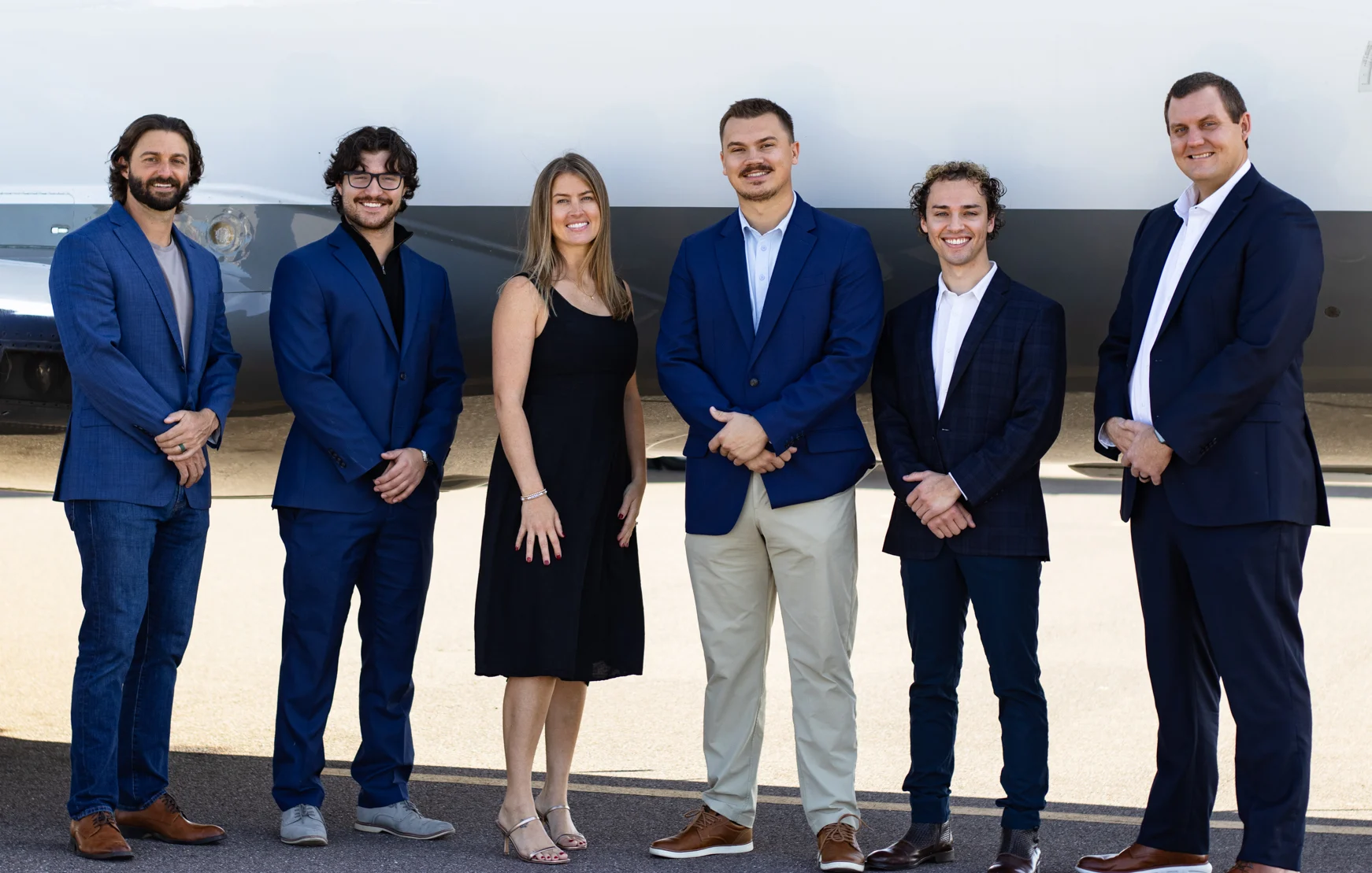 The AvSky Charters Leadership Team
Charter With The Best
AvSky provides comprehensive trip management on every flight, with rigorous operator vetting, route-appropriate aircraft selection, and coordinated ground transport upon request. The result is a seamless, fully white-glove charter experience from first call to wheels down.
Need catering, resort coordination or private security? Our charter advisors have the extensive experience and global partnerships necessary to provide a truly bespoke travel experience.
Inside JAGS McCartney International
JAGS McCartney International Airport (GDT/MBGT) serves as Grand Turk's sole aviation gateway, featuring a sea-level asphalt runway published at 6,335 feet. Because displaced thresholds and prevailing coastal winds affect declared landing distances, operating carriers verify tail-specific performance and passenger payloads for each flight. The airport operates from 6 a.m. to 8 p.m. without 24-hour coverage. Private flights utilize designated professional ground-handling agents for ramp escort, passenger clearance, and baggage management through the terminal.
Fuel management is the central operational consideration, as Grand Turk maintains no on-field Jet-A reserves. Inbound aircraft either tanker sufficient round-trip fuel from the mainland or coordinate a brief technical refueling stop in Providenciales, where the country's full-service FBOs operate. Customs and immigration officers process private arrivals on site during published airport operating hours, requiring advance handling coordination. For long-range routes or heavy passenger groups, staging into Providenciales with an onward island connection remains a reliable alternative.
Aircraft that can land at JAGS McCartney International Airport
About 6,335 ft, sea level — fit confirmed per trip; fuel is the real constraint.
Colonial Landmarks and Marine Life
Beyond its celebrated offshore drop-offs, Grand Turk serves as the cultural heart of the territory. Cockburn Town features historic Bermudian architecture along Duke and Front streets, where the Turks and Caicos National Museum displays the historic Molasses Reef Wreck—the oldest excavated European shipwreck in the Americas. Marine excursions explore over 40 preserved reef sites and the shallow stingray sandbars of nearby Gibbs Cay. To the north, a historic cast-iron lighthouse overlooks migrating whale waters, while a southern memorial commemorates John Glenn's historic Atlantic splashdown and recovery on the island.
Island Navigation and Cruise Schedules
Navigating Grand Turk is straightforward across barely seven square miles of land. Rented golf carts, open-top jeeps, and local taxis effortlessly cover the island's single main road network, with driving following British tradition on the left side. Financial transactions require zero conversion, as the US dollar serves as the official national currency. Local activity follows the maritime port calendar: non-ship days leave Cockburn Town and the beaches wonderfully deserted, while scheduled cruise calls temporarily animate the southern terminal area. Flight coordinators track port schedules to ensure your ground transfers remain unhurried and peaceful.
Payload Planning and Return Fuel Reserves
Because Grand Turk maintains no on-field aviation fuel, aircraft payload calculations account for tankering return fuel alongside passenger cargo. Dive expeditions, underwater photography equipment, and fishing gear add substantial baggage weight and volume. On brief South Florida routes, light jets and turboprops comfortably accommodate passengers, heavy gear, and sufficient fuel reserves. For flights departing from the Northeast or Midwest, stepping up to midsize and super-midsize cabins ensures ample passenger space, long-range fuel capacity, and generous external baggage holds without performance compromises. AvSky tailors aircraft recommendations to your exact passenger manifest and equipment load.
Out-Island Connections Across the Salt Chain
Grand Turk provides an ideal launch point for exploring the surrounding eastern cays. South Caicos lies 15 minutes away by air, serving as an emerging luxury hub anchored by oceanfront properties like Sailrock and Salterra alongside world-class bonefishing flats. Just to the south, Salt Cay preserves authentic Out Island heritage with historic salinas, near-total seclusion, and prime coastal vantage points for seasonal whale watching. Because Salt Cay's short airstrip accommodates only smaller aircraft during daylight hours, flights clear customs at Grand Turk before proceeding onward. AvSky coordinates inter-island connections seamlessly on a unified schedule.
Islands worth pairing with Grand Turk.
South Caicos XSC
The sister out-island: Sailrock, Salterra, and bonefishing flats, with international arrivals of its own.
Providenciales PLS
The full-service gateway and Grace Bay — the busy, polished counterpart to quiet Grand Turk.
Puerto Plata POP
The low-key Dominican coast: a Victorian port town, waterfalls, and mountains behind the sand.
Punta Cana PUJ
The Dominican Republic's big-resort coast: championship golf, spa hotels, and long Atlantic sand.
Grand Turk Charter Flight FAQs
Flight durations range from roughly two hours from South Florida (570 nautical miles) to three hours from Atlanta (1,020 nautical miles) and approximately three hours and fifteen minutes from the New York area (1,175 nautical miles). Positioned east of Cuba across open Atlantic waters, standard flight paths avoid Cuban airspace entirely. Exact block times vary with seasonal head winds and ATC routings, with AvSky calculating flight times tailored to your specific aircraft.
JAGS McCartney features a 6,335-foot sea-level asphalt runway accommodating turboprops, light jets, and midsize cabins comfortably. Because declared landing distances vary by runway heading due to displaced thresholds, operating carriers evaluate tail-specific performance, landing weight, and temperature before scheduling. Because on-island fueling is unavailable, aircraft payloads must accommodate return fuel. Groups requiring heavy business jets frequently land at Providenciales, completing the final leg to Grand Turk via regional aircraft.
Grand Turk maintains no on-field aviation fuel, requiring deliberate operational planning. On flights originating in Florida and the Southeast, aircraft carry round-trip fuel reserves while maintaining ample safety margins. For longer routes from the Northeast, flights either tanker fuel with adjusted passenger loads or make a brief technical refueling stop in Providenciales. AvSky coordinates and itemizes all fuel planning with the operating carrier in writing prior to departure.
Customs and immigration clearance occurs on the island during JAGS McCartney's published 6 a.m. to 8 p.m. operating hours. Ground handlers pre-arrange border officer attendance for your specific arrival time. US, Canadian, and UK citizens require a valid passport and proof of onward travel, with tourist entry typically granted up to 90 days. Mandatory departure taxes and airport security fees are included in your charter quote. Return flights clear US customs at your initial American arrival airport.
International private charter flights into the Turks and Caicos require landing authorizations from local airport authorities and commercial air transport permits from the TCIAA. Operating carriers submit advance electronic passenger manifests and arrange on-field customs and immigration coverage during published airport hours. AvSky oversees every administrative filing directly with the operator, confirming all regulatory clearances well before your departure date.
Grand Turk provides an ideal base for connecting to neighboring islands. South Caicos (XSC) sits approximately 15 minutes away by air, featuring full FBO services and luxury resorts like Sailrock and Salterra alongside world-class bonefishing. Historic Salt Cay lies just south, offering prime whale watching from an unpaved daylight airstrip. Because Salt Cay lacks customs and fueling, flights clear at Grand Turk before continuing onward, with AvSky coordinating all connecting legs seamlessly.
Humpback whale season runs from January through April, as migrating pods travel through the deep Columbus Passage separating the Turks Islands from the Caicos Banks. Grand Turk and Salt Cay offer premier viewing locations as the channel funnels whales close to shore, with local operators providing guided boat excursions. Outside winter whale season, the island's celebrated 7,000-foot coral wall offers exceptional scuba diving conditions year-round.
Charter costs depend primarily on flight distance, selected cabin class, and repositioning legs, ranging from efficient turboprops and light jets from Florida to heavy cabins from the Northeast. Pricing also reflects on-field fuel realities: aircraft must either tanker return fuel or incorporate a technical refueling stop in Providenciales. Fixed statutory expenses include TCIAA landing permits, passenger departure taxes, and local handling fees, all itemized transparently on AvSky quotes.
Empty legs occasionally become available during peak winter diving and whale-watching months when aircraft reposition following one-way passenger drop-offs. While these flights provide significant discounts, departure dates, times, and aircraft models remain strictly tied to the primary charter and cancel if that booking changes. For travelers with flexible dates, empty legs offer exceptional value, while dedicated round-trip charters ensure guaranteed scheduling for locked resort reservations.
Hold volume and payload weight are closely managed on Grand Turk flights, particularly when aircraft carry return fuel reserves. Scuba gear, underwater camera housings, and fishing equipment require substantial hold space. While light jets accommodate standard baggage on Florida routes, groups departing from northern cities or carrying extensive sporting equipment benefit from midsize or super-midsize cabins with dedicated external baggage bays, eliminating payload trade-offs.
Private charters operate throughout the June-to-November tropical season with active weather tracking. When tropical systems threaten flight corridors, AvSky adjusts departure windows proactively to preserve your itinerary rather than canceling outright. Providenciales serves as the primary regional diversion airport, offering a 9,200-foot runway and complete private aviation facilities. During winter months, occasional cold fronts produce ocean chop that temporarily pauses offshore boat excursions, making schedule flexibility advisable.
Charter Flights to Grand Turk
Sample round-trip estimates to Grand Turk, Turks & Caicos
Sample estimates reflect popular departure cities, though charter flights into Grand Turk (GDT) can originate from any private terminal. Figures represent modeled round-trip estimates rather than binding quotes. Final pricing adjusts based on chosen cabin category, passenger payload, fuel planning, and confirmed schedule availability. AvSky itemizes all aircraft handling and statutory fees transparently on your quote.
Get Instant EstimatePlan Your Private Flight to Grand Turk
Covering barely seven square miles, Grand Turk preserves the calm, historic soul of the Turks and Caicos. Bermudian colonial architecture lines quiet coastal streets established during historic salt-raking eras, maintaining an authentic rhythm far removed from commercial tourism strips. Offshore, the renowned Grand Turk Wall plunges sheer for 7,000 feet just minutes from leeward sands, while migrating humpback pods pass through deep passage waters each winter.
Flight planning into JAGS McCartney International requires careful fuel logistics. The 6,335-foot sea-level runway comfortably accommodates most business aircraft classes, yet the airport maintains no on-field aviation fuel. Aircraft either tanker adequate round-trip reserves from Florida or make a brief technical stop in Providenciales, home to the territory's full-service FBOs. Positioned 655 miles southeast of Miami and geographically east of Cuba, standard flight corridors from the United States route across open ocean, bypassing Cuban airspace entirely.
The Seamless Way Into Grand Turk
Flying privately to Grand Turk demands precise flight coordination and the right aircraft. Sourcing across an international fleet of over 12,000 vetted aircraft, AvSky matches the ideal cabin size, range, and baggage volume to your party. From arranging round-trip fuel logistics and technical stops to securing on-island ramp parking, our team oversees every operational detail, delivering flawless travel execution on any timeline.
Request An All-In QuoteInside JAGS McCartney International
JAGS McCartney International Airport (GDT/MBGT) serves as Grand Turk's sole aviation gateway, featuring a sea-level asphalt runway published at 6,335 feet. Because displaced thresholds and prevailing coastal winds affect declared landing distances, operating carriers verify tail-specific performance and passenger payloads for each flight. The airport operates from 6 a.m. to 8 p.m. without 24-hour coverage. Private flights utilize designated professional ground-handling agents for ramp escort, passenger clearance, and baggage management through the terminal.
Fuel management is the central operational consideration, as Grand Turk maintains no on-field Jet-A reserves. Inbound aircraft either tanker sufficient round-trip fuel from the mainland or coordinate a brief technical refueling stop in Providenciales, where the country's full-service FBOs operate. Customs and immigration officers process private arrivals on site during published airport operating hours, requiring advance handling coordination. For long-range routes or heavy passenger groups, staging into Providenciales with an onward island connection remains a reliable alternative.
Aircraft that can fly to & from JAGS McCartney International Airport
About 6,335 ft, sea level — fit confirmed per trip; fuel is the real constraint.
Grand Turk, Turks & Caicos details.
Colonial Landmarks and Marine Life
Beyond its celebrated offshore drop-offs, Grand Turk serves as the cultural heart of the territory. Cockburn Town features historic Bermudian architecture along Duke and Front streets, where the Turks and Caicos National Museum displays the historic Molasses Reef Wreck—the oldest excavated European shipwreck in the Americas. Marine excursions explore over 40 preserved reef sites and the shallow stingray sandbars of nearby Gibbs Cay. To the north, a historic cast-iron lighthouse overlooks migrating whale waters, while a southern memorial commemorates John Glenn's historic Atlantic splashdown and recovery on the island.
Island Navigation and Cruise Schedules
Navigating Grand Turk is straightforward across barely seven square miles of land. Rented golf carts, open-top jeeps, and local taxis effortlessly cover the island's single main road network, with driving following British tradition on the left side. Financial transactions require zero conversion, as the US dollar serves as the official national currency. Local activity follows the maritime port calendar: non-ship days leave Cockburn Town and the beaches wonderfully deserted, while scheduled cruise calls temporarily animate the southern terminal area. Flight coordinators track port schedules to ensure your ground transfers remain unhurried and peaceful.
Payload Planning and Return Fuel Reserves
Because Grand Turk maintains no on-field aviation fuel, aircraft payload calculations account for tankering return fuel alongside passenger cargo. Dive expeditions, underwater photography equipment, and fishing gear add substantial baggage weight and volume. On brief South Florida routes, light jets and turboprops comfortably accommodate passengers, heavy gear, and sufficient fuel reserves. For flights departing from the Northeast or Midwest, stepping up to midsize and super-midsize cabins ensures ample passenger space, long-range fuel capacity, and generous external baggage holds without performance compromises. AvSky tailors aircraft recommendations to your exact passenger manifest and equipment load.
Out-Island Connections Across the Salt Chain
Grand Turk provides an ideal launch point for exploring the surrounding eastern cays. South Caicos lies 15 minutes away by air, serving as an emerging luxury hub anchored by oceanfront properties like Sailrock and Salterra alongside world-class bonefishing flats. Just to the south, Salt Cay preserves authentic Out Island heritage with historic salinas, near-total seclusion, and prime coastal vantage points for seasonal whale watching. Because Salt Cay's short airstrip accommodates only smaller aircraft during daylight hours, flights clear customs at Grand Turk before proceeding onward. AvSky coordinates inter-island connections seamlessly on a unified schedule.
Four Flight Planning Rules for Grand Turk
Account for Off-Island Fuel Planning
Grand Turk maintains no on-field aviation fuel, with the nearest supply located at Providenciales. On shorter Florida flights, aircraft tanker round-trip reserves directly. Longer routes incorporate a brief technical refueling stop in Providenciales. AvSky coordinates and details all fuel logistics on your quote before departure.
Schedule Around Daytime Customs Clearance
Customs and immigration officers clear private arrivals on site at JAGS McCartney during published daytime hours. Ground handlers coordinate officer staffing in advance for your exact landing time. Returning flights clear US customs at your initial American airport, with required electronic manifests submitted ahead of takeoff.
Consult the Cruise Port Calendar
Grand Turk's atmosphere changes noticeably when cruise ships call at the southern terminal, bringing temporary activity to town shops, museum exhibits, and dive operators. To experience Cockburn Town and the beaches in near-total tranquility, coordinate your travel dates around non-ship days on the published port calendar.
Plan Day Flights for Salt Cay Connections
Onward flights to nearby Salt Cay require daylight visual operations on an unpaved, fuel-less airstrip suitable only for select light aircraft. Flights clear customs at Grand Turk first before continuing. AvSky schedules connecting legs with ample daylight margins, or arranges local boat transfers as a scenic alternative.
Islands worth pairing with Grand Turk.
Grand Turk Charter Flight FAQs
What are typical flight durations from Florida and the Northeast?
Flight durations range from roughly two hours from South Florida (570 nautical miles) to three hours from Atlanta (1,020 nautical miles) and approximately three hours and fifteen minutes from the New York area (1,175 nautical miles). Positioned east of Cuba across open Atlantic waters, standard flight paths avoid Cuban airspace entirely. Exact block times vary with seasonal head winds and ATC routings, with AvSky calculating flight times tailored to your specific aircraft.
Which aircraft classes can land at JAGS McCartney International?
JAGS McCartney features a 6,335-foot sea-level asphalt runway accommodating turboprops, light jets, and midsize cabins comfortably. Because declared landing distances vary by runway heading due to displaced thresholds, operating carriers evaluate tail-specific performance, landing weight, and temperature before scheduling. Because on-island fueling is unavailable, aircraft payloads must accommodate return fuel. Groups requiring heavy business jets frequently land at Providenciales, completing the final leg to Grand Turk via regional aircraft.
How do flight crews manage fuel without on-field Jet-A?
Grand Turk maintains no on-field aviation fuel, requiring deliberate operational planning. On flights originating in Florida and the Southeast, aircraft carry round-trip fuel reserves while maintaining ample safety margins. For longer routes from the Northeast, flights either tanker fuel with adjusted passenger loads or make a brief technical refueling stop in Providenciales. AvSky coordinates and itemizes all fuel planning with the operating carrier in writing prior to departure.
How does international customs and immigration work on Grand Turk?
Customs and immigration clearance occurs on the island during JAGS McCartney's published 6 a.m. to 8 p.m. operating hours. Ground handlers pre-arrange border officer attendance for your specific arrival time. US, Canadian, and UK citizens require a valid passport and proof of onward travel, with tourist entry typically granted up to 90 days. Mandatory departure taxes and airport security fees are included in your charter quote. Return flights clear US customs at your initial American arrival airport.
What permits and clearances are required for Grand Turk flights?
International private charter flights into the Turks and Caicos require landing authorizations from local airport authorities and commercial air transport permits from the TCIAA. Operating carriers submit advance electronic passenger manifests and arrange on-field customs and immigration coverage during published airport hours. AvSky oversees every administrative filing directly with the operator, confirming all regulatory clearances well before your departure date.
How do multi-destination flights to South Caicos or Salt Cay work?
Grand Turk provides an ideal base for connecting to neighboring islands. South Caicos (XSC) sits approximately 15 minutes away by air, featuring full FBO services and luxury resorts like Sailrock and Salterra alongside world-class bonefishing. Historic Salt Cay lies just south, offering prime whale watching from an unpaved daylight airstrip. Because Salt Cay lacks customs and fueling, flights clear at Grand Turk before continuing onward, with AvSky coordinating all connecting legs seamlessly.
When is the peak humpback whale migration season?
Humpback whale season runs from January through April, as migrating pods travel through the deep Columbus Passage separating the Turks Islands from the Caicos Banks. Grand Turk and Salt Cay offer premier viewing locations as the channel funnels whales close to shore, with local operators providing guided boat excursions. Outside winter whale season, the island's celebrated 7,000-foot coral wall offers exceptional scuba diving conditions year-round.
What operational factors determine Grand Turk charter pricing?
Charter costs depend primarily on flight distance, selected cabin class, and repositioning legs, ranging from efficient turboprops and light jets from Florida to heavy cabins from the Northeast. Pricing also reflects on-field fuel realities: aircraft must either tanker return fuel or incorporate a technical refueling stop in Providenciales. Fixed statutory expenses include TCIAA landing permits, passenger departure taxes, and local handling fees, all itemized transparently on AvSky quotes.
Are empty-leg charter flights available into Grand Turk?
Empty legs occasionally become available during peak winter diving and whale-watching months when aircraft reposition following one-way passenger drop-offs. While these flights provide significant discounts, departure dates, times, and aircraft models remain strictly tied to the primary charter and cancel if that booking changes. For travelers with flexible dates, empty legs offer exceptional value, while dedicated round-trip charters ensure guaranteed scheduling for locked resort reservations.
Does gear and baggage volume limit cabin selection?
Hold volume and payload weight are closely managed on Grand Turk flights, particularly when aircraft carry return fuel reserves. Scuba gear, underwater camera housings, and fishing equipment require substantial hold space. While light jets accommodate standard baggage on Florida routes, groups departing from northern cities or carrying extensive sporting equipment benefit from midsize or super-midsize cabins with dedicated external baggage bays, eliminating payload trade-offs.
How are Grand Turk charters managed during tropical weather?
Private charters operate throughout the June-to-November tropical season with active weather tracking. When tropical systems threaten flight corridors, AvSky adjusts departure windows proactively to preserve your itinerary rather than canceling outright. Providenciales serves as the primary regional diversion airport, offering a 9,200-foot runway and complete private aviation facilities. During winter months, occasional cold fronts produce ocean chop that temporarily pauses offshore boat excursions, making schedule flexibility advisable.
Ready when you are.
Charter flights from one of the world leaders in private aviation. Florida-based and on-call 24/7.