Private Jet Charters to Rum Cay
Experience the ultimate off-the-grid island escape. AvSky pairs your mainline flight with connecting island transfers, delivering you directly to the legendary coral canyons and tranquil beaches of the Out Islands.
Seamless routing through San Salvador or NassauNavigating Gateway Flights to Port Nelson
Perched on the continental shelf in the southeastern Bahamas, Rum Cay is an untouched sanctuary of coral reefs and secluded sand. Life centers on the quiet settlement of Port Nelson, surrounded by exceptional marine topography. Divers explore the Grand Canyon’s 60-foot coral drop-offs, swim-through tunnels, and chutes, while snorkelers visit the 1861 wreck of the 101-gun HMS Conqueror off Sumner Point, alongside pristine, uncrowded bonefish flats.
Because Port Nelson has no fuel farm and is not an international port of entry, inbound flights clear Bahamian customs and refuel at an approved gateway before continuing to the island. Nearby San Salvador offers an 8,000-foot runway with Jet A-1 fuel and an effortless 20-minute connection, while Nassau provides 24-hour full-service FBO handling on dual runways. Flight crews carry all required return fuel on board, ensuring complete operational independence during your stay.
How to Fly Private to Rum Cay
Getting to an island with fewer than a hundred residents means solving the logistics before takeoff. AvSky pairs your flight through San Salvador for the quick 20-minute crossing or Nassau for 24-hour handling, bringing your return fuel along and timing your landing well before sunset. Backed by a network of over 12,000 aircraft, we turn a complex Out Island flight into a seamless journey. Send over your travel window and let our team handle the details.
Sample round-trip estimates to Rum Cay, Bahamas
You can charter to Rum Cay from any airport worldwide. These sample rates cover a two-night weekend itinerary from Friday to Sunday. Final quotes adjust for your group's cabin size, direct Florida turboprop options versus jet connections, and chosen gateway routing through San Salvador or 24-hour Nassau.
Price your specific trip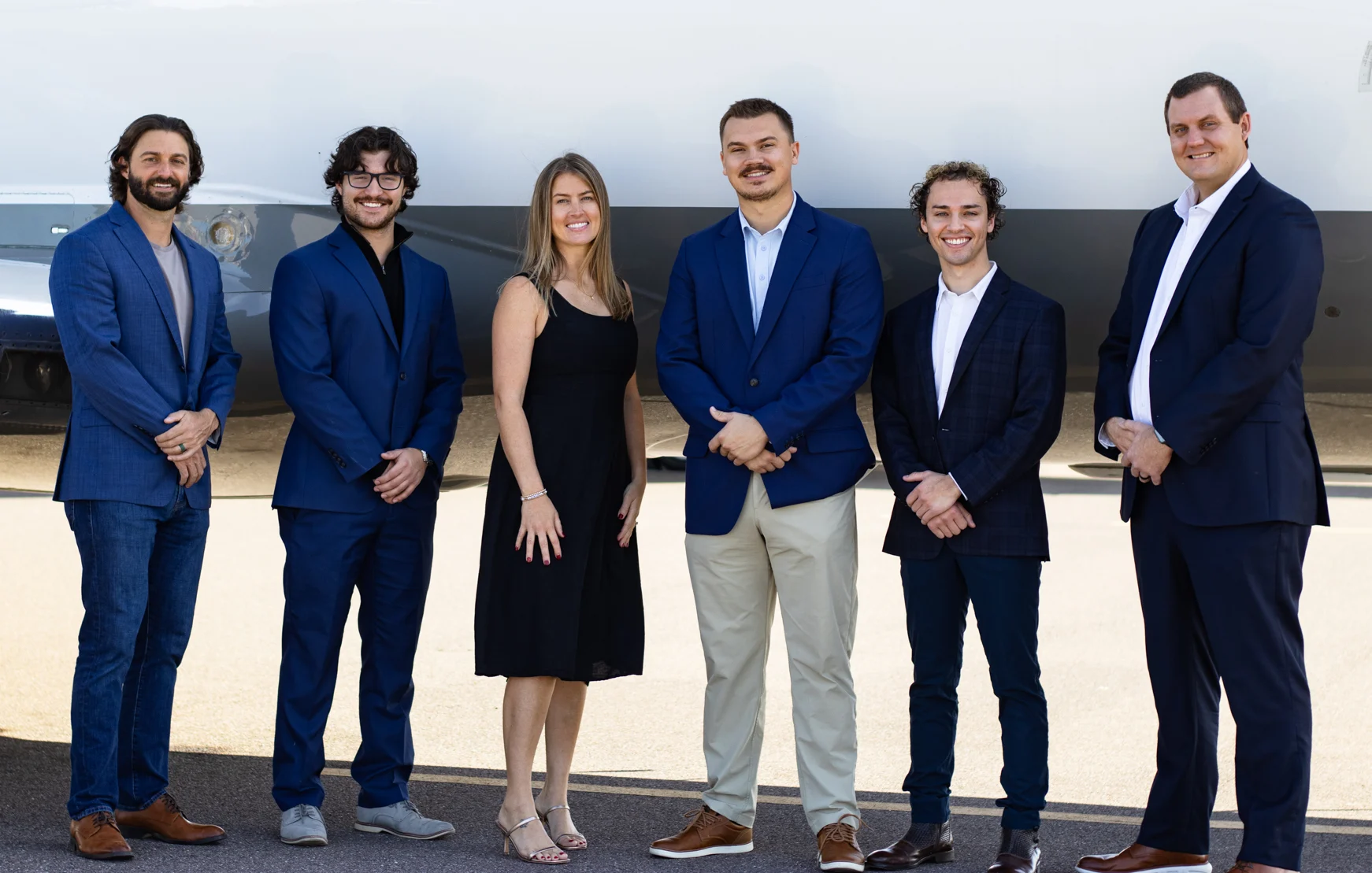 The AvSky Charters Leadership Team
Charter With The Best
AvSky provides comprehensive trip management on every flight, with rigorous operator vetting, route-appropriate aircraft selection, and coordinated ground transport upon request. The result is a seamless, fully white-glove charter experience from first call to wheels down.
Need catering, resort coordination or private security? Our charter advisors have the extensive experience and global partnerships necessary to provide a truly bespoke travel experience.
The Smartest Route into Rum Cay
New Port Nelson operates on a single asphalt runway, 09/27, measuring 4,469 by 100 feet and approved strictly for daylight visual flying. Because the airfield lacks international port-of-entry status and carries no fuel farm, international flights cannot land directly on the island. Every charter operates as a two-stage flight: landing at an authorized gateway to clear Bahamian customs and refuel, then continuing on a short domestic flight across to the strip.
Travelers choose between two distinct gateways. San Salvador sits just 29 nautical miles away, offering an 8,000-foot runway and Jet A-1 fuel, making it the fastest and most economical connection. Alternatively, Nassau lies 165 nautical miles northwest, providing 24-hour handling across dual runways with both Jet A-1 and Avgas. For the final crossing, operators select runway-compatible turboprops, carrying all required round-trip fuel on board since Rum Cay sells none.
Aircraft that can land at Rum Cay/New Port Nelson Airport
4,469 ft asphalt, daylight VFR — no fuel, not a port of entry.
Destination Highlights
Rum Cay sits directly on the edge of the continental shelf, where dramatic marine topography plunges into deep blue water. At the Grand Canyon, vibrant coral walls drop past 60 feet into swim-through tunnels and steep chutes. Off Sumner Point lies the protected underwater museum of HMS Conqueror, a 101-gun Royal Navy steam corvette wrecked in 1861 in 30 feet of crystal-clear water. Above the surface, the island offers pristine bonefish flats, winter surf along north-coast beaches, and ancient Lucayan petroglyphs preserved inside Hartford Cave.
Getting Around
With fewer than 100 residents clustered in Port Nelson, Rum Cay offers pure, uninterrupted seclusion. There are no commercial resorts, banks, or gear shops, meaning visitors arrive completely self-contained. The Bahamian dollar maintains parity with the U.S. dollar, and traveling with cash is essential. Island transport relies primarily on local boats to reach remote coves and offshore reefs, while historic plantation ruins and quiet trails reward exploration on foot. Because medical facilities are minimal this far out, arranging private medical evacuation coverage provides sensible peace of mind.
Aircraft Comfort and Options
Cargo volume dictates cabin selection for Rum Cay charters. Scuba groups travel with heavy regulators, wetsuits, and underwater camera housings, while anglers pack specialized rod tubes and tackle. Because Port Nelson has no on-site fuel farm, the connecting aircraft must carry full round-trip fuel reserves, requiring operators to balance baggage weight with fuel capacity. Departing from South Florida, chartering a single high-performance turboprop for the entire itinerary often provides greater efficiency and value than booking a mainline jet to the gateway paired with a separate island shuttle.
The Dive-and-Fish Calendar and Storm Months
While Rum Cay welcomes visitors year-round, calmer seas between December and April offer optimal water visibility for deep-wall diving along the continental shelf. This cooler winter window also pushes bonefish onto shallow sand flats. As coastal waters warm in spring and summer, tarpon arrive in the shallows and offshore anglers target blue marlin under local catch-and-release rules. Flats fishing requires valid permits and guide arrangements. The Atlantic hurricane season spans June through November, making flexible scheduling and a built-in weather reserve day essential for summer travel to this exposed Out Island.
Questions About Flying Private to Rum Cay
International flights cannot land directly on Rum Cay because New Port Nelson lacks customs facilities and has no on-site fuel farm. Every flight arrives as a two-stage journey: touching down at an authorized Bahamian gateway to clear customs and refuel before flying the final domestic leg to the island. Staging through nearby San Salvador allows you to clear and be diving the wall the same day. Limited scheduled flights from Nassau also operate a couple of days a week, and AvSky coordinates your entire route from your home airport.
Selecting your gateway depends on your priorities. San Salvador sits just 29 nautical miles from Rum Cay, featuring an 8,000-foot runway (code 4E) and Jet A-1 fuel, making it the closest, fastest, and most economical choice. Nassau lies 165 nautical miles northwest, operating 24 hours daily with Category 8 rescue capabilities, dual runways, Avgas, and comprehensive FBO handling. Because neither gateway offers U.S. general aviation preclearance, AvSky will model both options so you can choose the best fit.
Customs clearance takes place at your inbound gateway—San Salvador, Nassau, or George Town in the Exumas—before you fly the domestic sector down to Port Nelson. Travelers must present passports with adequate validity, confirmed lodging, and onward travel documentation under current Bahamas Immigration regulations. Your flight operator files the commercial charter declaration days in advance and submits electronic APIS manifests to your receiving U.S. airport for the flight home.
Because Port Nelson carries neither Jet-A nor Avgas, fuel planning is solved at the gateway. Your aircraft fills its tanks in San Salvador or Nassau with enough fuel reserves to cover the island crossing, on-ground stay, and return flight. Fuel costs are built directly into your all-in quote. Prior to dispatch, the operator calculates exact payload, reserve requirements, and warm-afternoon takeoff performance for the unpaved strip.
High-performance turboprops are the ideal aircraft for New Port Nelson’s 4,469-by-100-foot asphalt runway (09/27), which operates under sunrise-to-sunset visual flight rules. Beyond physical length, aircraft acceptance depends on published declared distances, pavement strength, obstacle clearances, payload, and warm-afternoon temperatures. Because the airfield has no on-site fuel and operates as rescue and fire Category 0, operators run strict performance calculations before dispatch, with most groups choosing a brief hop from the gateway.
Sitting right on the edge of the continental shelf, Rum Cay features exceptional underwater topography. Divers explore the Grand Canyon, where vibrant coral walls drop past 60 feet into chutes and swim-through tunnels. Off Sumner Point lies the 1861 wreck of the HMS Conqueror, a 101-gun Royal Navy ship preserved as an underwater museum in 30 feet of water. Nearby Conception Island National Park offers pristine, uninhabited diving accessible by boat, with dive trips coordinated via local day charters or liveaboards.
Rum Cay offers world-class flats and deep-sea fishing with minimal fishing pressure. Bonefish patrol shallow sand flats in cooler months, tarpon arrive as coastal waters warm, and offshore crews target blue marlin, tuna, and wahoo off South East Point in early summer. Bahamian regulations require licenses for anglers over 12, certified local guides for two or more anglers fishing from a boat, and catch-and-release for non-tournament billfish. Because local guide infrastructure is limited, we recommend bringing your own tackle and booking guides early.
Pricing reflects flight hours, aircraft category, and gateway selection. Departing from South Florida, a single turboprop flying the entire route is often the most cost-effective choice, while larger groups from farther origins book a private jet to the gateway paired with an island shuttle. Staging through San Salvador models several thousand dollars lower than Nassau due to the shorter crossing. Quotes also include Bahamian departure taxes, airport security fees, per-aircraft customs processing, and U.S. return international inspection charges.
Occasionally, yes. Empty-leg repositioning flights appear when an aircraft returns from a one-way drop-off, offering significant discounts. However, because these flights operate on another traveler's schedule and cancel if their plans change, empty legs offer zero flexibility. If your trip is anchored to a fixed guesthouse or liveaboard reservation, booking a confirmed round-trip charter is the safest choice while AvSky watches the corridor for opportunities.
Because there are no dive shops or tackle counters on Rum Cay, traveling with your own equipment is essential. Masks, wetsuits, camera housings, and rod tubes travel easily. Pressurized scuba cylinders are classified as dangerous goods and must travel completely depressurized with valves open for inspection, while dive lights and high-capacity batteries carry specific transport conditions. Share your gear list with AvSky before booking so we can select an aircraft hold that accommodates all equipment comfortably.
Rum Cay sits along the southeastern rim of the Bahamas, well east of Cuba, allowing standard U.S. flight paths to route entirely clear of Cuban airspace. From South Florida, flight tracks run roughly 160 nautical miles to Nassau followed by 165 nautical miles down to the island, with direct routings through San Salvador cutting that distance significantly. Your flight crew confirms the exact filed route, weather tracks, and airspace permissions prior to takeoff.
Visitors should expect absolute solitude rather than resort amenities. Island infrastructure is delightfully minimal, consisting of private cottages, local guesthouses, and a few dining spots in Port Nelson where cash is standard and advance notice is appreciated. Many travelers bring their own provisions, while others base on neighboring Long Island and cross by boat. Beyond wall diving, highlights include ancient Lucayan petroglyphs at Hartford Cave and miles of deserted beaches.
Private Jet Charters to Rum Cay
Sample round-trip estimates to Rum Cay, Bahamas
You can charter to Rum Cay from any airport worldwide. These sample rates cover a two-night weekend itinerary from Friday to Sunday. Final quotes adjust for your group's cabin size, direct Florida turboprop options versus jet connections, and chosen gateway routing through San Salvador or 24-hour Nassau.
Get Instant EstimateNavigating Gateway Flights to Port Nelson
Perched on the continental shelf in the southeastern Bahamas, Rum Cay is an untouched sanctuary of coral reefs and secluded sand. Life centers on the quiet settlement of Port Nelson, surrounded by exceptional marine topography. Divers explore the Grand Canyon’s 60-foot coral drop-offs, swim-through tunnels, and chutes, while snorkelers visit the 1861 wreck of the 101-gun HMS Conqueror off Sumner Point, alongside pristine, uncrowded bonefish flats.
Because Port Nelson has no fuel farm and is not an international port of entry, inbound flights clear Bahamian customs and refuel at an approved gateway before continuing to the island. Nearby San Salvador offers an 8,000-foot runway with Jet A-1 fuel and an effortless 20-minute connection, while Nassau provides 24-hour full-service FBO handling on dual runways. Flight crews carry all required return fuel on board, ensuring complete operational independence during your stay.
How to Fly Private to Rum Cay
Getting to an island with fewer than a hundred residents means solving the logistics before takeoff. AvSky pairs your flight through San Salvador for the quick 20-minute crossing or Nassau for 24-hour handling, bringing your return fuel along and timing your landing well before sunset. Backed by a network of over 12,000 aircraft, we turn a complex Out Island flight into a seamless journey. Send over your travel window and let our team handle the details.
Request An All-In QuoteThe Smartest Route into Rum Cay
New Port Nelson operates on a single asphalt runway, 09/27, measuring 4,469 by 100 feet and approved strictly for daylight visual flying. Because the airfield lacks international port-of-entry status and carries no fuel farm, international flights cannot land directly on the island. Every charter operates as a two-stage flight: landing at an authorized gateway to clear Bahamian customs and refuel, then continuing on a short domestic flight across to the strip.
Travelers choose between two distinct gateways. San Salvador sits just 29 nautical miles away, offering an 8,000-foot runway and Jet A-1 fuel, making it the fastest and most economical connection. Alternatively, Nassau lies 165 nautical miles northwest, providing 24-hour handling across dual runways with both Jet A-1 and Avgas. For the final crossing, operators select runway-compatible turboprops, carrying all required round-trip fuel on board since Rum Cay sells none.
Aircraft that can fly to & from Rum Cay/New Port Nelson Airport
4,469 ft asphalt, daylight VFR — no fuel, not a port of entry.
Rum Cay, Bahamas details.
Destination Highlights
Rum Cay sits directly on the edge of the continental shelf, where dramatic marine topography plunges into deep blue water. At the Grand Canyon, vibrant coral walls drop past 60 feet into swim-through tunnels and steep chutes. Off Sumner Point lies the protected underwater museum of HMS Conqueror, a 101-gun Royal Navy steam corvette wrecked in 1861 in 30 feet of crystal-clear water. Above the surface, the island offers pristine bonefish flats, winter surf along north-coast beaches, and ancient Lucayan petroglyphs preserved inside Hartford Cave.
Getting Around
With fewer than 100 residents clustered in Port Nelson, Rum Cay offers pure, uninterrupted seclusion. There are no commercial resorts, banks, or gear shops, meaning visitors arrive completely self-contained. The Bahamian dollar maintains parity with the U.S. dollar, and traveling with cash is essential. Island transport relies primarily on local boats to reach remote coves and offshore reefs, while historic plantation ruins and quiet trails reward exploration on foot. Because medical facilities are minimal this far out, arranging private medical evacuation coverage provides sensible peace of mind.
Aircraft Comfort and Options
Cargo volume dictates cabin selection for Rum Cay charters. Scuba groups travel with heavy regulators, wetsuits, and underwater camera housings, while anglers pack specialized rod tubes and tackle. Because Port Nelson has no on-site fuel farm, the connecting aircraft must carry full round-trip fuel reserves, requiring operators to balance baggage weight with fuel capacity. Departing from South Florida, chartering a single high-performance turboprop for the entire itinerary often provides greater efficiency and value than booking a mainline jet to the gateway paired with a separate island shuttle.
The Dive-and-Fish Calendar and Storm Months
While Rum Cay welcomes visitors year-round, calmer seas between December and April offer optimal water visibility for deep-wall diving along the continental shelf. This cooler winter window also pushes bonefish onto shallow sand flats. As coastal waters warm in spring and summer, tarpon arrive in the shallows and offshore anglers target blue marlin under local catch-and-release rules. Flats fishing requires valid permits and guide arrangements. The Atlantic hurricane season spans June through November, making flexible scheduling and a built-in weather reserve day essential for summer travel to this exposed Out Island.
Four Charter Flight Realities on Rum Cay
Choose Your Gateway Between San Salvador and Nassau
Because Rum Cay requires a two-stage journey, selecting your gateway shapes the itinerary. San Salvador offers the shortest flight path and full Jet A-1 refueling, making it the faster and more economical choice. Nassau provides 24-hour full-service FBO handling for flexible late-night departures. AvSky quotes both options side by side.
Clear Customs and Refuel at the Gateway
Port Nelson has no customs desk and no on-site fuel farm. Every international flight must clear Bahamian customs and top off fuel at an authorized gateway before flying across to the island, carrying all return fuel reserves on board. AvSky coordinates this entire routing so your arrival is fully compliant and seamless.
Schedule Your Final Touchdown Before Sunset
Port Nelson’s unpaved runway operates strictly under daylight visual flight rules with no airfield lighting. To ensure a safe arrival, the final connecting flight must land well before sunset. Scheduling early gateway connections ensures you touch down in bright daylight, leaving the afternoon open for calm diving along the wall.
Arrive Fully Self-Contained with Your Own Gear
With no dive shops or tackle outfitters on the island, travelers must arrive fully self-contained with their own equipment, specialized batteries, and provisions. Share your complete gear manifest with AvSky in advance so your flight crew can approve dangerous goods, manage baggage weight limits, and clear agricultural protocols before takeoff.
Questions About Flying Private to Rum Cay
Why can't our flight from the States land at Rum Cay first?
International flights cannot land directly on Rum Cay because New Port Nelson lacks customs facilities and has no on-site fuel farm. Every flight arrives as a two-stage journey: touching down at an authorized Bahamian gateway to clear customs and refuel before flying the final domestic leg to the island. Staging through nearby San Salvador allows you to clear and be diving the wall the same day. Limited scheduled flights from Nassau also operate a couple of days a week, and AvSky coordinates your entire route from your home airport.
San Salvador or Nassau — which gateway should we use?
Selecting your gateway depends on your priorities. San Salvador sits just 29 nautical miles from Rum Cay, featuring an 8,000-foot runway (code 4E) and Jet A-1 fuel, making it the closest, fastest, and most economical choice. Nassau lies 165 nautical miles northwest, operating 24 hours daily with Category 8 rescue capabilities, dual runways, Avgas, and comprehensive FBO handling. Because neither gateway offers U.S. general aviation preclearance, AvSky will model both options so you can choose the best fit.
Where does the paperwork actually happen on a two-leg Rum Cay trip?
Customs clearance takes place at your inbound gateway—San Salvador, Nassau, or George Town in the Exumas—before you fly the domestic sector down to Port Nelson. Travelers must present passports with adequate validity, confirmed lodging, and onward travel documentation under current Bahamas Immigration regulations. Your flight operator files the commercial charter declaration days in advance and submits electronic APIS manifests to your receiving U.S. airport for the flight home.
What happens to the fuel plan when the island has no pump?
Because Port Nelson carries neither Jet-A nor Avgas, fuel planning is solved at the gateway. Your aircraft fills its tanks in San Salvador or Nassau with enough fuel reserves to cover the island crossing, on-ground stay, and return flight. Fuel costs are built directly into your all-in quote. Prior to dispatch, the operator calculates exact payload, reserve requirements, and warm-afternoon takeoff performance for the unpaved strip.
What decides whether an airplane is accepted at New Port Nelson?
High-performance turboprops are the ideal aircraft for New Port Nelson’s 4,469-by-100-foot asphalt runway (09/27), which operates under sunrise-to-sunset visual flight rules. Beyond physical length, aircraft acceptance depends on published declared distances, pavement strength, obstacle clearances, payload, and warm-afternoon temperatures. Because the airfield has no on-site fuel and operates as rescue and fire Category 0, operators run strict performance calculations before dispatch, with most groups choosing a brief hop from the gateway.
What will we actually see underwater at Rum Cay?
Sitting right on the edge of the continental shelf, Rum Cay features exceptional underwater topography. Divers explore the Grand Canyon, where vibrant coral walls drop past 60 feet into chutes and swim-through tunnels. Off Sumner Point lies the 1861 wreck of the HMS Conqueror, a 101-gun Royal Navy ship preserved as an underwater museum in 30 feet of water. Nearby Conception Island National Park offers pristine, uninhabited diving accessible by boat, with dive trips coordinated via local day charters or liveaboards.
What's the fishing like off Rum Cay, on the flats and offshore?
Rum Cay offers world-class flats and deep-sea fishing with minimal fishing pressure. Bonefish patrol shallow sand flats in cooler months, tarpon arrive as coastal waters warm, and offshore crews target blue marlin, tuna, and wahoo off South East Point in early summer. Bahamian regulations require licenses for anglers over 12, certified local guides for two or more anglers fishing from a boat, and catch-and-release for non-tournament billfish. Because local guide infrastructure is limited, we recommend bringing your own tackle and booking guides early.
What are we actually paying for on a two-leg trip to Rum Cay?
Pricing reflects flight hours, aircraft category, and gateway selection. Departing from South Florida, a single turboprop flying the entire route is often the most cost-effective choice, while larger groups from farther origins book a private jet to the gateway paired with an island shuttle. Staging through San Salvador models several thousand dollars lower than Nassau due to the shorter crossing. Quotes also include Bahamian departure taxes, airport security fees, per-aircraft customs processing, and U.S. return international inspection charges.
Can we take somebody else's return flight from Rum Cay at a discount?
Occasionally, yes. Empty-leg repositioning flights appear when an aircraft returns from a one-way drop-off, offering significant discounts. However, because these flights operate on another traveler's schedule and cancel if their plans change, empty legs offer zero flexibility. If your trip is anchored to a fixed guesthouse or liveaboard reservation, booking a confirmed round-trip charter is the safest choice while AvSky watches the corridor for opportunities.
Scuba cylinders, camera housings, rod tubes — what flies to Rum Cay?
Because there are no dive shops or tackle counters on Rum Cay, traveling with your own equipment is essential. Masks, wetsuits, camera housings, and rod tubes travel easily. Pressurized scuba cylinders are classified as dangerous goods and must travel completely depressurized with valves open for inspection, while dive lights and high-capacity batteries carry specific transport conditions. Share your gear list with AvSky before booking so we can select an aircraft hold that accommodates all equipment comfortably.
Where exactly does Rum Cay sit, and does the track go near Cuba?
Rum Cay sits along the southeastern rim of the Bahamas, well east of Cuba, allowing standard U.S. flight paths to route entirely clear of Cuban airspace. From South Florida, flight tracks run roughly 160 nautical miles to Nassau followed by 165 nautical miles down to the island, with direct routings through San Salvador cutting that distance significantly. Your flight crew confirms the exact filed route, weather tracks, and airspace permissions prior to takeoff.
What should we expect from Rum Cay once we're on the ground?
Visitors should expect absolute solitude rather than resort amenities. Island infrastructure is delightfully minimal, consisting of private cottages, local guesthouses, and a few dining spots in Port Nelson where cash is standard and advance notice is appreciated. Many travelers bring their own provisions, while others base on neighboring Long Island and cross by boat. Beyond wall diving, highlights include ancient Lucayan petroglyphs at Hartford Cave and miles of deserted beaches.
Ready when you are.
Charter flights from one of the world leaders in private aviation. Florida-based and on-call 24/7.