Private Jet Charters to San Salvador
AvSky delivers seamless nonstop access to Cockburn Town from South Florida and across the US. Step off the aircraft directly into the Bahamas' premier wall-diving sanctuary.
Nonstop service avoiding Nassau hubsPlan Your Direct Route to San Salvador
Perched 200 miles east of Nassau on an isolated Atlantic platform, San Salvador is one of the Bahamas' quietest outposts. Divers travel here for over 50 steep lee-side reef walls that plunge into deep ocean within sight of shore, alongside seasonal hammerhead encounters. Anchored by Club Med Columbus Isle and historic Columbus landfall monuments, the island pairs pristine offshore waters with unhurried seclusion.
Unlike most remote Family Islands constrained by short airstrips and absent fueling, San Salvador features an 8,000-foot asphalt runway with designated port-of-entry clearance and listed Jet A-1 fuel. This infrastructure enables midsize, super-midsize, and heavy aircraft to fly directly from the US mainland without routing through Nassau. Before departure, AvSky secures Bahamas charter authorizations, confirms live fuel and ramp handling arrangements, and schedules flight timing within the airport's published sunrise-to-sunset daylight hours.
Bespoke Charter Solutions Confirmed to the Last Detail
Chartering into San Salvador requires precision planning and the right equipment. AvSky sources across a vetted global fleet of 12,000 aircraft to place the exact cabin size, range, and hold capacity your group requires. From securing coveted ramp parking to coordinating fuel releases and flight clearances, our team oversees every operational prerequisite, delivering seamless execution on your terms.
Sample round-trip estimates to San Salvador, Bahamas
These sample routes reflect our most requested departure cities into San Salvador (ZSA), though flights can originate from any airport. Figures represent modeled round-trip estimates rather than binding quotes. Final pricing adjusts based on selected cabin class, passenger count, positioning distances, fuel, and confirmed date availability. AvSky provides custom quotes tailored to your exact itinerary.
Price your specific trip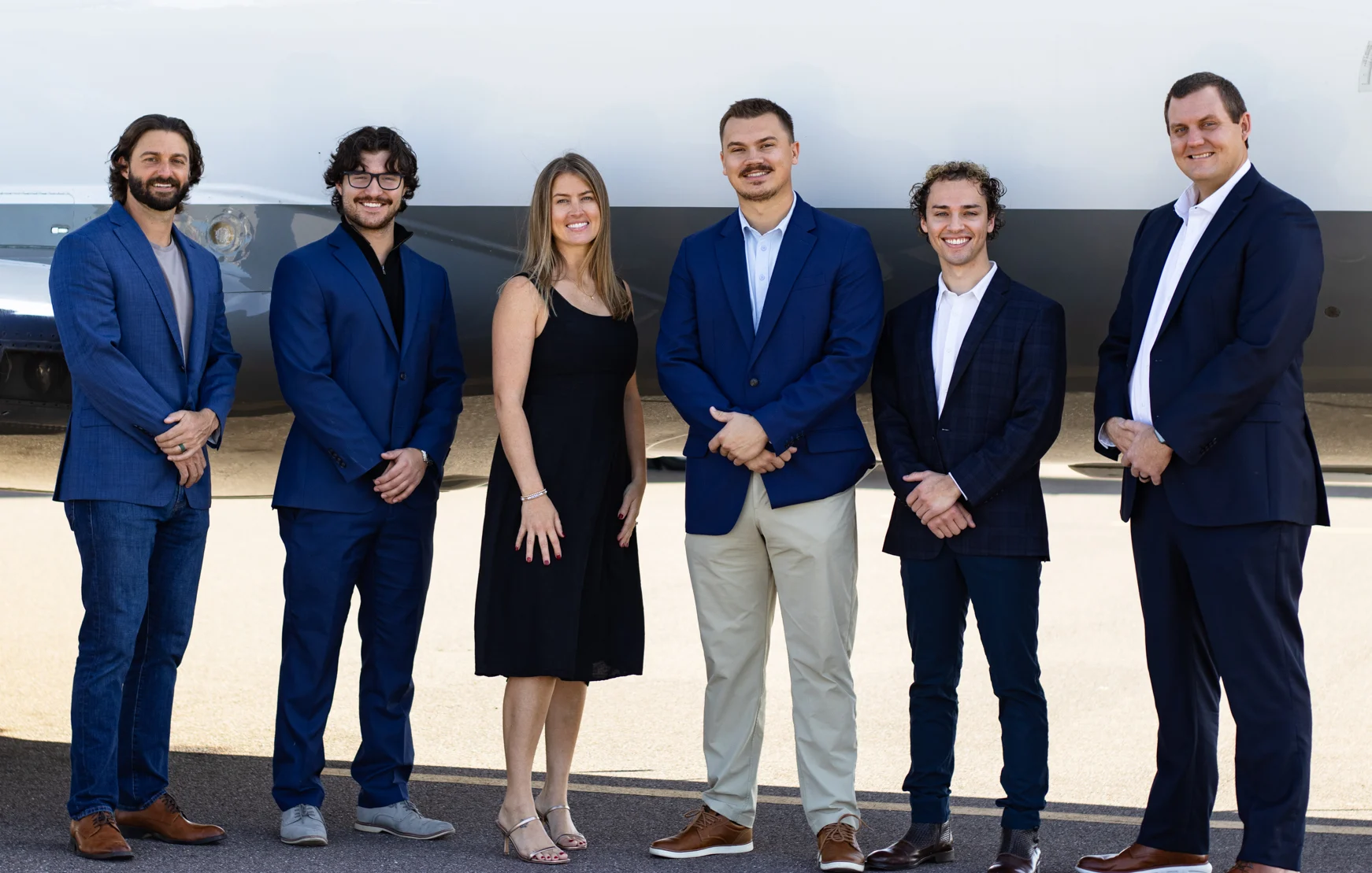 The AvSky Charters Leadership Team
Charter With The Best
AvSky provides comprehensive trip management on every flight, with rigorous operator vetting, route-appropriate aircraft selection, and coordinated ground transport upon request. The result is a seamless, fully white-glove charter experience from first call to wheels down.
Need catering, resort coordination or private security? Our charter advisors have the extensive experience and global partnerships necessary to provide a truly bespoke travel experience.
Inside San Salvador International Airport
San Salvador International Airport (ZSA/MYSM) anchors the island with an 8,000-foot by 150-foot asphalt runway, an aerodrome reference code of 4E, and Category 8 rescue and firefighting coverage. These dimensions accommodate large business aircraft that shorter Family Island strips cannot accept. Before departure, operating carriers evaluate current declared distances, pavement strength ratings, ambient temperatures, and tail-specific landing weight to ensure the chosen aircraft operates comfortably within all safety margins.
As an official port of entry, San Salvador processes customs and immigration on site during published visual daylight hours from sunrise to sunset. The aerodrome register lists Jet A-1 fuel, and flight crews confirm active supplier availability, pricing, and fuel releases in writing prior to departure. If adverse weather or night operations require an alternate, Nassau's 24-hour international hub sits 170 nautical miles west, providing full FBO handling, round-the-clock lighting, and maintenance support.
Aircraft that can land at San Salvador International Airport
8,000 ft asphalt — port of entry, Jet A-1 listed, published hours sunrise to sunset.
Reef Drop-offs and Island Heritage
Underwater topography defines San Salvador's appeal. Positioned on an isolated oceanic platform, the island features over 50 documented dive sites along sheltered lee-side walls that drop steeply from 40 feet into open ocean, with seasonal hammerhead sightings drawing enthusiasts worldwide. Shoreline attractions offer quiet historic appeal, including the kerosene-lit Dixon Hill Lighthouse—one of the Bahamas' few remaining hand-wound beacons—and the Long Bay monument marking the traditional 1492 landfall. Riding Rock serves as the historic center for dedicated scuba excursions, while the oceanfront villas of Club Med Columbus Isle along Bonefish Bay provide the primary resort stay.
Ground Transit and Local Currency
Ground transportation on San Salvador is uncomplicated, guided by a single coastal loop road connecting sparse settlements with minimal traffic. Cockburn Town and Club Med sit minutes from the terminal, with resort shuttles and private transfers meeting incoming flights upon request, making rental cars unnecessary. Driving follows Bahamian tradition on the left side of the road. Currency exchange is redundant, as the Bahamian dollar trades at one-to-one parity with the US dollar and American cash is accepted everywhere. Beyond the main resort, lodging remains small-scale and dive-focused, anchored by Riding Rock, local guesthouses, and the Gerace Research Centre at Grahams Harbour.
Cabin Selection and Luggage Capacity
Specialized sporting cargo influences aircraft selection as significantly as passenger head count. Underwater photography gear, heavy dive bags, and resort provisions require generous baggage volume. Over short Florida departures, turboprops easily accommodate standard luggage and clock flight times comparable to light jets, providing an economical entry point. For parties traveling from the Northeast, or groups carrying multiple sets of scuba gear, midsize and super-midsize cabins provide essential stand-up cabin comfort and expansive external hold capacity. Sharing your complete passenger manifest and equipment list allows AvSky to match an aircraft built specifically for your payload.
Seasonal Conditions and Island Lore
Calendar timing shapes the on-island experience. Peak diving conditions align with the dry winter and spring months from December through April, coinciding with prime visibility and seasonal hammerhead encounters. In October, the island marks its contested heritage during Discovery Day celebrations, commemorating the Lucayan landfall scholars still actively debate against rival sites like Samana Cay. Because San Salvador sits exposed on the outer Atlantic edge during the June-to-November tropical season, private flight plans benefit from built-in schedule flexibility. For academic research and environmental study, the Gerace Research Centre maintains year-round facilities supporting visiting field scientists.
Expand Your Out Island Itinerary
Cat Island TBI
The quiet sister island just west, known for deserted pink-sand beaches, Mount Alvernia's hermitage, and deep out-island seclusion.
Long Island LGI
World-record freediving depths at Dean's Blue Hole, dramatic Atlantic bluffs, and the tranquil leeward beaches of Cape Santa Maria.
Nassau NAS
The Bahamas' 24-hour international hub, offering heavy-jet runway capacity, full-service FBO handling, and round-the-clock global connections.
Eleuthera & Harbour Island ELH
Iconic pink-sand beaches and historic Dunmore Town, featuring refined boutique resorts, vibrant harbor dining, and private marina slips.
San Salvador Charter Flight FAQs
Yes. San Salvador International (ZSA/MYSM) features an 8,000-foot asphalt runway with Category 8 rescue and firefighting coverage, allowing aircraft from turboprops to heavy business jets to arrive nonstop from the US mainland. Operating carriers verify tail-specific performance against current declared distances, runway conditions, and landing weight before confirming the flight. AvSky coordinates with the operator to ensure your chosen aircraft meets all airfield performance criteria.
Yes. San Salvador is an official international port of entry, allowing passengers to clear customs and immigration immediately upon landing. Flight crews file required declarations in advance through the Bahamian Click2Clear system and submit electronic passenger manifests to US and local authorities. While inbound entry happens on the island, private flights returning to the United States complete US customs inspection at their initial mainland point of arrival.
Jet A-1 fuel is officially registered at the airport, setting San Salvador apart from neighboring Out Islands. However, because supply levels and attended pump hours vary on remote airfields, availability is never assumed. Prior to departure, AvSky and your flight crew confirm on-field supplier staffing and secure a written fuel release. For flights originating in Florida, aircraft can also tanker round-trip fuel as a built-in operational safeguard.
San Salvador sits approximately 333 nautical miles east-southeast of South Florida, 781 nautical miles from Atlanta, and 1,008 nautical miles from the New York area. Standard flight paths from these US departure points route well northeast of Cuba across open Atlantic waters, avoiding Cuban airspace entirely. Operating carriers confirm filed flight paths, weather alternates, and applicable international airspace permits for each flight.
San Salvador International operates under visual conditions between sunrise and sunset. Arriving after dark requires a filed instrument flight plan, review of current airfield lighting and NOTAMs, and prior written authorization from Bahamian aviation authorities. AvSky structures flight schedules around daylight hours by default to ensure smooth touchdowns and seamless ground transfers, coordinating regulatory night clearances in advance when evening arrivals are unavoidable.
Because San Salvador rests on an isolated submarine platform, sheer reef walls sit unusually close to the shoreline. Over 50 protected dive sites line the sheltered western coast, beginning around 40 feet before plunging into deep ocean trenches famous for seasonal hammerhead sightings. Diving conditions remain favorable year-round, with peak visibility from December through April. Guided boat dives and equipment rentals are booked as separate add-ons through local operators and Club Med.
San Salvador is the historically accepted site of the 1492 landfall—the Lucayan island of Guanahani—celebrated by coastal monuments at Long Bay and annual Discovery Day events. While maritime historians continue to debate alternative landfall theories such as Samana Cay, the island embraces this heritage. Visiting the landfall memorials and the historic Dixon Hill Lighthouse offers an engaging cultural complement to offshore diving excursions.
Cabin class and aircraft positioning represent the largest cost variables, spanning efficient turboprops from Florida to super-midsize and heavy jets from the Northeast. Pricing also accounts for layover duration, local ramp handling, and confirmed Jet-A fuel availability. Fixed statutory charges apply to every flight, including Bahamian customs processing, passenger departure taxes, civil aviation levies, and US customs return inspection fees. Because the Bahamian dollar matches the US dollar at par, AvSky provides fully transparent quotes itemizing all aircraft and government expenses.
Empty legs occur when an aircraft repositions without passengers following a one-way booking, offering discounted rates along common corridors like South Florida. Because departure dates, aircraft models, and flight times are fixed to the primary itinerary, availability adjusts if the initial charter changes. Travelers with flexible calendars gain substantial value, while dedicated round-trip charters provide guaranteed scheduling for fixed resort reservations.
Cargo volume typically dictates aircraft size more than gross weight. Scuba expeditions involve bulky equipment, including wetsuits, regulators, camera housings, and personal provisions. Turboprops and light jets easily accommodate gear for two divers on short Florida crossings, while larger traveling groups require midsize or super-midsize cabins with dedicated external baggage bays. Sharing your equipment list in advance ensures AvSky matches an aircraft with sufficient hold dimensions.
Several Out Islands sit within a brief flight. Cat Island's New Bight field lies roughly 20 minutes west, Long Island's Deadman's Cay is 25 minutes away, and North Eleuthera and Nassau are approximately 45 minutes by air. Because San Salvador's 8,000-foot runway accommodates all business aircraft classes, you can retain the same charter aircraft across multiple stops or position into smaller fields seamlessly. AvSky coordinates inter-island routing, local handling, and passenger manifests on a unified booking.
San Salvador operates year-round, with private aviation offering complete scheduling autonomy. Dry, mild weather from December through April marks the peak diving season, noted for clear visibility and hammerhead migrations. Between June and November, tropical weather patterns occasionally influence the outer Atlantic, making built-in schedule flexibility advisable for late-summer travel. AvSky monitors regional weather developments continuously, proactively adjusting departure timing when convective systems appear.
Private Jet Charters to San Salvador
Sample round-trip estimates to San Salvador, Bahamas
These sample routes reflect our most requested departure cities into San Salvador (ZSA), though flights can originate from any airport. Figures represent modeled round-trip estimates rather than binding quotes. Final pricing adjusts based on selected cabin class, passenger count, positioning distances, fuel, and confirmed date availability. AvSky provides custom quotes tailored to your exact itinerary.
Get Instant EstimatePlan Your Direct Route to San Salvador
Perched 200 miles east of Nassau on an isolated Atlantic platform, San Salvador is one of the Bahamas' quietest outposts. Divers travel here for over 50 steep lee-side reef walls that plunge into deep ocean within sight of shore, alongside seasonal hammerhead encounters. Anchored by Club Med Columbus Isle and historic Columbus landfall monuments, the island pairs pristine offshore waters with unhurried seclusion.
Unlike most remote Family Islands constrained by short airstrips and absent fueling, San Salvador features an 8,000-foot asphalt runway with designated port-of-entry clearance and listed Jet A-1 fuel. This infrastructure enables midsize, super-midsize, and heavy aircraft to fly directly from the US mainland without routing through Nassau. Before departure, AvSky secures Bahamas charter authorizations, confirms live fuel and ramp handling arrangements, and schedules flight timing within the airport's published sunrise-to-sunset daylight hours.
Bespoke Charter Solutions Confirmed to the Last Detail
Chartering into San Salvador requires precision planning and the right equipment. AvSky sources across a vetted global fleet of 12,000 aircraft to place the exact cabin size, range, and hold capacity your group requires. From securing coveted ramp parking to coordinating fuel releases and flight clearances, our team oversees every operational prerequisite, delivering seamless execution on your terms.
Request An All-In QuoteInside San Salvador International Airport
San Salvador International Airport (ZSA/MYSM) anchors the island with an 8,000-foot by 150-foot asphalt runway, an aerodrome reference code of 4E, and Category 8 rescue and firefighting coverage. These dimensions accommodate large business aircraft that shorter Family Island strips cannot accept. Before departure, operating carriers evaluate current declared distances, pavement strength ratings, ambient temperatures, and tail-specific landing weight to ensure the chosen aircraft operates comfortably within all safety margins.
As an official port of entry, San Salvador processes customs and immigration on site during published visual daylight hours from sunrise to sunset. The aerodrome register lists Jet A-1 fuel, and flight crews confirm active supplier availability, pricing, and fuel releases in writing prior to departure. If adverse weather or night operations require an alternate, Nassau's 24-hour international hub sits 170 nautical miles west, providing full FBO handling, round-the-clock lighting, and maintenance support.
Aircraft that can fly to & from San Salvador International Airport
8,000 ft asphalt — port of entry, Jet A-1 listed, published hours sunrise to sunset.
San Salvador, Bahamas details.
Reef Drop-offs and Island Heritage
Underwater topography defines San Salvador's appeal. Positioned on an isolated oceanic platform, the island features over 50 documented dive sites along sheltered lee-side walls that drop steeply from 40 feet into open ocean, with seasonal hammerhead sightings drawing enthusiasts worldwide. Shoreline attractions offer quiet historic appeal, including the kerosene-lit Dixon Hill Lighthouse—one of the Bahamas' few remaining hand-wound beacons—and the Long Bay monument marking the traditional 1492 landfall. Riding Rock serves as the historic center for dedicated scuba excursions, while the oceanfront villas of Club Med Columbus Isle along Bonefish Bay provide the primary resort stay.
Ground Transit and Local Currency
Ground transportation on San Salvador is uncomplicated, guided by a single coastal loop road connecting sparse settlements with minimal traffic. Cockburn Town and Club Med sit minutes from the terminal, with resort shuttles and private transfers meeting incoming flights upon request, making rental cars unnecessary. Driving follows Bahamian tradition on the left side of the road. Currency exchange is redundant, as the Bahamian dollar trades at one-to-one parity with the US dollar and American cash is accepted everywhere. Beyond the main resort, lodging remains small-scale and dive-focused, anchored by Riding Rock, local guesthouses, and the Gerace Research Centre at Grahams Harbour.
Cabin Selection and Luggage Capacity
Specialized sporting cargo influences aircraft selection as significantly as passenger head count. Underwater photography gear, heavy dive bags, and resort provisions require generous baggage volume. Over short Florida departures, turboprops easily accommodate standard luggage and clock flight times comparable to light jets, providing an economical entry point. For parties traveling from the Northeast, or groups carrying multiple sets of scuba gear, midsize and super-midsize cabins provide essential stand-up cabin comfort and expansive external hold capacity. Sharing your complete passenger manifest and equipment list allows AvSky to match an aircraft built specifically for your payload.
Seasonal Conditions and Island Lore
Calendar timing shapes the on-island experience. Peak diving conditions align with the dry winter and spring months from December through April, coinciding with prime visibility and seasonal hammerhead encounters. In October, the island marks its contested heritage during Discovery Day celebrations, commemorating the Lucayan landfall scholars still actively debate against rival sites like Samana Cay. Because San Salvador sits exposed on the outer Atlantic edge during the June-to-November tropical season, private flight plans benefit from built-in schedule flexibility. For academic research and environmental study, the Gerace Research Centre maintains year-round facilities supporting visiting field scientists.
Four Essential Guidelines for San Salvador Charters
Bypass Connecting Hubs from the US
Unlike most remote Out Islands requiring intermediate stops, San Salvador's 8,000-foot runway and designated port-of-entry status support nonstop flights from the United States. Once your operator confirms aircraft runway performance, you touch down, clear Bahamian customs immediately on site, and transfer straight to your resort.
ecure Written Jet-A Fuel Releases in Advance
While Jet A-1 appears on the official government register, on-field supply and pump hours vary on remote airfields. AvSky verifies the active supplier, confirms pump attendance, and secures a written fuel release before departure, ensuring your aircraft is fully fueled without relying on assumed availability.
Schedule Departures for Visual Daylight Hours
San Salvador International operates under visual flight rules from sunrise to sunset. Night landings require specialized instrument flight plans, weather clearances, and formal regulatory approvals. Timing your arrival for midday ensures effortless visual touchdowns and smooth ground transfers before the airport closes at dusk.
Understand Local Lodging and Resort Amenities
San Salvador offers secluded tranquility rather than a commercial resort corridor. Accommodations center on Club Med Columbus Isle alongside specialized dive lodges such as Riding Rock. Scuba excursions operate as separate paid additions, and local activities focus on pristine reef diving and serene coastal relaxation.
Expand Your Out Island Itinerary
San Salvador Charter Flight FAQs
Can private flights land on San Salvador without stopping in Nassau?
Yes. San Salvador International (ZSA/MYSM) features an 8,000-foot asphalt runway with Category 8 rescue and firefighting coverage, allowing aircraft from turboprops to heavy business jets to arrive nonstop from the US mainland. Operating carriers verify tail-specific performance against current declared distances, runway conditions, and landing weight before confirming the flight. AvSky coordinates with the operator to ensure your chosen aircraft meets all airfield performance criteria.
Is international customs clearance completed on San Salvador?
Yes. San Salvador is an official international port of entry, allowing passengers to clear customs and immigration immediately upon landing. Flight crews file required declarations in advance through the Bahamian Click2Clear system and submit electronic passenger manifests to US and local authorities. While inbound entry happens on the island, private flights returning to the United States complete US customs inspection at their initial mainland point of arrival.
Is aviation fuel reliably available at San Salvador International?
Jet A-1 fuel is officially registered at the airport, setting San Salvador apart from neighboring Out Islands. However, because supply levels and attended pump hours vary on remote airfields, availability is never assumed. Prior to departure, AvSky and your flight crew confirm on-field supplier staffing and secure a written fuel release. For flights originating in Florida, aircraft can also tanker round-trip fuel as a built-in operational safeguard.
What are typical flight distances, and does routing involve Cuban airspace?
San Salvador sits approximately 333 nautical miles east-southeast of South Florida, 781 nautical miles from Atlanta, and 1,008 nautical miles from the New York area. Standard flight paths from these US departure points route well northeast of Cuba across open Atlantic waters, avoiding Cuban airspace entirely. Operating carriers confirm filed flight paths, weather alternates, and applicable international airspace permits for each flight.
Can private flights arrive after dark on San Salvador?
San Salvador International operates under visual conditions between sunrise and sunset. Arriving after dark requires a filed instrument flight plan, review of current airfield lighting and NOTAMs, and prior written authorization from Bahamian aviation authorities. AvSky structures flight schedules around daylight hours by default to ensure smooth touchdowns and seamless ground transfers, coordinating regulatory night clearances in advance when evening arrivals are unavoidable.
How accessible are the drop-off reef walls from the beach?
Because San Salvador rests on an isolated submarine platform, sheer reef walls sit unusually close to the shoreline. Over 50 protected dive sites line the sheltered western coast, beginning around 40 feet before plunging into deep ocean trenches famous for seasonal hammerhead sightings. Diving conditions remain favorable year-round, with peak visibility from December through April. Guided boat dives and equipment rentals are booked as separate add-ons through local operators and Club Med.
Is San Salvador the verified site of Columbus's first landfall?
San Salvador is the historically accepted site of the 1492 landfall—the Lucayan island of Guanahani—celebrated by coastal monuments at Long Bay and annual Discovery Day events. While maritime historians continue to debate alternative landfall theories such as Samana Cay, the island embraces this heritage. Visiting the landfall memorials and the historic Dixon Hill Lighthouse offers an engaging cultural complement to offshore diving excursions.
What operational factors determine San Salvador charter costs?
Cabin class and aircraft positioning represent the largest cost variables, spanning efficient turboprops from Florida to super-midsize and heavy jets from the Northeast. Pricing also accounts for layover duration, local ramp handling, and confirmed Jet-A fuel availability. Fixed statutory charges apply to every flight, including Bahamian customs processing, passenger departure taxes, civil aviation levies, and US customs return inspection fees. Because the Bahamian dollar matches the US dollar at par, AvSky provides fully transparent quotes itemizing all aircraft and government expenses.
How do empty-leg charter flights to San Salvador work?
Empty legs occur when an aircraft repositions without passengers following a one-way booking, offering discounted rates along common corridors like South Florida. Because departure dates, aircraft models, and flight times are fixed to the primary itinerary, availability adjusts if the initial charter changes. Travelers with flexible calendars gain substantial value, while dedicated round-trip charters provide guaranteed scheduling for fixed resort reservations.
Does baggage weight or cargo bulk determine cabin selection for dive gear?
Cargo volume typically dictates aircraft size more than gross weight. Scuba expeditions involve bulky equipment, including wetsuits, regulators, camera housings, and personal provisions. Turboprops and light jets easily accommodate gear for two divers on short Florida crossings, while larger traveling groups require midsize or super-midsize cabins with dedicated external baggage bays. Sharing your equipment list in advance ensures AvSky matches an aircraft with sufficient hold dimensions.
Which neighboring Out Islands can be combined on a single itinerary?
Several Out Islands sit within a brief flight. Cat Island's New Bight field lies roughly 20 minutes west, Long Island's Deadman's Cay is 25 minutes away, and North Eleuthera and Nassau are approximately 45 minutes by air. Because San Salvador's 8,000-foot runway accommodates all business aircraft classes, you can retain the same charter aircraft across multiple stops or position into smaller fields seamlessly. AvSky coordinates inter-island routing, local handling, and passenger manifests on a unified booking.
Does San Salvador have an operational off-season?
San Salvador operates year-round, with private aviation offering complete scheduling autonomy. Dry, mild weather from December through April marks the peak diving season, noted for clear visibility and hammerhead migrations. Between June and November, tropical weather patterns occasionally influence the outer Atlantic, making built-in schedule flexibility advisable for late-summer travel. AvSky monitors regional weather developments continuously, proactively adjusting departure timing when convective systems appear.
Ready when you are.
Charter flights from one of the world leaders in private aviation. Florida-based and on-call 24/7.