Charter Flights to Roatán
Arrive directly at the Bay Islands' jewel without mainland transfers, stepping from your cabin straight into boutique beachfront retreats.
Dedicated jet runway · Nonstop Gulf accessWhere the Mesoamerican Reef Meets the Beach
Situated thirty miles off the northern coast of Honduras, Roatán is the largest and most developed of the Bay Islands, world-renowned for its privileged position along the Mesoamerican Barrier Reef. At the island's western tip, West Bay Beach features calm, crystal-clear turquoise waters and soft white sand fronting boutique luxury resorts. Offshore, dramatic coral walls, submarine canyons and protected marine reserves offer extraordinary scuba diving and snorkeling.
Nonstop charter flights reach the Bay Islands in just over two hours from Texas and Florida gateways, completely avoiding mainland connections in San Pedro Sula. AvSky Charters coordinates private VIP terminal clearance with direct chauffeur service to West Bay luxury resorts.
Set Your Nonstop Wheels-Up Time for Roatán
Flying private directly to Roatán delivers you straight to the island without the hassle of commercial airline layovers in San Pedro Sula or mainland ferry crossings. AvSky Charters pairs your party with an aircraft engineered for fast nonstop performance, securing airport parking and coordinating VIP customs processing so your arrival is effortless.
Sample round-trip estimates to Roatán, Honduras
Modeled estimates reflect round trips from key hubs, though AvSky Charters flies from any private airfield you choose. Exact charter pricing reflects chosen aircraft category, passenger party size and seasonal ramp parking demand. Every quote is delivered as a firm, all-inclusive figure with all Honduran aviation fees included before departure.
Price your specific trip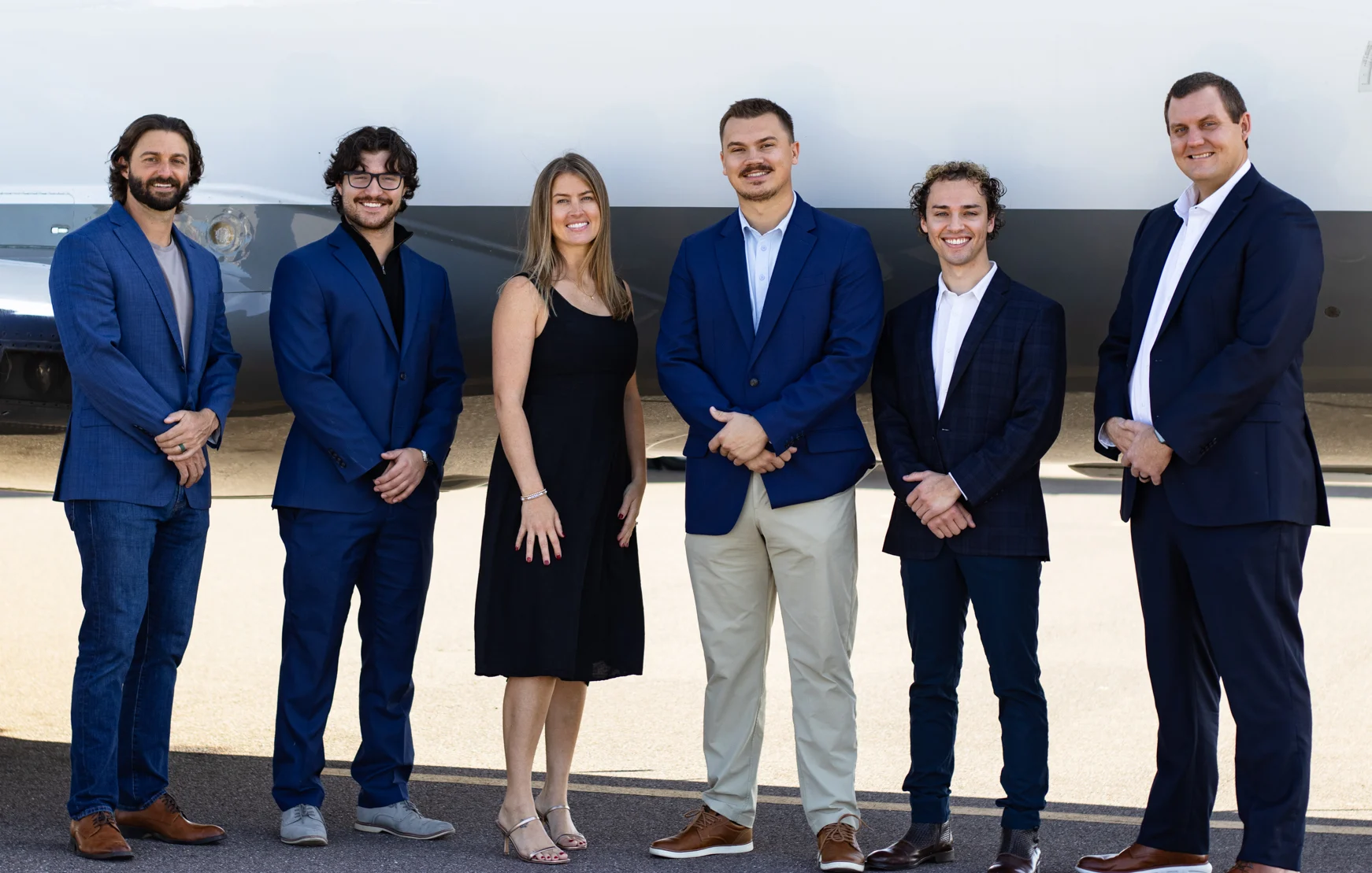 The AvSky Charters Leadership Team
Charter With The Best
AvSky provides comprehensive trip management on every flight, with rigorous operator vetting, route-appropriate aircraft selection, and coordinated ground transport upon request. The result is a seamless, fully white-glove charter experience from first call to wheels down.
Need catering, resort coordination or private security? Our charter advisors have the extensive experience and global partnerships necessary to provide a truly bespoke travel experience.
Juan Manuel Gálvez: Roatán's Direct Jet Gateway
Juan Manuel Gálvez International Airport (RTB/MHRO) occupies the south-central coast of Roatán, just outside Coxen Hole and twenty minutes from West Bay and West End. Its 6,854-foot paved asphalt runway easily accommodates high-performance turboprops, light jets and midsize corporate aircraft without runway length restrictions. The airfield operates daily with complete instrument approach systems.
Private aviation arrivals operate through dedicated executive handling facilities, providing quiet passenger lounges, private customs clearance and direct ramp-side vehicle pickups. The airfield maintains comprehensive Jet-A fueling and ground handling infrastructure. For regional diversions, Golosón International Airport in La Ceiba, 40 nautical miles south on the mainland, provides convenient alternate support.
Aircraft that can land at Juan Manuel Gálvez International Airport
About 6,854 ft of asphalt, full length usable both directions — aircraft fit is confirmed per trip by the operator.
West Bay Beach and Mesoamerican Barrier Reef
West Bay Beach serves as Roatán's premier coastal showcase, offering powder-soft white sand and exceptionally calm, sheltered turquoise water. Just fifty yards from shore, the Mesoamerican Barrier Reef rises to within feet of the surface, allowing snorkelers and scuba divers to step directly into thriving coral gardens teeming with parrotfish, sea turtles, spotted eagle rays and vibrant sea fans along dramatic drop-offs.
Island Roads, Topography and Chauffeur Options
Roatán features a central paved spine highway winding across rolling jungle ridges, connecting the airport to Coxen Hole, French Harbour, West End and West Bay in under thirty minutes. Driving proceeds on the right side of the road, and American dollars are accepted universally alongside the Honduran lempira. AvSky Charters coordinates private executive chauffeur service in luxury SUVs directly from the private terminal ramp.
Selecting Aircraft for Central American Corridors
Nonstop flights from Florida and the Gulf Coast to Roatán cover roughly 700 to 900 nautical miles, requiring just over two hours in the air. High-performance light and midsize jets like the Citation XLS+ or Phenom 300 operate into Roatán's 6,854-foot runway with complete safety reserves, while super-midsize jets like the Challenger 350 provide spacious stand-up cabins and non-stop transcontinental range from northern hubs.
Anthony's Key, French Harbour and Mangrove Canals
Beyond world-class scuba diving, Roatán offers captivating island adventures. At Anthony's Key, travelers participate in educational dolphin snorkel encounters and coastal boat tours. In French Harbour, private marinas accommodate visiting sportfishing yachts, while guided kayak excursions explore ancient mangrove tunnels once used by 17th-century buccaneers to conceal pirate vessels.
Barrier Reef Escapes and Coastal Sanctuaries
Belize BZE
The reef trio's third point — the Blue Hole, jungle-and-cave day trips, and cayes strung along the barrier.
Cozumel CZM
Fast drift walls on the same Mesoamerican reef, a short island off Mexico's Riviera Maya coast.
Cancún CUN
Cenote dives, Tulum's ruins, and the big-resort beaches of the Riviera Maya just inland.
Grand Cayman GCM
The Western Caribbean's wall-diving marquee — Seven Mile Beach and the Stingray City sandbar.
The Roatán Questions Clients Ask Most
Customs and immigration for Roatán are handled on arrival at Gálvez (RTB), where the border desks keep published hours of 6 a.m. to 9 p.m. US citizens need a passport with at least six months' validity and a blank page, evidence of onward travel, and no visa for a tourist stay of up to 90 days; travelers under 21 flying without both parents need notarized consent. Honduras also requires its online customs declaration from travelers, filed for the journey in and again on the way out. There's no US preclearance in Honduras, so for the flight home your operator files the required passenger data, secures US Customs permission to land, and confirms the first American airport is approved and staffed for your arrival.
Yes — a commercial charter carrying passengers into Roatán requires prior authorization from Honduras's civil-aviation authority, AHAC. The application runs on the operator's side — operator and aircraft details, crew, routing, timing — along with the airport handling coordination, so none of it lands on your desk. Honduras's 24-hour short-notice rule covers only transit and technical stops, not a passenger charter, and the exact application route and lead time get confirmed for the specific flight, so the practical advice is to book with room to spare, a touch more around the holiday weeks. A purely private, non-revenue flight follows a different notice procedure. AvSky opens the process the moment a trip is confirmed, which keeps the clearance well ahead of departure day.
Roatán's runway is about 6,854 feet long — 2,089 meters of asphalt, every foot of it available for takeoff and landing in either direction — and the field handles scheduled narrow-body airline service. For your charter, that gets settled aircraft by aircraft: the operator runs the performance numbers for the exact tail, fuel load, passenger count, the day's weather, and the condition of the runway on your dates before committing, because cabin class alone doesn't answer the question, and airline service isn't a proxy for it. In practice a wide range of business aircraft serves the island, and a larger cabin stays on the table subject to that check. Tell AvSky your party size and starting point, and we'll put up options the operators can genuinely sign off on.
Not necessarily — whether a Roatán flight enters Cuban-controlled airspace depends on the route your crew actually files. Some departures from Texas and the Gulf can be planned over open water outside Cuba's Havana flight information region, while a Florida or East Coast departure may cross it or use one of the exempt route structures; airways through Cuban-controlled airspace generally call for an overflight permit arranged in advance. Your origin points the routing in a direction, but weather, air-traffic control, and the operator's planning make the final call, so the permit question gets settled flight by flight, never taken as read. It's one of the details AvSky raises with the operator when your options are being set out, so the answer is pinned down before you sign anything.
As a rough guide, a jet out of South Florida reaches Roatán in a bit over two hours, Houston runs around two and a half, Atlanta about three, and the New York area closer to four nonstop — but treat those as bearings, not block times. The exact figure moves with the airports on each end, the aircraft, the winds, the filed route, and taxi time, and your operator pins down the real number once your dates and aircraft are fixed. If your starting point sits far enough north or west that a nonstop gets tight for a given cabin, a quick fuel stop slots in without losing much of the day.
The road from Gálvez (RTB) to West Bay typically runs about 25 to 40 minutes once you've cleared the border and collected bags, depending on traffic and where your hotel sits. The airport sits on Roatán's western end near Coxen Hole, which happens to be the right side of the island for the hotels, and West End is nearer still. Taxis don't run meters, so you'll settle the fare before setting off — expect something like $25 to $35 for a private car, confirmed at the curb — or have a pre-arranged transfer waiting, which AvSky can set up on request. Either way it's a short, scenic drive over the island's spine, not a slog.
Roatán has workable diversion options, which matters on a Western Caribbean island in the wet months. Golosón International (LCE) at La Ceiba, about 40 nautical miles south on the Honduran mainland, is the closest; Ramón Villeda Morales (SAP) at San Pedro Sula sits roughly 96 nautical miles out, and Belize (BZE) and Grand Cayman (GCM) are farther regional choices. Which field becomes your alternate is the crew's call for the day — weather, notices, fuel, runway, and available services all factor in, not distance alone. The hurricane season here spans June 1 to November 30, so crews plan fuel and diverts with the calendar in mind, and flexible trip terms earn their keep in those months.
It's a fair thing to ask, and the honest answer starts with the official picture. The US State Department rates Honduras at Level 3, "Reconsider Travel," because of crime — a national rating worth reading in full before you book. The same advisory notes that around resort areas in the Bay Islands, Roatán among them, "there is a concentration of resources, and these areas are better policed." That's a meaningful distinction, not a pass: use pre-arranged, reputable transport rather than hailing rides, keep valuables out of sight, and follow current local guidance the way you would anywhere carrying that rating. Ten minutes with the full advisory is the right prep for weighing the trip.
A Roatán charter prices off the aircraft and the route rather than any set rate. Cabin size is the biggest lever — stepping up a class moves the hourly cost more than anything else — and positioning comes next: a plane already near your home airport is cheaper than one flown in empty to collect you. Timing is third, since a scarce parking spot in the busiest winter weeks can mean flying the aircraft off the island and back. On the government side, Honduras publishes per-passenger departure charges plus aircraft-based landing, parking, and authorization fees, and the US adds international taxes and arrival charges of its own — so AvSky prices your actual dates and manifest from an itemized quote, with every included item spelled out before anything is signed.
Empty legs into Roatán run to no schedule at all, and they arrive with one honest string attached: the dates and the cabin have to bend. These fares surface when an aircraft is already booked one way into the region and its operator discounts the return rather than fly it home hollow — so you take on their timing, their origin, and their airplane, and you lose the seats if their plan changes. Inventory shifts constantly, so no week or corridor can be promised in advance. When your trip is pinned to a booked villa or a dive package, a guaranteed charter is the sound call and one of these deals is a bonus if it happens to align. When the dates are loose, hand AvSky your window and a cabin floor, and we'll watch for you.
Roatán is a gear-heavy trip, so it's worth sizing up early. The limit is the aircraft's hold, and it scales with the cabin: step up to super-midsize and you can typically take a full dive party's kit — buoyancy vests, regulators, fins, housed cameras — plus clubs and a week of villa provisions, with nobody rationing. A smaller cabin still carries two travelers and their kit without complaint, but a full dive group — a roller per diver — is what pushes the choice one cabin larger. Collapsible bags help too: they stow tighter than rigid cases and forgive a stray wetsuit or fin. Give AvSky the full list — every diver, every bag and board — and we'll size the hold to it rather than leave anything on the ramp.
Guanaja and Utila are reachable from Roatán — just not usually aboard the same jet. The sister Bay Islands each keep a small airstrip built for light local aircraft, and the current Honduran AIP lists both runways in poor condition, so Guanaja (GJA) and Utila (UII) aren't fields a charter jet plans around. The usual move is to land at Gálvez and carry on by small plane or by boat — Guanaja being the remote, quiet one with a handful of boutique dive lodges, Utila the budget-friendly island known for whale-shark encounters that arrive on the ocean's schedule, not yours. Raise the onward hop at booking and AvSky can look into current providers on request, so the timing dovetails with your arrival on Roatán.
Charter Flights to Roatán
Sample round-trip estimates to Roatán, Honduras
Modeled estimates reflect round trips from key hubs, though AvSky Charters flies from any private airfield you choose. Exact charter pricing reflects chosen aircraft category, passenger party size and seasonal ramp parking demand. Every quote is delivered as a firm, all-inclusive figure with all Honduran aviation fees included before departure.
Get Instant EstimateWhere the Mesoamerican Reef Meets the Beach
Situated thirty miles off the northern coast of Honduras, Roatán is the largest and most developed of the Bay Islands, world-renowned for its privileged position along the Mesoamerican Barrier Reef. At the island's western tip, West Bay Beach features calm, crystal-clear turquoise waters and soft white sand fronting boutique luxury resorts. Offshore, dramatic coral walls, submarine canyons and protected marine reserves offer extraordinary scuba diving and snorkeling.
Nonstop charter flights reach the Bay Islands in just over two hours from Texas and Florida gateways, completely avoiding mainland connections in San Pedro Sula. AvSky Charters coordinates private VIP terminal clearance with direct chauffeur service to West Bay luxury resorts.
Set Your Nonstop Wheels-Up Time for Roatán
Flying private directly to Roatán delivers you straight to the island without the hassle of commercial airline layovers in San Pedro Sula or mainland ferry crossings. AvSky Charters pairs your party with an aircraft engineered for fast nonstop performance, securing airport parking and coordinating VIP customs processing so your arrival is effortless.
Request An All-In QuoteJuan Manuel Gálvez: Roatán's Direct Jet Gateway
Juan Manuel Gálvez International Airport (RTB/MHRO) occupies the south-central coast of Roatán, just outside Coxen Hole and twenty minutes from West Bay and West End. Its 6,854-foot paved asphalt runway easily accommodates high-performance turboprops, light jets and midsize corporate aircraft without runway length restrictions. The airfield operates daily with complete instrument approach systems.
Private aviation arrivals operate through dedicated executive handling facilities, providing quiet passenger lounges, private customs clearance and direct ramp-side vehicle pickups. The airfield maintains comprehensive Jet-A fueling and ground handling infrastructure. For regional diversions, Golosón International Airport in La Ceiba, 40 nautical miles south on the mainland, provides convenient alternate support.
Aircraft that can fly to & from Juan Manuel Gálvez International Airport
About 6,854 ft of asphalt, full length usable both directions — aircraft fit is confirmed per trip by the operator.
Roatán, Honduras details.
West Bay Beach and Mesoamerican Barrier Reef
West Bay Beach serves as Roatán's premier coastal showcase, offering powder-soft white sand and exceptionally calm, sheltered turquoise water. Just fifty yards from shore, the Mesoamerican Barrier Reef rises to within feet of the surface, allowing snorkelers and scuba divers to step directly into thriving coral gardens teeming with parrotfish, sea turtles, spotted eagle rays and vibrant sea fans along dramatic drop-offs.
Island Roads, Topography and Chauffeur Options
Roatán features a central paved spine highway winding across rolling jungle ridges, connecting the airport to Coxen Hole, French Harbour, West End and West Bay in under thirty minutes. Driving proceeds on the right side of the road, and American dollars are accepted universally alongside the Honduran lempira. AvSky Charters coordinates private executive chauffeur service in luxury SUVs directly from the private terminal ramp.
Selecting Aircraft for Central American Corridors
Nonstop flights from Florida and the Gulf Coast to Roatán cover roughly 700 to 900 nautical miles, requiring just over two hours in the air. High-performance light and midsize jets like the Citation XLS+ or Phenom 300 operate into Roatán's 6,854-foot runway with complete safety reserves, while super-midsize jets like the Challenger 350 provide spacious stand-up cabins and non-stop transcontinental range from northern hubs.
Anthony's Key, French Harbour and Mangrove Canals
Beyond world-class scuba diving, Roatán offers captivating island adventures. At Anthony's Key, travelers participate in educational dolphin snorkel encounters and coastal boat tours. In French Harbour, private marinas accommodate visiting sportfishing yachts, while guided kayak excursions explore ancient mangrove tunnels once used by 17th-century buccaneers to conceal pirate vessels.
Four Flight Guidelines for Roatán Charters
Complete Honduran Electronic Customs Declaration
All international travelers entering Honduras must complete an official online immigration and customs declaration prior to arrival. Submitting your travel details online generates an approved entry QR code for rapid verification through executive terminal border control upon touchdown.
Take Advantage of On-Island Direct Jet Landing
Landing directly at Juan Manuel Gálvez International Airport places your party minutes from West Bay and West End resorts, eliminating the lengthy multi-hour mainland road drive and passenger ferry crossing from La Ceiba or San Pedro Sula.
Schedule Arrivals During Operating Tower Hours
Roatán's airport operates daily with full air traffic control and customs services through 9:00 p.m. local time. AvSky Charters schedules departures to touch down with comfortable daylight margins, ensuring unhurried approaches and smooth daytime resort check-ins.
Pack Specialized Scuba and Snorkel Gear Safely
When traveling with personal dive equipment, pack dive computers in carry-on luggage and ensure pressure gauges and regulators are well padded. AvSky Charters sizes your aircraft hold to comfortably accommodate hard dive cases and weight belts without compromising cabin space.
Barrier Reef Escapes and Coastal Sanctuaries
The Roatán Questions Clients Ask Most
What do the border desks at Gálvez need from arriving travelers?
Customs and immigration for Roatán are handled on arrival at Gálvez (RTB), where the border desks keep published hours of 6 a.m. to 9 p.m. US citizens need a passport with at least six months' validity and a blank page, evidence of onward travel, and no visa for a tourist stay of up to 90 days; travelers under 21 flying without both parents need notarized consent. Honduras also requires its online customs declaration from travelers, filed for the journey in and again on the way out. There's no US preclearance in Honduras, so for the flight home your operator files the required passenger data, secures US Customs permission to land, and confirms the first American airport is approved and staffed for your arrival.
Does Honduras have to approve our charter before it lands on Roatán?
Yes — a commercial charter carrying passengers into Roatán requires prior authorization from Honduras's civil-aviation authority, AHAC. The application runs on the operator's side — operator and aircraft details, crew, routing, timing — along with the airport handling coordination, so none of it lands on your desk. Honduras's 24-hour short-notice rule covers only transit and technical stops, not a passenger charter, and the exact application route and lead time get confirmed for the specific flight, so the practical advice is to book with room to spare, a touch more around the holiday weeks. A purely private, non-revenue flight follows a different notice procedure. AvSky opens the process the moment a trip is confirmed, which keeps the clearance well ahead of departure day.
What size jet can land at Roatán?
Roatán's runway is about 6,854 feet long — 2,089 meters of asphalt, every foot of it available for takeoff and landing in either direction — and the field handles scheduled narrow-body airline service. For your charter, that gets settled aircraft by aircraft: the operator runs the performance numbers for the exact tail, fuel load, passenger count, the day's weather, and the condition of the runway on your dates before committing, because cabin class alone doesn't answer the question, and airline service isn't a proxy for it. In practice a wide range of business aircraft serves the island, and a larger cabin stays on the table subject to that check. Tell AvSky your party size and starting point, and we'll put up options the operators can genuinely sign off on.
Will our crew have to file through Cuba's flight information region to reach Roatán?
Not necessarily — whether a Roatán flight enters Cuban-controlled airspace depends on the route your crew actually files. Some departures from Texas and the Gulf can be planned over open water outside Cuba's Havana flight information region, while a Florida or East Coast departure may cross it or use one of the exempt route structures; airways through Cuban-controlled airspace generally call for an overflight permit arranged in advance. Your origin points the routing in a direction, but weather, air-traffic control, and the operator's planning make the final call, so the permit question gets settled flight by flight, never taken as read. It's one of the details AvSky raises with the operator when your options are being set out, so the answer is pinned down before you sign anything.
How long is the run down to Roatán, and could it need a fuel stop?
As a rough guide, a jet out of South Florida reaches Roatán in a bit over two hours, Houston runs around two and a half, Atlanta about three, and the New York area closer to four nonstop — but treat those as bearings, not block times. The exact figure moves with the airports on each end, the aircraft, the winds, the filed route, and taxi time, and your operator pins down the real number once your dates and aircraft are fixed. If your starting point sits far enough north or west that a nonstop gets tight for a given cabin, a quick fuel stop slots in without losing much of the day.
What's the transfer from Gálvez to the West Bay resorts?
The road from Gálvez (RTB) to West Bay typically runs about 25 to 40 minutes once you've cleared the border and collected bags, depending on traffic and where your hotel sits. The airport sits on Roatán's western end near Coxen Hole, which happens to be the right side of the island for the hotels, and West End is nearer still. Taxis don't run meters, so you'll settle the fare before setting off — expect something like $25 to $35 for a private car, confirmed at the curb — or have a pre-arranged transfer waiting, which AvSky can set up on request. Either way it's a short, scenic drive over the island's spine, not a slog.
Which alternates does a crew plan for a Roatán flight?
Roatán has workable diversion options, which matters on a Western Caribbean island in the wet months. Golosón International (LCE) at La Ceiba, about 40 nautical miles south on the Honduran mainland, is the closest; Ramón Villeda Morales (SAP) at San Pedro Sula sits roughly 96 nautical miles out, and Belize (BZE) and Grand Cayman (GCM) are farther regional choices. Which field becomes your alternate is the crew's call for the day — weather, notices, fuel, runway, and available services all factor in, not distance alone. The hurricane season here spans June 1 to November 30, so crews plan fuel and diverts with the calendar in mind, and flexible trip terms earn their keep in those months.
Is it safe to travel to Roatán?
It's a fair thing to ask, and the honest answer starts with the official picture. The US State Department rates Honduras at Level 3, "Reconsider Travel," because of crime — a national rating worth reading in full before you book. The same advisory notes that around resort areas in the Bay Islands, Roatán among them, "there is a concentration of resources, and these areas are better policed." That's a meaningful distinction, not a pass: use pre-arranged, reputable transport rather than hailing rides, keep valuables out of sight, and follow current local guidance the way you would anywhere carrying that rating. Ten minutes with the full advisory is the right prep for weighing the trip.
What are the main cost drivers on a Roatán charter?
A Roatán charter prices off the aircraft and the route rather than any set rate. Cabin size is the biggest lever — stepping up a class moves the hourly cost more than anything else — and positioning comes next: a plane already near your home airport is cheaper than one flown in empty to collect you. Timing is third, since a scarce parking spot in the busiest winter weeks can mean flying the aircraft off the island and back. On the government side, Honduras publishes per-passenger departure charges plus aircraft-based landing, parking, and authorization fees, and the US adds international taxes and arrival charges of its own — so AvSky prices your actual dates and manifest from an itemized quote, with every included item spelled out before anything is signed.
Do empty legs into Roatán show up reliably?
Empty legs into Roatán run to no schedule at all, and they arrive with one honest string attached: the dates and the cabin have to bend. These fares surface when an aircraft is already booked one way into the region and its operator discounts the return rather than fly it home hollow — so you take on their timing, their origin, and their airplane, and you lose the seats if their plan changes. Inventory shifts constantly, so no week or corridor can be promised in advance. When your trip is pinned to a booked villa or a dive package, a guaranteed charter is the sound call and one of these deals is a bonus if it happens to align. When the dates are loose, hand AvSky your window and a cabin floor, and we'll watch for you.
Does a full dive party's kit force a bigger cabin to Roatán?
Roatán is a gear-heavy trip, so it's worth sizing up early. The limit is the aircraft's hold, and it scales with the cabin: step up to super-midsize and you can typically take a full dive party's kit — buoyancy vests, regulators, fins, housed cameras — plus clubs and a week of villa provisions, with nobody rationing. A smaller cabin still carries two travelers and their kit without complaint, but a full dive group — a roller per diver — is what pushes the choice one cabin larger. Collapsible bags help too: they stow tighter than rigid cases and forgive a stray wetsuit or fin. Give AvSky the full list — every diver, every bag and board — and we'll size the hold to it rather than leave anything on the ramp.
Is there a way on to Guanaja or Utila once we've landed?
Guanaja and Utila are reachable from Roatán — just not usually aboard the same jet. The sister Bay Islands each keep a small airstrip built for light local aircraft, and the current Honduran AIP lists both runways in poor condition, so Guanaja (GJA) and Utila (UII) aren't fields a charter jet plans around. The usual move is to land at Gálvez and carry on by small plane or by boat — Guanaja being the remote, quiet one with a handful of boutique dive lodges, Utila the budget-friendly island known for whale-shark encounters that arrive on the ocean's schedule, not yours. Raise the onward hop at booking and AvSky can look into current providers on request, so the timing dovetails with your arrival on Roatán.
Ready when you are.
Charter flights from one of the world leaders in private aviation. Florida-based and on-call 24/7.