Charter Flights to Aruba
Arrive outside the hurricane belt on your schedule, trading commercial airport queues for private villa estates along Palm Beach.
VIP FBO ramp · U.S. customs preclearanceAruba by Private Jet, Planned by AvSky
Resting comfortably below the Atlantic hurricane belt off the South American coastline, Aruba delivers reliable sunshine and steady cooling trade winds year-round. Beyond the world-renowned powder-soft shores of Eagle Beach and Palm Beach, the island offers an intriguing landscape of wind-sculpted divi-divi trees, desert cacti and rugged limestone cliffs. Guests enjoy world-class casino resorts, private seaside villas and a vibrant fine-dining scene in Oranjestad.
Positioned safely below the Caribbean hurricane belt, private charter flights reach Oranjestad in roughly three hours from Florida hubs and under five hours from the Northeast. AvSky Charters coordinates expedited private FBO handling and seamless chauffeur escort directly to your Palm Beach suite or oceanfront villa.
Design Your Nonstop Private Flight to Aruba
Flying private to Aruba gives you complete control over your travel schedule, eliminating crowded commercial gates and unpredictable airline delays. AvSky Charters pairs your party with a long-range jet engineered for effortless overwater comfort. We oversee airport parking, coordinate VIP ground handling and arrange luxury chauffeur service straight to your beachfront suite upon landing.
Sample round-trip estimates to Oranjestad, Aruba
These estimates price modeled Friday-to-Sunday round trips from key departure cities, though AvSky Charters flies from any private airfield you specify. Final charter pricing adjusts with aircraft availability, group size, seasonal positioning and scheduled ramp handling. Every quote is delivered as a firm, all-inclusive number before you book.
Price your specific trip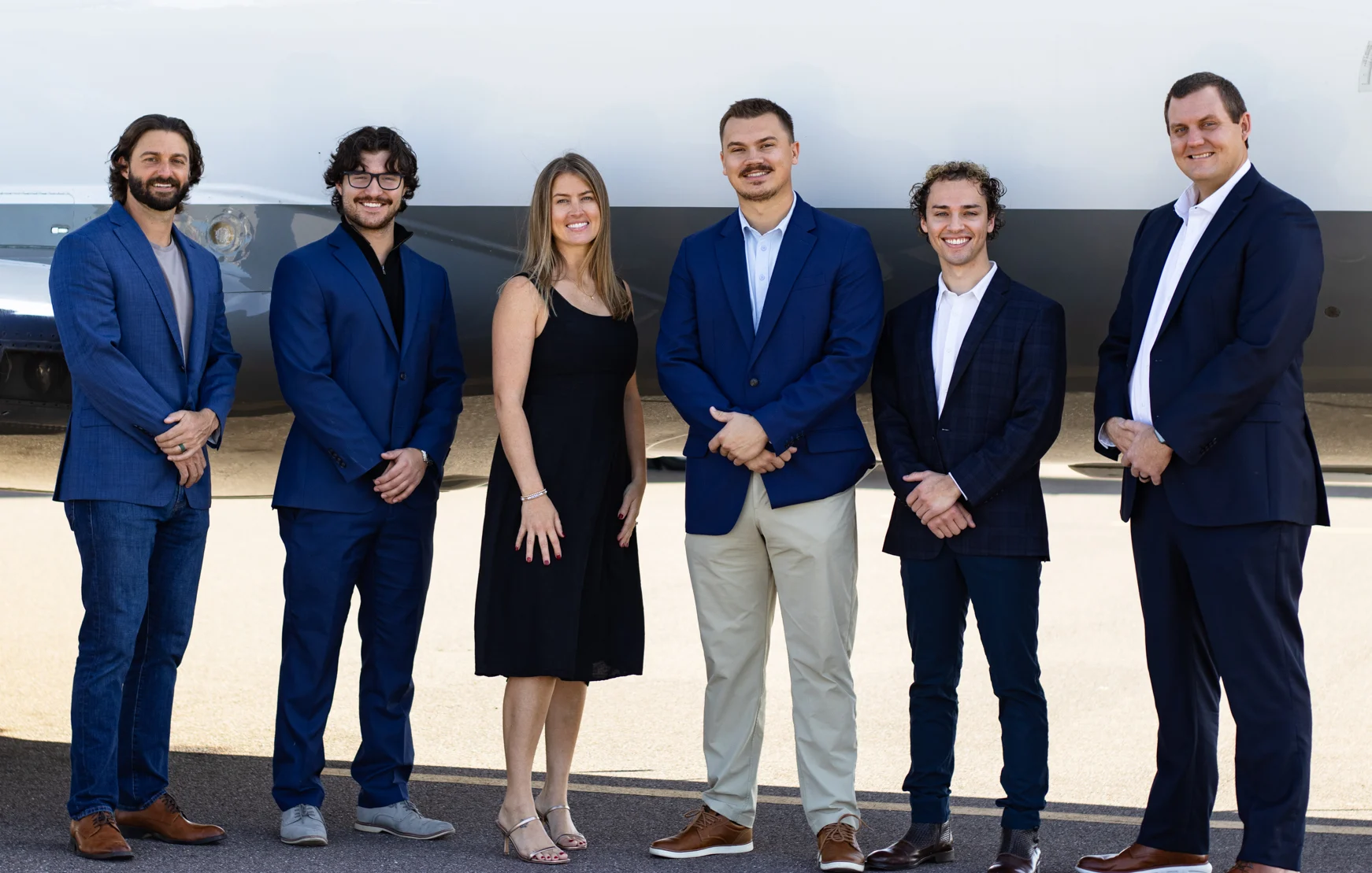 The AvSky Charters Leadership Team
Charter With The Best
AvSky provides comprehensive trip management on every flight, with rigorous operator vetting, route-appropriate aircraft selection, and coordinated ground transport upon request. The result is a seamless, fully white-glove charter experience from first call to wheels down.
Need catering, resort coordination or private security? Our charter advisors have the extensive experience and global partnerships necessary to provide a truly bespoke travel experience.
Queen Beatrix: Aruba's Full-Service International Gateway
Queen Beatrix International Airport (AUA/TNCA) sits on Aruba's western coast, just south of Oranjestad and minutes from the island's primary hotel districts. The airport features a single 9,278-foot paved asphalt runway capable of supporting any business jet or commercial airliner without weight or fuel limitations. Full instrument landing systems and around-the-clock air traffic control ensure seamless flight operations in all weather conditions.
Private aviation traffic operates through dedicated FBO facilities, providing quiet passenger lounges, private customs clearance and ramp-side vehicle pickups. Aruba is one of the few Caribbean airports offering United States customs and immigration preclearance for general aviation, allowing return flights to bypass customs upon arrival in the U.S. In the event of diversions, full-service international airfields in Curaçao and Bonaire provide reliable regional alternates.
Aircraft that can land at Queen Beatrix International Airport
9,278 × 148 ft — fit confirmed by the operator per aircraft and mission.
Eagle Beach and Coastal Sanctuaries
Aruba's coastline is world-famous for its broad expanses of fine white sand and gentle turquoise surf. Eagle Beach consistently ranks among the top beaches globally, celebrated for its uncrowded sands and nesting sea turtles. Further north, Palm Beach hums with glamorous seaside resorts, open-air beach bars and water sports. Travelers seeking seclusion head to the southern reaches of Baby Beach and Mangel Halto, where calm barrier lagoons provide exceptional shallow-water snorkeling over living brain coral and tropical reef fish.
Island Ground Navigation and Chauffeur Options
Getting around Aruba is straightforward and convenient. The island features modern, well-maintained highways connecting the airport directly to Oranjestad, Palm Beach and northern golf clubs. Driving is on the right side of the road, and American dollars are accepted universally alongside the local Aruban florin. Executive private transfers arranged through AvSky Charters meet you directly at the private terminal exit, whisking your party to west coast resorts in under 20 minutes with zero hassle.
Choosing the Right Cabin for Southern Caribbean Routes
Nonstop flights from the East Coast to Aruba cover substantial overwater distances, averaging 1,150 nautical miles from Miami and nearly 1,800 from New York. Midsize jets like the Citation XLS+ provide efficient nonstop comfort from Florida, while super-midsize and heavy jets like the Challenger 350 or Gulfstream G450 are ideal for larger groups departing northern hubs, delivering expansive stand-up cabins, generous luggage space and non-stop range against winter headwinds.
Arikok National Park and Island Adventures
Covering nearly 20 percent of the island, Arikok National Park reveals Aruba's rugged, untouched terrain. Private four-wheel-drive tours guide visitors through desert landscapes dotted with giant columnar cacti, dramatic limestone caves featuring ancient Arawak petroglyphs, and secluded natural ocean pools carved into volcanic shoreline rock. Offshore, championship windsurfing along Boca Grandi and wreck diving around the scuttled World War II freighter Antilla complete an active island itinerary.
Neighboring Sanctuaries in the Southern Seas
Curaçao CUR
Willemstad's pastel Unesco waterfront, a deep dining bench, and a long, capable runway.
Bonaire BON
Shore diving straight off the coast road, salt-flat flamingos, and pickup trucks loaded with tanks.
Punta Cana PUJ
The DR's resort capital of golf courses and gated beachfront, with its own private terminal.
St. Barts SBH
The Caribbean's French set piece — Gustavia's boutiques and beach clubs, on a short runway that takes a specially approved aircraft or a connection.
Aruba Charter Questions We Field Most
Aruba's Queen Beatrix Airport hosts a US Customs and Border Protection preclearance operation covering general aviation — a service very few airports anywhere extend to private flights. Your operator requests the appointment through JET-TNCA at least 48 hours before departure, and the request isn't automatic: CBP and airport approval, the day's operating window, and an eligible US destination all have to line up. The manifest — capped at 19 people, crew included — reaches CBP no later than an hour before inspection, officers complete the full check at JET-TNCA before boarding, and the flight then runs direct and sterile to a US airport approved to receive precleared arrivals, where you step off having already been through; destination-airport, security, and agriculture rules still apply. Any preclearance charges are quoted for the specific trip, and AvSky folds the whole procedure into the itinerary.
Lead time for an Aruba charter depends on how the flight is operated, so it deserves a straight answer rather than the island's easygoing reputation. Private non-revenue flights and paid charter operations follow different rules: a foreign nonscheduled commercial flight needs authorization from Aruba's Department of Civil Aviation, and the airport authority has to approve parking and slot times — the operator confirms both, along with handling by JET-TNCA, before the trip is sold as firm, and the lead time varies with the operation. The traveler-side items are quicker: the ED card, completed inside the week before arrival, and the optional preclearance appointment, requested no less than 48 hours out. Booking earlier still buys more aircraft choice and smoother approvals, especially in deep winter.
Aruba asks each traveler for two things — a passport valid for the full stay and a completed ED card, the government's embarkation form at edcardaruba.aw, filed in the seven days ahead of arrival for every member of the party, infants included. The card carries Aruba's $20 sustainability fee for most visitors age 8 and up, waived for qualifying repeat visitors, and it generates an emailed approval that's verified before boarding. Americans don't need a visa for a vacation stay, but travelers should hold a ticket out or onward plans, and immigration can ask for accommodation and financial-means evidence — the officer at the border makes the final call. Check health requirements against your origin and recent itinerary, keep the approval on a phone, and the paperwork is done before the packing starts.
South Florida is the short run to Aruba — roughly three hours, covering just over 1,000 nautical miles. Add distance and the ride stretches with it: Atlanta and New York both land a bit past the four-hour mark, Boston runs a few minutes longer still, and Chicago approaches five. Treat all of those as illustrative, because the operator's aircraft, winds, routing, payload, and ATC set the actual block time. Two quirks are worth knowing: trade winds hurry you south in winter and lean on the nose coming home, and the last miles are flown over open water on the island's windward side, with routing reviewed against current airspace notices on every trip. For the longer legs, ask about super-midsize and heavy cabins, with the operator verifying range and payload for your actual party.
All private flights to Aruba use Queen Beatrix International — AUA on your itinerary, TNCA in the flight plan — the only public field on the island open to international traffic, on the southern shore beside Oranjestad. Its single strip of concrete and asphalt measures roughly 9,278 by 148 feet at 62 feet of elevation, with published landing distances of about 9,003 and 9,193 feet by direction: room for most business-jet categories, with performance, weight, and approvals confirmed by the operator for each aircraft. General aviation gets a dedicated terminal south of the runway, run since 2023 by the airport itself under the JET-TNCA name: lounge, conference space, flight-planning room, fuel, roughly 20,000 square feet of hangar and 155,000 of parking apron, opening at 7 a.m. and closing at 11 p.m., with individual services confirmed per trip. It's also home to the CBP desk that handles preclearance appointments.
Charter pricing to Aruba is driven first by cabin class against distance: the southern-Caribbean leg is long enough that a Northeast nonstop generally wants a bigger cabin — super-midsize and up — while Florida trips can price into smaller ones, and that swing matters more than any other variable. From there the quote moves with repositioning (how far the aircraft travels to reach you), the calendar (peak winter firms up fastest), and trip shape — a week of island parking versus a drop-and-return. Government and airport charges are real line items, not rounding errors: Aruba's published passenger levies, the $20-per-person sustainability fee, US international departure and arrival taxes, air-navigation charges, and any preclearance costs all apply per the trip's specifics. AvSky presents the whole stack as one quote with its inclusions spelled out, so nothing arrives after the fact.
Empty legs to Aruba do come up — they're created whenever an aircraft repositions for someone else's itinerary, which makes them opportunistic by nature, confirmable only against live inventory. The economics can be genuinely attractive on a leg this long, but so are the strings: you fly the aircraft that's already moving, on its date, and if the trip that created the leg cancels, yours evaporates with it. If your calendar bends, give AvSky your dates and we'll watch for a match; if it doesn't, a guaranteed round trip is the honest recommendation.
Baggage room on an Aruba charter comes down to the specific aircraft, not just its class — hold volume, baggage-door dimensions, and loading limits all vary from one type to the next. Plan around the island's calling cards: kite and windsurf quivers bound for Fisherman's Huts run long and need a door that accepts them, dive kit for the Antilla stacks heavy, and golf cases for Tierra del Sol claim more space than people expect. The subtlety is leg length — on a full nonstop from the Northeast, weight competes with fuel, so a jet that technically fits the bags may not carry them and you at once. Inventory the pile for AvSky early, weights and dimensions included, and the operator confirms the load flies with the route and reserves.
Hurricane risk in Aruba is among the lowest in the Caribbean, though it's a strong track record rather than a guarantee. The island sits at 12 degrees north, well below the belt the big Atlantic storms usually follow, and the record kept by the tourism authority shows no direct strike since 1851 — but June through November is still hurricane season, and passing systems have brought wind, rain, swell, and flooding that can disrupt flights and ground plans. Rainfall totals about 20 inches annually, most of it between September and January, and temperatures barely move with the calendar. For charter planning, that means Aruba books with unusual confidence in months when the rest of the region hedges — with an operator watching the forecast all the same. The constant is wind: trade breezes averaging around 17 miles per hour, which is climate, not weather, and part of why the kiteboarders come.
Charter flights to Aruba operate normally, with routing treated as a live operational decision rather than a fixed promise. Arrivals from the US generally approach from the north through the Curaçao and Aruba flight-information regions, and while US advisories touching Venezuelan airspace have come and gone, operators review current notices, restrictions, and the filed route before every departure. Cuban airspace permission or navigation charges can also figure in, depending on the origin and the airway, and the operator handles that when the route is built. Choosing a diversion field is its job as well: Curaçao and Bonaire, roughly 65 and 105 nautical miles east, are the commonly considered alternates, chosen for the specific aircraft, weather, and conditions on the day.
A charter can absolutely link Aruba with its sister islands: Curaçao lies about 65 nautical miles to the east and Bonaire another 40 beyond, which puts remarkably little of a three-island trip in the air. The paperwork multiplies even when the flying doesn't, though: Aruba and Curaçao are each constituent countries within the Kingdom of the Netherlands, while Bonaire is a public body of the Dutch state itself, and each keeps its own entry formalities and its own online arrival card. Willemstad's restored colonial harbor makes a natural day trip; divers often split a week between Bonaire's reefs and Aruba's beaches. Sequence it at booking and AvSky prices the legs as one trip, with the operator confirming each field for the aircraft.
Aruba charters work in any month, with weather odds most of the Caribbean can't offer — so timing turns mostly on crowds and availability. December through April is the classic high season, with the winter holidays and the weeks around Carnival the most competitive stretch for aircraft and villa stock alike; late spring and fall bring the same warm water with less contention. If a marquee event anchors the trip — Carnival's parades, or the Hi-Winds watersports contest off Hadicurari — reserve the aircraft when you buy the tickets and confirm the current edition's dates, since those weeks concentrate demand. Otherwise, Aruba rewards a contrarian calendar: shoulder-season trips get the same island with less friction at both ends.
Charter Flights to Aruba
Sample round-trip estimates to Oranjestad, Aruba
These estimates price modeled Friday-to-Sunday round trips from key departure cities, though AvSky Charters flies from any private airfield you specify. Final charter pricing adjusts with aircraft availability, group size, seasonal positioning and scheduled ramp handling. Every quote is delivered as a firm, all-inclusive number before you book.
Get Instant EstimateAruba by Private Jet, Planned by AvSky
Resting comfortably below the Atlantic hurricane belt off the South American coastline, Aruba delivers reliable sunshine and steady cooling trade winds year-round. Beyond the world-renowned powder-soft shores of Eagle Beach and Palm Beach, the island offers an intriguing landscape of wind-sculpted divi-divi trees, desert cacti and rugged limestone cliffs. Guests enjoy world-class casino resorts, private seaside villas and a vibrant fine-dining scene in Oranjestad.
Positioned safely below the Caribbean hurricane belt, private charter flights reach Oranjestad in roughly three hours from Florida hubs and under five hours from the Northeast. AvSky Charters coordinates expedited private FBO handling and seamless chauffeur escort directly to your Palm Beach suite or oceanfront villa.
Design Your Nonstop Private Flight to Aruba
Flying private to Aruba gives you complete control over your travel schedule, eliminating crowded commercial gates and unpredictable airline delays. AvSky Charters pairs your party with a long-range jet engineered for effortless overwater comfort. We oversee airport parking, coordinate VIP ground handling and arrange luxury chauffeur service straight to your beachfront suite upon landing.
Request An All-In QuoteQueen Beatrix: Aruba's Full-Service International Gateway
Queen Beatrix International Airport (AUA/TNCA) sits on Aruba's western coast, just south of Oranjestad and minutes from the island's primary hotel districts. The airport features a single 9,278-foot paved asphalt runway capable of supporting any business jet or commercial airliner without weight or fuel limitations. Full instrument landing systems and around-the-clock air traffic control ensure seamless flight operations in all weather conditions.
Private aviation traffic operates through dedicated FBO facilities, providing quiet passenger lounges, private customs clearance and ramp-side vehicle pickups. Aruba is one of the few Caribbean airports offering United States customs and immigration preclearance for general aviation, allowing return flights to bypass customs upon arrival in the U.S. In the event of diversions, full-service international airfields in Curaçao and Bonaire provide reliable regional alternates.
Aircraft that can fly to & from Queen Beatrix International Airport
9,278 × 148 ft — fit confirmed by the operator per aircraft and mission.
Oranjestad, Aruba details.
Eagle Beach and Coastal Sanctuaries
Aruba's coastline is world-famous for its broad expanses of fine white sand and gentle turquoise surf. Eagle Beach consistently ranks among the top beaches globally, celebrated for its uncrowded sands and nesting sea turtles. Further north, Palm Beach hums with glamorous seaside resorts, open-air beach bars and water sports. Travelers seeking seclusion head to the southern reaches of Baby Beach and Mangel Halto, where calm barrier lagoons provide exceptional shallow-water snorkeling over living brain coral and tropical reef fish.
Island Ground Navigation and Chauffeur Options
Getting around Aruba is straightforward and convenient. The island features modern, well-maintained highways connecting the airport directly to Oranjestad, Palm Beach and northern golf clubs. Driving is on the right side of the road, and American dollars are accepted universally alongside the local Aruban florin. Executive private transfers arranged through AvSky Charters meet you directly at the private terminal exit, whisking your party to west coast resorts in under 20 minutes with zero hassle.
Choosing the Right Cabin for Southern Caribbean Routes
Nonstop flights from the East Coast to Aruba cover substantial overwater distances, averaging 1,150 nautical miles from Miami and nearly 1,800 from New York. Midsize jets like the Citation XLS+ provide efficient nonstop comfort from Florida, while super-midsize and heavy jets like the Challenger 350 or Gulfstream G450 are ideal for larger groups departing northern hubs, delivering expansive stand-up cabins, generous luggage space and non-stop range against winter headwinds.
Arikok National Park and Island Adventures
Covering nearly 20 percent of the island, Arikok National Park reveals Aruba's rugged, untouched terrain. Private four-wheel-drive tours guide visitors through desert landscapes dotted with giant columnar cacti, dramatic limestone caves featuring ancient Arawak petroglyphs, and secluded natural ocean pools carved into volcanic shoreline rock. Offshore, championship windsurfing along Boca Grandi and wreck diving around the scuttled World War II freighter Antilla complete an active island itinerary.
Four Operational Protocols for Aruba Charters
Schedule General Aviation U.S. Preclearance
Aruba offers U.S. customs preclearance for private aircraft departures by prior appointment. AvSky Charters schedules your preclearance window with local border officers, allowing your party to complete all entry inspections before takeoff and arrive home as domestic passengers.
Complete the Mandatory Online ED Card
All visitors entering Aruba must complete the online Embarkation-Disembarkation (ED) card through the official government portal prior to travel. Submitting your travel details ahead of time generates an approved entry pass for swift terminal verification upon landing.
Take Advantage of Year-Round Weather Windows
Positioned comfortably south of the Caribbean hurricane path, Aruba avoids seasonal storm disruptions common to northern islands. This geographic advantage ensures reliable flight weather, predictable landing schedules and consistent travel conditions across all twelve months of the year.
Plan Coordinated Ground Chauffeur Transfers
While rental vehicles are readily available, arranging dedicated executive chauffeur transport avoids navigating busy Oranjestad roundabouts. AvSky Charters coordinates private vehicle pickups directly airside at the FBO, ensuring immediate departure toward your resort.
Neighboring Sanctuaries in the Southern Seas
Aruba Charter Questions We Field Most
How does US customs preclearance work on a private flight home from Aruba?
Aruba's Queen Beatrix Airport hosts a US Customs and Border Protection preclearance operation covering general aviation — a service very few airports anywhere extend to private flights. Your operator requests the appointment through JET-TNCA at least 48 hours before departure, and the request isn't automatic: CBP and airport approval, the day's operating window, and an eligible US destination all have to line up. The manifest — capped at 19 people, crew included — reaches CBP no later than an hour before inspection, officers complete the full check at JET-TNCA before boarding, and the flight then runs direct and sterile to a US airport approved to receive precleared arrivals, where you step off having already been through; destination-airport, security, and agriculture rules still apply. Any preclearance charges are quoted for the specific trip, and AvSky folds the whole procedure into the itinerary.
Do we need a landing permit or long lead time for an Aruba charter?
Lead time for an Aruba charter depends on how the flight is operated, so it deserves a straight answer rather than the island's easygoing reputation. Private non-revenue flights and paid charter operations follow different rules: a foreign nonscheduled commercial flight needs authorization from Aruba's Department of Civil Aviation, and the airport authority has to approve parking and slot times — the operator confirms both, along with handling by JET-TNCA, before the trip is sold as firm, and the lead time varies with the operation. The traveler-side items are quicker: the ED card, completed inside the week before arrival, and the optional preclearance appointment, requested no less than 48 hours out. Booking earlier still buys more aircraft choice and smoother approvals, especially in deep winter.
Is Aruba's ED card the only paperwork travelers have to file?
Aruba asks each traveler for two things — a passport valid for the full stay and a completed ED card, the government's embarkation form at edcardaruba.aw, filed in the seven days ahead of arrival for every member of the party, infants included. The card carries Aruba's $20 sustainability fee for most visitors age 8 and up, waived for qualifying repeat visitors, and it generates an emailed approval that's verified before boarding. Americans don't need a visa for a vacation stay, but travelers should hold a ticket out or onward plans, and immigration can ask for accommodation and financial-means evidence — the officer at the border makes the final call. Check health requirements against your origin and recent itinerary, keep the approval on a phone, and the paperwork is done before the packing starts.
How long will we be in the air flying to Aruba?
South Florida is the short run to Aruba — roughly three hours, covering just over 1,000 nautical miles. Add distance and the ride stretches with it: Atlanta and New York both land a bit past the four-hour mark, Boston runs a few minutes longer still, and Chicago approaches five. Treat all of those as illustrative, because the operator's aircraft, winds, routing, payload, and ATC set the actual block time. Two quirks are worth knowing: trade winds hurry you south in winter and lean on the nose coming home, and the last miles are flown over open water on the island's windward side, with routing reviewed against current airspace notices on every trip. For the longer legs, ask about super-midsize and heavy cabins, with the operator verifying range and payload for your actual party.
How is private aviation set up at Queen Beatrix?
All private flights to Aruba use Queen Beatrix International — AUA on your itinerary, TNCA in the flight plan — the only public field on the island open to international traffic, on the southern shore beside Oranjestad. Its single strip of concrete and asphalt measures roughly 9,278 by 148 feet at 62 feet of elevation, with published landing distances of about 9,003 and 9,193 feet by direction: room for most business-jet categories, with performance, weight, and approvals confirmed by the operator for each aircraft. General aviation gets a dedicated terminal south of the runway, run since 2023 by the airport itself under the JET-TNCA name: lounge, conference space, flight-planning room, fuel, roughly 20,000 square feet of hangar and 155,000 of parking apron, opening at 7 a.m. and closing at 11 p.m., with individual services confirmed per trip. It's also home to the CBP desk that handles preclearance appointments.
What does a private jet to Aruba cost?
Charter pricing to Aruba is driven first by cabin class against distance: the southern-Caribbean leg is long enough that a Northeast nonstop generally wants a bigger cabin — super-midsize and up — while Florida trips can price into smaller ones, and that swing matters more than any other variable. From there the quote moves with repositioning (how far the aircraft travels to reach you), the calendar (peak winter firms up fastest), and trip shape — a week of island parking versus a drop-and-return. Government and airport charges are real line items, not rounding errors: Aruba's published passenger levies, the $20-per-person sustainability fee, US international departure and arrival taxes, air-navigation charges, and any preclearance costs all apply per the trip's specifics. AvSky presents the whole stack as one quote with its inclusions spelled out, so nothing arrives after the fact.
Aruba empty legs — how do they actually come about?
Empty legs to Aruba do come up — they're created whenever an aircraft repositions for someone else's itinerary, which makes them opportunistic by nature, confirmable only against live inventory. The economics can be genuinely attractive on a leg this long, but so are the strings: you fly the aircraft that's already moving, on its date, and if the trip that created the leg cancels, yours evaporates with it. If your calendar bends, give AvSky your dates and we'll watch for a match; if it doesn't, a guaranteed round trip is the honest recommendation.
How does luggage space work on the long leg down to Aruba?
Baggage room on an Aruba charter comes down to the specific aircraft, not just its class — hold volume, baggage-door dimensions, and loading limits all vary from one type to the next. Plan around the island's calling cards: kite and windsurf quivers bound for Fisherman's Huts run long and need a door that accepts them, dive kit for the Antilla stacks heavy, and golf cases for Tierra del Sol claim more space than people expect. The subtlety is leg length — on a full nonstop from the Northeast, weight competes with fuel, so a jet that technically fits the bags may not carry them and you at once. Inventory the pile for AvSky early, weights and dimensions included, and the operator confirms the load flies with the route and reserves.
Is hurricane season a real concern for Aruba trips?
Hurricane risk in Aruba is among the lowest in the Caribbean, though it's a strong track record rather than a guarantee. The island sits at 12 degrees north, well below the belt the big Atlantic storms usually follow, and the record kept by the tourism authority shows no direct strike since 1851 — but June through November is still hurricane season, and passing systems have brought wind, rain, swell, and flooding that can disrupt flights and ground plans. Rainfall totals about 20 inches annually, most of it between September and January, and temperatures barely move with the calendar. For charter planning, that means Aruba books with unusual confidence in months when the rest of the region hedges — with an operator watching the forecast all the same. The constant is wind: trade breezes averaging around 17 miles per hour, which is climate, not weather, and part of why the kiteboarders come.
Does the situation over Venezuela affect Aruba flights?
Charter flights to Aruba operate normally, with routing treated as a live operational decision rather than a fixed promise. Arrivals from the US generally approach from the north through the Curaçao and Aruba flight-information regions, and while US advisories touching Venezuelan airspace have come and gone, operators review current notices, restrictions, and the filed route before every departure. Cuban airspace permission or navigation charges can also figure in, depending on the origin and the airway, and the operator handles that when the route is built. Choosing a diversion field is its job as well: Curaçao and Bonaire, roughly 65 and 105 nautical miles east, are the commonly considered alternates, chosen for the specific aircraft, weather, and conditions on the day.
Can we add Curaçao or Bonaire to an Aruba trip?
A charter can absolutely link Aruba with its sister islands: Curaçao lies about 65 nautical miles to the east and Bonaire another 40 beyond, which puts remarkably little of a three-island trip in the air. The paperwork multiplies even when the flying doesn't, though: Aruba and Curaçao are each constituent countries within the Kingdom of the Netherlands, while Bonaire is a public body of the Dutch state itself, and each keeps its own entry formalities and its own online arrival card. Willemstad's restored colonial harbor makes a natural day trip; divers often split a week between Bonaire's reefs and Aruba's beaches. Sequence it at booking and AvSky prices the legs as one trip, with the operator confirming each field for the aircraft.
When should we plan an Aruba charter?
Aruba charters work in any month, with weather odds most of the Caribbean can't offer — so timing turns mostly on crowds and availability. December through April is the classic high season, with the winter holidays and the weeks around Carnival the most competitive stretch for aircraft and villa stock alike; late spring and fall bring the same warm water with less contention. If a marquee event anchors the trip — Carnival's parades, or the Hi-Winds watersports contest off Hadicurari — reserve the aircraft when you buy the tickets and confirm the current edition's dates, since those weeks concentrate demand. Otherwise, Aruba rewards a contrarian calendar: shoulder-season trips get the same island with less friction at both ends.
Ready when you are.
Charter flights from one of the world leaders in private aviation. Florida-based and on-call 24/7.