Charter Flights to Bonaire
Bypass regional layovers with direct private routing to the ABC Islands' premier diving and wind-driven coastal sanctuary.
Long-range capability · 24-hour handlingThe Dutch Caribbean's Shore-Diving Island
Lying fifty miles off the Venezuelan coast, Bonaire is globally celebrated as the premier shore-diving destination in the Caribbean. The entire perimeter of the island, including uninhabited Klein Bonaire, has been a strictly protected national marine park since 1979. Beyond turquoise fringing reefs marked by roadside yellow stones, the island reveals pink salt flats teeming with wild flamingos, quiet seaside resorts in Kralendijk, and a tranquil, unhurried pace.
Bypassing regional airline layovers in Curaçao or Aruba, private charter flights connect directly from U.S. departure hubs in under four hours. AvSky Charters synchronizes dedicated customs processing with resort ground transfers, ensuring an effortless arrival on your timetable.
Arrive on Bonaire on Your Own Schedule
Private air travel to Bonaire delivers effortless access to the southern Caribbean, bypassing commercial flight connections in Aruba or Curaçao. AvSky Charters pairs your party with a long-range jet equipped for non-stop overwater comfort. We oversee airport parking, coordinate swift terminal customs clearance and arrange private ground transportation straight to your resort or dive boat dock.
Sample round-trip estimates to Kralendijk, Bonaire
These estimates model weekend round trips from major departure cities, but AvSky Charters flies from any private airfield you choose. Exact charter costs reflect selected cabin class, passenger manifest, fuel positioning and ramp handling schedules. You receive a firm, all-inclusive written quote with all international handling fees detailed upfront before you commit.
Price your specific trip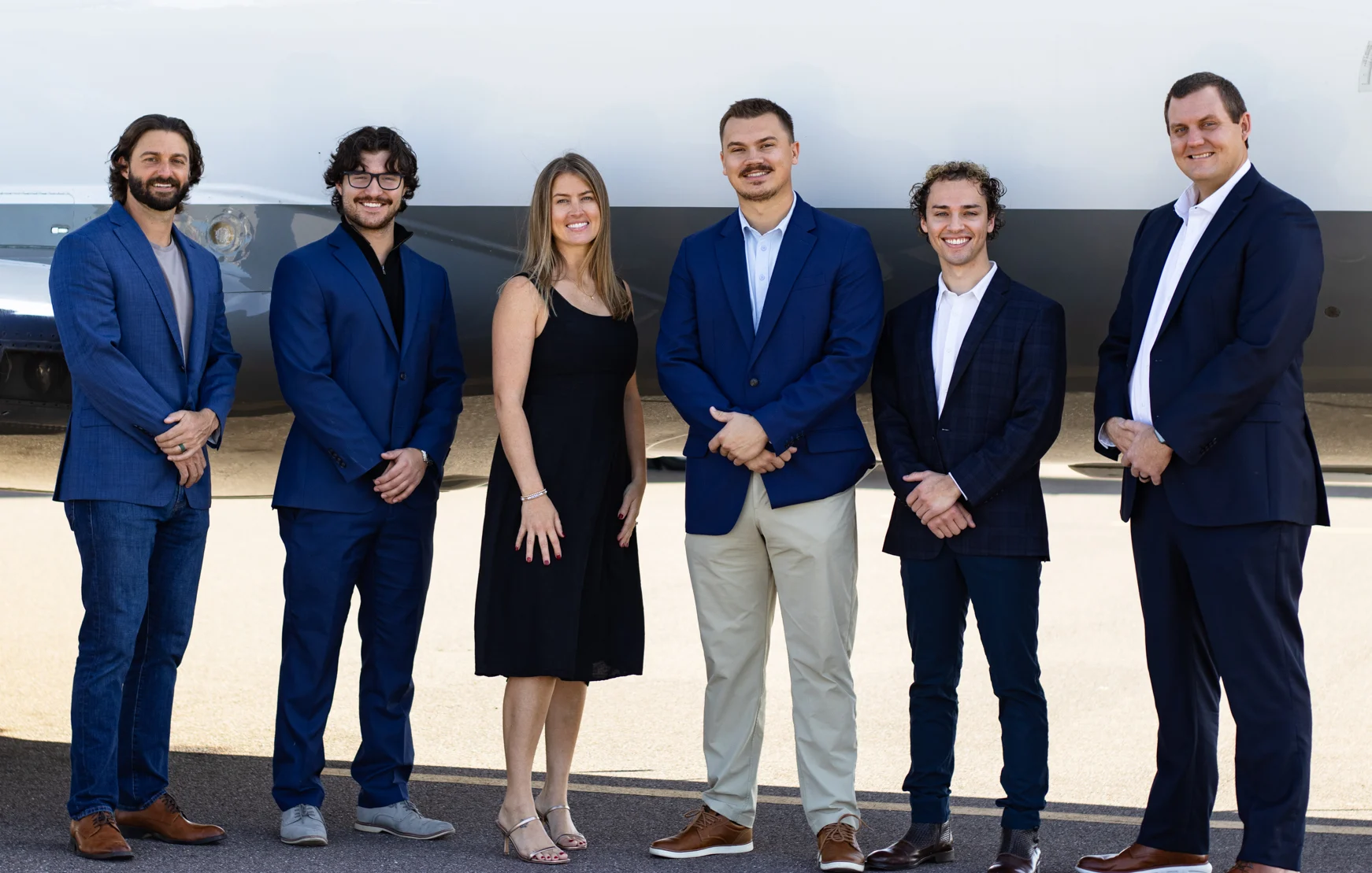 The AvSky Charters Leadership Team
Charter With The Best
AvSky provides comprehensive trip management on every flight, with rigorous operator vetting, route-appropriate aircraft selection, and coordinated ground transport upon request. The result is a seamless, fully white-glove charter experience from first call to wheels down.
Need catering, resort coordination or private security? Our charter advisors have the extensive experience and global partnerships necessary to provide a truly bespoke travel experience.
Flamingo International: Bonaire's Full-Capacity Airfield
Flamingo International Airport (BON/TNCB) sits on Bonaire's southwestern coast, less than ten minutes from downtown Kralendijk and premier waterfront dive resorts. Its 10,030-foot asphalt runway ranks among the longest in the southern Caribbean, accommodating transatlantic private jets and airline widebodies without performance restrictions. The field operates daily with full instrument landing capabilities and on-site customs clearance.
Private flights operate through dedicated executive handling facilities, offering private passenger lounges, aircraft fueling and ramp-side vehicle transfers. Bonaire's position south of the hurricane belt ensures dependable year-round flight conditions. If weather alternates are ever needed, full-service international airfields in neighboring Curaçao, just 41 nautical miles west, and Aruba provide convenient regional diversion options.
Aircraft that can land at Flamingo International Airport
10,030 ft of pavement at 24 ft elevation — fit confirmed per tail at booking.
World-Renowned Shore Diving and Klein Bonaire
Bonaire's unique coastal topography allows divers to step straight from the shore into thriving coral gardens. Over eighty designated dive sites ring the island, prominently marked by numbered yellow roadside stones. Divers explore famous reefs like 1,000 Steps, Andrea I and II, and the historic sunken freighter Hilma Hooker. Offshore, water taxis and private day boats take visitors across to Klein Bonaire, an uninhabited coral atoll boasting pristine drift dives and white-sand sea turtle nesting sanctuaries.
Island Transportation and Truck Rentals
Ground transportation on Bonaire reflects its active outdoor lifestyle. While paved coastal highways link Kralendijk to resort districts, double-cab pickup trucks equipped with built-in scuba tank racks are the island's vehicle of choice for exploring remote northern dive sites and national park dirt tracks. Driving proceeds on the right side of the road, and American dollars serve as the official currency. AvSky Charters coordinates executive vehicle rentals or chauffeured transport directly from the private terminal.
Cabin Selection for Deep Southern Caribbean Flights
Covering the distance to Bonaire requires strategic aircraft matching. Flights from Florida span approximately 1,200 nautical miles, while routes from the Northeast and Midwest exceed 1,800 miles across open ocean. Midsize jets like the Citation Latitude manage Florida departures with ease, while super-midsize and heavy jets like the Challenger 350 or Gulfstream G450 provide ideal non-stop range, stand-up cabin comfort and expansive luggage bays for heavy dive bags from northern hubs.
Pekelmeer Salt Flats and Washington-Slagbaai
Beyond the water, Bonaire reveals striking arid landscapes. In the south, giant white salt pyramids rise beside vibrant pink evaporation ponds and the Pekelmeer Flamingo Sanctuary, one of the most important breeding grounds for Caribbean flamingos. In the rugged north, Washington-Slagbaai National Park protects thousands of acres of desert scrub, towering candle cacti, secluded swimming calas and coastal blowholes where crashing waves explode through volcanic shoreline limestone.
Island Sanctuaries Across the Leeward Antilles
Curaçao CUR
Colonial Willemstad, the Pietermaai dinner strip, and more than 38 shore dives of its own.
Aruba AUA
The beach-week neighbor — wide sand, the high-rise hotel strip, and Oranjestad's Dutch-gabled waterfront.
Grenada GND
The Spice Island down the chain: waterfalls in the rainforest, a dive-able underwater sculpture park, and uncrowded reefs.
St. Lucia UVF
The green, dramatic one — the Pitons over the sea, rainforest, and nature-luxury hideaways for a change of pace.
What Bonaire Clients Ask Before They Book
Bonaire runs a single airport, so there's no decision to make: Flamingo International (BON/TNCB), on the west coast at the edge of Kralendijk. That one-field setup works in your favor — the terminal sits close to the dive resorts, and it takes everything from turboprops up to the biggest cabins in charter, with the fit for your specific aircraft confirmed at booking. Private flights go through one of the airport's approved handlers rather than the airline hall; the roster is a short one, and AvSky confirms which company greets the aircraft and where the party clears customs and immigration. We arrange the handling, the fuel, and the landing permit the field asks for before you leave home.
Yes — heavy and long-range jets are routine at Bonaire's Flamingo International. The runway measures 10,030 feet, with published declared distances that vary a little by direction, so the operator runs a performance check against your particular tail, load, and the day's conditions — a standard step, taken well ahead of the trip. In practice your cabin is decided less by the field than by the leg: distance from your origin and the number of divers and the volume of gear coming along — which is why a group flying down from Houston or the Northeast might choose a heavy cabin that a couple out of Florida would never need.
Flights home from Bonaire clear US customs at the first US airport they touch, since the island runs no preclearance facility — of the three Dutch islands, only Aruba has one. Your operator lodges the manifest ahead, secures US Customs' permission to land, and the jet makes that first stop at a designated port of entry, with officers meeting the party there. Day to day the only thing it changes is where the line forms, yet plenty of charter sites blur the point, so we spell it out. If clearing customs before you take off is central to the plan, that lone edge belongs to Aruba, and we're glad to compare the two islands with you.
A commercial charter into Bonaire needs a landing permit, and the operator files it: in writing, a minimum of 24 hours out and naming the ground handler. The published rules don't list a permit price, so any authority or filing fee is confirmed when it's submitted, and some operators pad the 24-hour legal floor with extra buffer for peak weeks. A purely private, non-revenue flight skips the permit and instead gives notice through its flight plan at least two hours ahead of arrival. Because the island is a Dutch special municipality, the permit is issued by the civil aviation authority for the BES islands rather than an island one. Whichever applies, our operations desk files it long before departure — there's nothing here a passenger has to deal with.
Bonaire collects two visitor levies, and only one of them is universal. The entry levy runs $75 a head from age 13 and $10 for younger children, declared through the government's portal and good for a month once the code comes back. The $40-a-head nature fee applies to anyone who dives, snorkels, swims, or enters a park — on a dive trip, effectively everyone — runs until the year turns over, and arrives as a QR e-tag the wardens spot-check on the reef. Documents are the simple part: a passport in date, onward travel, somewhere to stay, and no visa for US citizens on a short holiday stay. Bonaire also skips the separate online immigration card Curaçao and Aruba use, and since everything's priced in dollars, there's no exchange to deal with.
Reaching Bonaire takes about three hours nonstop from South Florida, an hour more from Atlanta, and roughly four and a half from the Northeast or Houston — treat those as planning figures, since the day's winds, routing, and aircraft all move the block time. On airspace, the one thing people ask about is Venezuela: the island lies some 50 miles off its coast, and most US arrivals drop in from the north through Curaçao's control area. The precautionary advisories the FAA once posted for the region have been lifted, and the final track is set flight by flight against current notices, winds, and whatever policy the operator flies by. We confirm the planned routing with your quote.
Private flights into Bonaire's Flamingo work through a company from the airport's approved roster rather than a private terminal of their own — one is required for every arrival, and the list runs to Swissport, Air Handling Services Bonaire, and Progressive Air Services, with the Bonaire Jet Center pitched at business aviation — so AvSky confirms who's meeting you and how your customs flow works before you fly. Jet A-1 is published as available at any hour, no small thing this far out, though handler staffing keeps shorter days and the runway lighting normally shuts down once the last scheduled service is through, which is why an evening arrival gets coordinated in advance. A rental vehicle can be waiting when you step off, and AvSky runs your arrival, fueling, handling, and departure end to end.
Bonaire sits at about 12 degrees north, low enough to fall outside the usual hurricane tracks, and direct hits are rare. Between that latitude, a dry desert climate, and the constant easterly trades, conditions hold steadier through the official storm months from June to November than they do farther north — for a dive trip, that's the quiet headline. It's still weather, though: forecasts, sea state, and the dispatch call govern every flight, on Bonaire like anywhere else. But as Caribbean bets go, this is one of the more dependable ones.
The aircraft is most of a Bonaire quote, and the cabin the distance calls for is the single biggest lever — a Florida trip in a smaller one lands far below a Houston or Northeast run on a heavy jet, and that difference swamps the rest. Around it sit the repositioning leg (how far the jet flies to reach you) and how full the calendar is the week you travel. The remainder is pass-throughs: Bonaire publishes landing, parking, air-navigation, and per-passenger departure charges that scale with the aircraft and schedule, US taxes and inspection fees attach to the return, and the island's $75 visitor tax and $40 nature levy are paid by travelers directly. AvSky quotes one written number and itemizes what's inside — including the levies you'll pay on your own.
Empty legs to Bonaire are worth watching for but never counting on. The term describes a discounted seat on a jet that's already repositioning with no one aboard, and one only surfaces when an aircraft happens to be running this corridor unbooked — nobody can promise when that will be. If one does match your dates, the price can be a real bargain. What you sacrifice is say-so: the airplane, the calendar, and the starting point come from someone else's booking and fall through if theirs does. Anyone tied to specific dive dates is better off with a firm charter, and we'll flag a bargain leg if one appears. Just share the week you have in mind.
A full week of Bonaire dive kit for a whole party generally argues for a super-midsize or heavy cabin, since hold space rises with every class. A pair traveling light is fine in a midsize, though a week's worth of regulators, drysuits, camera housings, and a windsurf board or two for Lac Bay fills a hold quickly. The wrinkle is the long legs: on a full nonstop from up north, bags and fuel draw on the same payload, so an aircraft that swallows the gear on paper may not lift it and everyone together. One thing eases it — the tanks and lead stay on the island, supplied at the shop. Tell us everything that's coming and we'll put you on a cabin with room for all of it.
A three-island run out of Bonaire is entirely practical, because the ABCs sit in a short line: about 41 nautical miles west to Curaçao, roughly 105 to Aruba, less time aloft altogether than a hop up the US East Coast. The flying is the easy part; the paperwork stacks up, since each island keeps its own rules — Curaçao and Aruba run online arrival cards, while Bonaire asks for its visitor-tax declaration and nature fee instead. A common split is a few days on the reef here and a night or two of Willemstad dining or an Aruba beach. Lay the sequence out when you book and AvSky bundles the legs into one trip.
Charter Flights to Bonaire
Sample round-trip estimates to Kralendijk, Bonaire
These estimates model weekend round trips from major departure cities, but AvSky Charters flies from any private airfield you choose. Exact charter costs reflect selected cabin class, passenger manifest, fuel positioning and ramp handling schedules. You receive a firm, all-inclusive written quote with all international handling fees detailed upfront before you commit.
Get Instant EstimateThe Dutch Caribbean's Shore-Diving Island
Lying fifty miles off the Venezuelan coast, Bonaire is globally celebrated as the premier shore-diving destination in the Caribbean. The entire perimeter of the island, including uninhabited Klein Bonaire, has been a strictly protected national marine park since 1979. Beyond turquoise fringing reefs marked by roadside yellow stones, the island reveals pink salt flats teeming with wild flamingos, quiet seaside resorts in Kralendijk, and a tranquil, unhurried pace.
Bypassing regional airline layovers in Curaçao or Aruba, private charter flights connect directly from U.S. departure hubs in under four hours. AvSky Charters synchronizes dedicated customs processing with resort ground transfers, ensuring an effortless arrival on your timetable.
Arrive on Bonaire on Your Own Schedule
Private air travel to Bonaire delivers effortless access to the southern Caribbean, bypassing commercial flight connections in Aruba or Curaçao. AvSky Charters pairs your party with a long-range jet equipped for non-stop overwater comfort. We oversee airport parking, coordinate swift terminal customs clearance and arrange private ground transportation straight to your resort or dive boat dock.
Request An All-In QuoteFlamingo International: Bonaire's Full-Capacity Airfield
Flamingo International Airport (BON/TNCB) sits on Bonaire's southwestern coast, less than ten minutes from downtown Kralendijk and premier waterfront dive resorts. Its 10,030-foot asphalt runway ranks among the longest in the southern Caribbean, accommodating transatlantic private jets and airline widebodies without performance restrictions. The field operates daily with full instrument landing capabilities and on-site customs clearance.
Private flights operate through dedicated executive handling facilities, offering private passenger lounges, aircraft fueling and ramp-side vehicle transfers. Bonaire's position south of the hurricane belt ensures dependable year-round flight conditions. If weather alternates are ever needed, full-service international airfields in neighboring Curaçao, just 41 nautical miles west, and Aruba provide convenient regional diversion options.
Aircraft that can fly to & from Flamingo International Airport
10,030 ft of pavement at 24 ft elevation — fit confirmed per tail at booking.
Kralendijk, Bonaire details.
World-Renowned Shore Diving and Klein Bonaire
Bonaire's unique coastal topography allows divers to step straight from the shore into thriving coral gardens. Over eighty designated dive sites ring the island, prominently marked by numbered yellow roadside stones. Divers explore famous reefs like 1,000 Steps, Andrea I and II, and the historic sunken freighter Hilma Hooker. Offshore, water taxis and private day boats take visitors across to Klein Bonaire, an uninhabited coral atoll boasting pristine drift dives and white-sand sea turtle nesting sanctuaries.
Island Transportation and Truck Rentals
Ground transportation on Bonaire reflects its active outdoor lifestyle. While paved coastal highways link Kralendijk to resort districts, double-cab pickup trucks equipped with built-in scuba tank racks are the island's vehicle of choice for exploring remote northern dive sites and national park dirt tracks. Driving proceeds on the right side of the road, and American dollars serve as the official currency. AvSky Charters coordinates executive vehicle rentals or chauffeured transport directly from the private terminal.
Cabin Selection for Deep Southern Caribbean Flights
Covering the distance to Bonaire requires strategic aircraft matching. Flights from Florida span approximately 1,200 nautical miles, while routes from the Northeast and Midwest exceed 1,800 miles across open ocean. Midsize jets like the Citation Latitude manage Florida departures with ease, while super-midsize and heavy jets like the Challenger 350 or Gulfstream G450 provide ideal non-stop range, stand-up cabin comfort and expansive luggage bays for heavy dive bags from northern hubs.
Pekelmeer Salt Flats and Washington-Slagbaai
Beyond the water, Bonaire reveals striking arid landscapes. In the south, giant white salt pyramids rise beside vibrant pink evaporation ponds and the Pekelmeer Flamingo Sanctuary, one of the most important breeding grounds for Caribbean flamingos. In the rugged north, Washington-Slagbaai National Park protects thousands of acres of desert scrub, towering candle cacti, secluded swimming calas and coastal blowholes where crashing waves explode through volcanic shoreline limestone.
Four Flight Guidelines for Bonaire Charters
Pay the Mandatory Nature Fee and Visitor Tax
Bonaire requires all international visitors to pay an official entry tourism tax online prior to arrival. In addition, water-sports enthusiasts must purchase the Bonaire National Marine Park Nature Fee tag online. Completing these registrations beforehand avoids administrative delays upon touchdown.
Take Advantage of Hurricane-Free Operating Skies
Situated well south of the Atlantic storm belt alongside Aruba and Curaçao, Bonaire enjoys stable meteorological conditions year-round. This geographic shield guarantees reliable flight operations, predictable schedules and smooth ocean approaches across every season of the year.
Coordinate Priority Aircraft Refueling
Flamingo International Airport maintains reliable Jet-A fuel infrastructure, though fueling trucks service commercial airline flights during early afternoon arrival banks. AvSky Charters coordinates advance fuel reservations with local handlers to ensure prompt turnaround times for departing private aircraft.
Pack Specialized Diving Equipment Safely
When bringing personal dive gear, travelers must pack dive computers in carry-on bags and ensure pressure gauges and regulators are protected. AvSky Charters sizes your aircraft hold to comfortably accommodate hard dive cases and weight belts without compromising cabin legroom.
Island Sanctuaries Across the Leeward Antilles
What Bonaire Clients Ask Before They Book
Bonaire only has one airport — what does that mean for our charter?
Bonaire runs a single airport, so there's no decision to make: Flamingo International (BON/TNCB), on the west coast at the edge of Kralendijk. That one-field setup works in your favor — the terminal sits close to the dive resorts, and it takes everything from turboprops up to the biggest cabins in charter, with the fit for your specific aircraft confirmed at booking. Private flights go through one of the airport's approved handlers rather than the airline hall; the roster is a short one, and AvSky confirms which company greets the aircraft and where the party clears customs and immigration. We arrange the handling, the fuel, and the landing permit the field asks for before you leave home.
Is Flamingo's 10,030-foot runway enough for a heavy jet?
Yes — heavy and long-range jets are routine at Bonaire's Flamingo International. The runway measures 10,030 feet, with published declared distances that vary a little by direction, so the operator runs a performance check against your particular tail, load, and the day's conditions — a standard step, taken well ahead of the trip. In practice your cabin is decided less by the field than by the leg: distance from your origin and the number of divers and the volume of gear coming along — which is why a group flying down from Houston or the Northeast might choose a heavy cabin that a couple out of Florida would never need.
Without preclearance on Bonaire, where does the border check happen?
Flights home from Bonaire clear US customs at the first US airport they touch, since the island runs no preclearance facility — of the three Dutch islands, only Aruba has one. Your operator lodges the manifest ahead, secures US Customs' permission to land, and the jet makes that first stop at a designated port of entry, with officers meeting the party there. Day to day the only thing it changes is where the line forms, yet plenty of charter sites blur the point, so we spell it out. If clearing customs before you take off is central to the plan, that lone edge belongs to Aruba, and we're glad to compare the two islands with you.
Who files Bonaire's landing permit — and does a private flight need one?
A commercial charter into Bonaire needs a landing permit, and the operator files it: in writing, a minimum of 24 hours out and naming the ground handler. The published rules don't list a permit price, so any authority or filing fee is confirmed when it's submitted, and some operators pad the 24-hour legal floor with extra buffer for peak weeks. A purely private, non-revenue flight skips the permit and instead gives notice through its flight plan at least two hours ahead of arrival. Because the island is a Dutch special municipality, the permit is issued by the civil aviation authority for the BES islands rather than an island one. Whichever applies, our operations desk files it long before departure — there's nothing here a passenger has to deal with.
Bonaire charges two visitor levies — what are they, and does everyone pay?
Bonaire collects two visitor levies, and only one of them is universal. The entry levy runs $75 a head from age 13 and $10 for younger children, declared through the government's portal and good for a month once the code comes back. The $40-a-head nature fee applies to anyone who dives, snorkels, swims, or enters a park — on a dive trip, effectively everyone — runs until the year turns over, and arrives as a QR e-tag the wardens spot-check on the reef. Documents are the simple part: a passport in date, onward travel, somewhere to stay, and no visa for US citizens on a short holiday stay. Bonaire also skips the separate online immigration card Curaçao and Aruba use, and since everything's priced in dollars, there's no exchange to deal with.
How many hours to Bonaire, and does the route go near Venezuela?
Reaching Bonaire takes about three hours nonstop from South Florida, an hour more from Atlanta, and roughly four and a half from the Northeast or Houston — treat those as planning figures, since the day's winds, routing, and aircraft all move the block time. On airspace, the one thing people ask about is Venezuela: the island lies some 50 miles off its coast, and most US arrivals drop in from the north through Curaçao's control area. The precautionary advisories the FAA once posted for the region have been lifted, and the final track is set flight by flight against current notices, winds, and whatever policy the operator flies by. We confirm the planned routing with your quote.
Does Flamingo have an FBO, or does everything go through a handler?
Private flights into Bonaire's Flamingo work through a company from the airport's approved roster rather than a private terminal of their own — one is required for every arrival, and the list runs to Swissport, Air Handling Services Bonaire, and Progressive Air Services, with the Bonaire Jet Center pitched at business aviation — so AvSky confirms who's meeting you and how your customs flow works before you fly. Jet A-1 is published as available at any hour, no small thing this far out, though handler staffing keeps shorter days and the runway lighting normally shuts down once the last scheduled service is through, which is why an evening arrival gets coordinated in advance. A rental vehicle can be waiting when you step off, and AvSky runs your arrival, fueling, handling, and departure end to end.
How does Bonaire's latitude affect storm risk in the summer months?
Bonaire sits at about 12 degrees north, low enough to fall outside the usual hurricane tracks, and direct hits are rare. Between that latitude, a dry desert climate, and the constant easterly trades, conditions hold steadier through the official storm months from June to November than they do farther north — for a dive trip, that's the quiet headline. It's still weather, though: forecasts, sea state, and the dispatch call govern every flight, on Bonaire like anywhere else. But as Caribbean bets go, this is one of the more dependable ones.
Which parts of a Bonaire charter quote are aircraft, and which are fees?
The aircraft is most of a Bonaire quote, and the cabin the distance calls for is the single biggest lever — a Florida trip in a smaller one lands far below a Houston or Northeast run on a heavy jet, and that difference swamps the rest. Around it sit the repositioning leg (how far the jet flies to reach you) and how full the calendar is the week you travel. The remainder is pass-throughs: Bonaire publishes landing, parking, air-navigation, and per-passenger departure charges that scale with the aircraft and schedule, US taxes and inspection fees attach to the return, and the island's $75 visitor tax and $40 nature levy are paid by travelers directly. AvSky quotes one written number and itemizes what's inside — including the levies you'll pay on your own.
Should we wait for an empty leg, or book the Bonaire round trip?
Empty legs to Bonaire are worth watching for but never counting on. The term describes a discounted seat on a jet that's already repositioning with no one aboard, and one only surfaces when an aircraft happens to be running this corridor unbooked — nobody can promise when that will be. If one does match your dates, the price can be a real bargain. What you sacrifice is say-so: the airplane, the calendar, and the starting point come from someone else's booking and fall through if theirs does. Anyone tied to specific dive dates is better off with a firm charter, and we'll flag a bargain leg if one appears. Just share the week you have in mind.
We're bringing a week of dive kit to Bonaire — which cabin does that need?
A full week of Bonaire dive kit for a whole party generally argues for a super-midsize or heavy cabin, since hold space rises with every class. A pair traveling light is fine in a midsize, though a week's worth of regulators, drysuits, camera housings, and a windsurf board or two for Lac Bay fills a hold quickly. The wrinkle is the long legs: on a full nonstop from up north, bags and fuel draw on the same payload, so an aircraft that swallows the gear on paper may not lift it and everyone together. One thing eases it — the tanks and lead stay on the island, supplied at the shop. Tell us everything that's coming and we'll put you on a cabin with room for all of it.
Is a three-island Dutch Caribbean itinerary practical from Bonaire?
A three-island run out of Bonaire is entirely practical, because the ABCs sit in a short line: about 41 nautical miles west to Curaçao, roughly 105 to Aruba, less time aloft altogether than a hop up the US East Coast. The flying is the easy part; the paperwork stacks up, since each island keeps its own rules — Curaçao and Aruba run online arrival cards, while Bonaire asks for its visitor-tax declaration and nature fee instead. A common split is a few days on the reef here and a night or two of Willemstad dining or an Aruba beach. Lay the sequence out when you book and AvSky bundles the legs into one trip.
Ready when you are.
Charter flights from one of the world leaders in private aviation. Florida-based and on-call 24/7.