Charter Flights to Curaçao
Arrive relaxed on an island outside the hurricane path, clearing private terminal customs within minutes of touchdown.
Transatlantic heavy-jet runway · 24-hour FBOWillemstad's Pastel Harbor, One Runway Away
Situated just forty miles north of Venezuela, Curaçao combines centuries of Dutch colonial architecture with pristine Caribbean natural beauty. In the historic capital of Willemstad, pastel merchants' houses border St. Anna Bay and the famous Queen Emma floating pontoon bridge. Along the island's tranquil western tip, dramatic rocky coves like Grote Knip and Playa Lagun give way to world-class diving at the Mushroom Forest reef.
Arriving in the Dutch Caribbean by private charter provides seamless nonstop routing outside the hurricane path in under three and a half hours from Miami. AvSky Charters manages dedicated private terminal clearance, arranging luxury chauffeur escort to historic Willemstad villas and private cove resorts.
Set Your Nonstop Wheels-Up Time for Curaçao
Flying private to Curaçao gives you complete control over your travel itinerary, bypassing commercial flight connections in regional hubs. AvSky Charters matches your party with an aircraft engineered for comfortable overwater range. We confirm airport parking, coordinate VIP customs clearance and arrange luxury executive vehicle transfers so your island arrival is effortless.
Sample round-trip estimates to Curaçao
Sample rates reflect modeled weekend round trips from major departure points, though AvSky Charters flies from any private airfield you choose. Exact charter pricing reflects your selected cabin size, passenger manifest and scheduled ground handling. Every quote is delivered as a firm, all-inclusive figure with all Dutch Caribbean fees included before you book.
Price your specific trip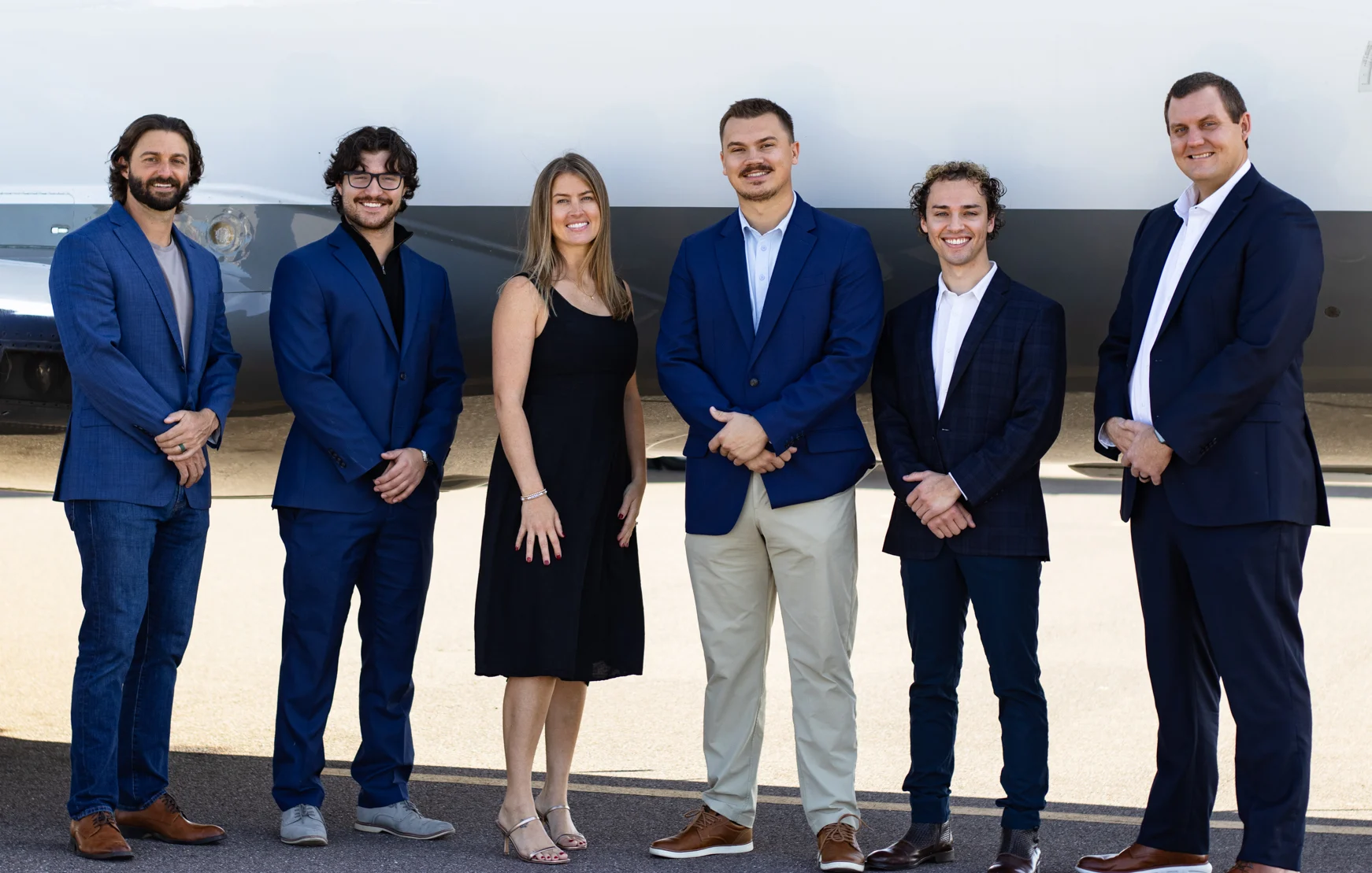 The AvSky Charters Leadership Team
Charter With The Best
AvSky provides comprehensive trip management on every flight, with rigorous operator vetting, route-appropriate aircraft selection, and coordinated ground transport upon request. The result is a seamless, fully white-glove charter experience from first call to wheels down.
Need catering, resort coordination or private security? Our charter advisors have the extensive experience and global partnerships necessary to provide a truly bespoke travel experience.
Curaçao International: The Island's Transatlantic Runway
Curaçao International Airport (CUR/TNCC), also known as Hato International, occupies the island's northern coast just fifteen minutes from downtown Willemstad. Its 11,198-foot asphalt runway is one of the longest in the West Indies, capable of supporting the largest commercial airliners and heavy business jets without performance limitations. The airfield operates 24 hours daily with comprehensive instrument approach systems.
General aviation arrivals operate through a dedicated executive terminal operated by Jet Centre Curaçao, featuring private passenger lounges, aircraft fueling and ramp-side vehicle boarding. Positioned comfortably south of the Caribbean hurricane belt, the airport enjoys dependable flight weather year-round. Neighboring airfields in Bonaire and Aruba, located less than 65 nautical miles away, provide excellent regional diversion alternates.
Aircraft that can land at Curaçao International Airport / Hato
11,198 × 197 ft physical; RWY 11 landing distance 8,458 ft — operator confirms fit per aircraft.
Willemstad Architecture and Queen Emma Bridge
Willemstad is a UNESCO World Heritage site celebrated for its vibrant Dutch colonial architecture. The historic districts of Punda and Pietermaai feature colorful 18th-century commercial buildings housing upscale restaurants, art galleries and boutique hotels. The pedestrian Queen Emma floating pontoon bridge connects Punda to historic Otrobanda across St. Anna Bay, swinging open daily to allow ocean freighters and private yachts into the inner harbor.
Island Roads, Driving and Ground Navigation
Getting around Curaçao is easy thanks to well-paved modern highways connecting the airport to central Willemstad, western beach coves and eastern marinas. Driving proceeds on the right side of the road, and American dollars are widely accepted alongside the Netherlands Antillean guilder. AvSky Charters coordinates private executive chauffeur service directly from the private aviation terminal, ensuring smooth transit straight to your coastal villa.
Choosing Aircraft for Southern Caribbean Crossings
Nonstop flights from the United States to Curaçao cover substantial overwater distances, averaging 1,200 nautical miles from Florida and nearly 1,800 from northern hubs. Midsize jets like the Citation Latitude offer efficient, comfortable travel from the Southeast, while super-midsize and heavy jets like the Challenger 350 or Gulfstream G450 deliver necessary non-stop range, stand-up cabins and generous baggage holds for northern departures.
Playa Kalki, Grote Knip and Mushroom Forest Reef
Curaçao's best beaches cluster along the sheltered western coast, known as Westpunt. Secluded limestone bays like Grote Knip and Playa Jeremi feature crystal-clear turquoise shallows framed by high cliffs. Offshore, scuba divers and snorkelers explore the famous Mushroom Forest, an underwater wonderland where giant star coral formations resembling mushrooms shelter schools of yellowtail snapper, moray eels and foraging green sea turtles.
Exclusive Enclaves Across the Dutch Caribbean
Bonaire BON
Where the diving purists go — a marine park around the whole island and yellow stones marking the entries.
Aruba AUA
The sun-and-sand sister of the group, and the one place in the ABCs with a US preclearance hall for the trip home.
Grenada GND
Rainforest waterfalls, a submerged sculpture park, and coves that never seem to fill up.
St. Maarten SXM
The Dutch-French crossroads up north, where the superyachts gather and the restaurants rival anything in the Caribbean.
Curaçao Charter Flight FAQs
Private flights to Curaçao arrive at Curaçao International (CUR/TNCC), known locally as Hato, on the north coast roughly 12 kilometers from Willemstad — the island's one airport, so the choice is made for you. Arriving passengers use Jet Centre Curaçao instead of the airline building next door, and it has lounges plus border and security staff on site; the AIP shows those officers on call at any hour, with scheduled charter handling between 6 a.m. and midnight. Willemstad and the Pietermaai dinner strip sit a short drive from the ramp. AvSky nails down the assigned handler, how passengers are processed, fueling, parking, and ground transport with every booking.
Hato's single runway measures 11,198 by 197 feet, one of the roomier pieces of pavement you'll find on a Caribbean island, and Curaçao's usable figures differ end to end. Both directions offer the full length for takeoff, while the published landing distance is 8,458 feet on RWY 11 and the whole runway on RWY 29, and the airport plans around widebody airliner traffic. So Hato handles business aircraft from turboprops to ultra-long-range heavies, but acceptance, payload, and nonstop capability are confirmed by the operator for the specific aircraft, weight, weather, and runway in use — never assumed from length alone. For most Curaçao trips, cabin choice ends up driven by range, headcount, and baggage.
The flight home from Curaçao arrives in the States as a full international arrival, because the island has no US customs preclearance facility; among the ABC islands, only Aruba does, and Nassau and Bermuda are the other preclearance stops in the wider region. In practice that means the operator transmits eAPIS manifests, obtains CBP permission to land, and confirms an eligible arrival airport. Flights arriving from this far south generally clear at a designated gateway first unless the operator holds an approved Border Overflight Exemption for the itinerary, so a nonstop to an inland home field is a planning question, not a given. It's routine, but it's real work — we build the return clearance into the itinerary and the quote from the start.
Curaçao's landing authorization goes in at least 48 hours before the flight: current aeronautical guidance requires all private, non-scheduled, and charter flights to obtain it from the Curaçao Civil Aviation Authority, requested through the CCAA's foreign-permits channel. The authority currently describes the authorization itself as complimentary, but the filing is mandatory and air-navigation and airport charges still apply, so treat it as a lead-time matter rather than a line on the invoice. Your operator and the handler arrange it as part of the booking, and flights operating between Venezuela and Curaçao need separate Venezuelan authorization on top. The one step that stays with each traveler is their own entry filing ahead of the trip.
Curaçao's Digital Immigration Card is the island's online ED form, and most arriving visitors need one: passengers other than residents and active flight crew complete it at the official portal, dicardcuracao.com, no more than seven days before departure, then show a digital or printed confirmation on arrival. Stick to that site rather than third-party outfits that resell the filing. The card isn't the whole of entry, though — passport validity, any visa your nationality requires, and proof of onward travel, accommodation, and funds are separate requirements that vary by passport, so check the rules that apply to yours when you file. We flag the card in every Curaçao itinerary; the filing itself belongs to each traveler.
Flying time to Curaçao mostly tracks how far north you start: figure roughly three hours from South Florida and around four from the Northeast, with the exact block time set by the aircraft, winds, and the filed route rather than the straight-line math. Routing over the southern Caribbean is flight-specific: your crew files against the restrictions, permissions, and airspace conditions in effect that day, whether that means transiting a neighboring flight information region or planning around one. If a filed route crosses the Havana FIR, the operator confirms current Cuban authorization and the overflight fees that come with it as part of the release. We confirm the routing and the resulting time with every quote.
Jet Centre Curaçao, the CATS-run FBO for private flights at Hato, sits alongside the airline terminal and keeps published hours worth checking against a late departure time. It advertises VIP lounges backed by clearance and security officers on site, coordinates Jet A-1 fueling, and can set up rental cars and transfers on request. Those officers show as on call day and night, while the charter passenger window covers 6 a.m. through midnight, so a departure after that gets arranged by the handler instead of assumed. We run your arrival and departure through the Jet Centre end to end, confirming passenger flow, fuel, and parking before the day.
Not one storm on the official record has ever made direct landfall on Curaçao, though the island isn't outside the story entirely: it sits near 12 degrees north, on the southern edge of the Atlantic hurricane region. A tropical cyclone passes within 100 nautical miles only about once every 11 years — though near-misses have brought damaging wind, rain, and coastal flooding, as the 1877 storm that brushed just south of the island did. Hurricane season runs June 1 through November 30 and peaks August to October, so your crew and our operations desk watch the official forecasts and plan accordingly.
The cabin moves a Curaçao quote more than anything else: a midsize jet out of South Florida sits well below a heavy cabin from New York, and that gap outweighs almost every other entry on the sheet. After that it comes down to where your jet is based and has to fly from to collect you, how tightly the calendar is booked when you travel, and the trip's ground stack — Curaçao landing, handling, parking, and navigation charges, plus US and Curaçao per-passenger government fees that currently add up to roughly $120 a traveler on a round trip, confirmed against the flight you book. AvSky prices from a live operator and handler quote and walks you through exactly what's included before you sign.
Empty legs to Curaçao surface less predictably than they do nearer the US mainland — the run down is long and far south, so fewer jets wind up here holding an open one-way to sell. The math can be appealing when the timing lines up: you're buying a repositioning flight another client already set in motion, priced by whichever operator is holding it. The catch is a loss of control: the date, the jet, and the origin are fixed to that other trip and vanish if it changes. If your plans are firm around a resort stay or a festival week, we'd point you to a locked-in round trip and simply flag any matching empty leg that turns up in the meantime.
Baggage capacity for a Curaçao trip scales with cabin size — the hold grows with every class you step up — and this is a destination where that counts, since divers pack heavy. A couple traveling light has easy options, but a haul of dive cases, camera housings, and a set or two of clubs for a round at Santa Barbara argues for a bigger hold, and your operator checks the numbers on the actual tail, since compartment dimensions differ from one airframe to the next. A practical tip: soft duffels tuck away far better than rigid suitcases, though hard cases for regulators and cameras are the reasonable exception. Give us the full inventory and we'll line up cabins that take all of it, confirmed before you book.
Charter Flights to Curaçao
Sample round-trip estimates to Curaçao
Sample rates reflect modeled weekend round trips from major departure points, though AvSky Charters flies from any private airfield you choose. Exact charter pricing reflects your selected cabin size, passenger manifest and scheduled ground handling. Every quote is delivered as a firm, all-inclusive figure with all Dutch Caribbean fees included before you book.
Get Instant EstimateWillemstad's Pastel Harbor, One Runway Away
Situated just forty miles north of Venezuela, Curaçao combines centuries of Dutch colonial architecture with pristine Caribbean natural beauty. In the historic capital of Willemstad, pastel merchants' houses border St. Anna Bay and the famous Queen Emma floating pontoon bridge. Along the island's tranquil western tip, dramatic rocky coves like Grote Knip and Playa Lagun give way to world-class diving at the Mushroom Forest reef.
Arriving in the Dutch Caribbean by private charter provides seamless nonstop routing outside the hurricane path in under three and a half hours from Miami. AvSky Charters manages dedicated private terminal clearance, arranging luxury chauffeur escort to historic Willemstad villas and private cove resorts.
Set Your Nonstop Wheels-Up Time for Curaçao
Flying private to Curaçao gives you complete control over your travel itinerary, bypassing commercial flight connections in regional hubs. AvSky Charters matches your party with an aircraft engineered for comfortable overwater range. We confirm airport parking, coordinate VIP customs clearance and arrange luxury executive vehicle transfers so your island arrival is effortless.
Request An All-In QuoteCuraçao International: The Island's Transatlantic Runway
Curaçao International Airport (CUR/TNCC), also known as Hato International, occupies the island's northern coast just fifteen minutes from downtown Willemstad. Its 11,198-foot asphalt runway is one of the longest in the West Indies, capable of supporting the largest commercial airliners and heavy business jets without performance limitations. The airfield operates 24 hours daily with comprehensive instrument approach systems.
General aviation arrivals operate through a dedicated executive terminal operated by Jet Centre Curaçao, featuring private passenger lounges, aircraft fueling and ramp-side vehicle boarding. Positioned comfortably south of the Caribbean hurricane belt, the airport enjoys dependable flight weather year-round. Neighboring airfields in Bonaire and Aruba, located less than 65 nautical miles away, provide excellent regional diversion alternates.
Aircraft that can fly to & from Curaçao International Airport / Hato
11,198 × 197 ft physical; RWY 11 landing distance 8,458 ft — operator confirms fit per aircraft.
Curaçao details.
Willemstad Architecture and Queen Emma Bridge
Willemstad is a UNESCO World Heritage site celebrated for its vibrant Dutch colonial architecture. The historic districts of Punda and Pietermaai feature colorful 18th-century commercial buildings housing upscale restaurants, art galleries and boutique hotels. The pedestrian Queen Emma floating pontoon bridge connects Punda to historic Otrobanda across St. Anna Bay, swinging open daily to allow ocean freighters and private yachts into the inner harbor.
Island Roads, Driving and Ground Navigation
Getting around Curaçao is easy thanks to well-paved modern highways connecting the airport to central Willemstad, western beach coves and eastern marinas. Driving proceeds on the right side of the road, and American dollars are widely accepted alongside the Netherlands Antillean guilder. AvSky Charters coordinates private executive chauffeur service directly from the private aviation terminal, ensuring smooth transit straight to your coastal villa.
Choosing Aircraft for Southern Caribbean Crossings
Nonstop flights from the United States to Curaçao cover substantial overwater distances, averaging 1,200 nautical miles from Florida and nearly 1,800 from northern hubs. Midsize jets like the Citation Latitude offer efficient, comfortable travel from the Southeast, while super-midsize and heavy jets like the Challenger 350 or Gulfstream G450 deliver necessary non-stop range, stand-up cabins and generous baggage holds for northern departures.
Playa Kalki, Grote Knip and Mushroom Forest Reef
Curaçao's best beaches cluster along the sheltered western coast, known as Westpunt. Secluded limestone bays like Grote Knip and Playa Jeremi feature crystal-clear turquoise shallows framed by high cliffs. Offshore, scuba divers and snorkelers explore the famous Mushroom Forest, an underwater wonderland where giant star coral formations resembling mushrooms shelter schools of yellowtail snapper, moray eels and foraging green sea turtles.
Four Flight Guidelines for Curaçao Charters
Complete the Mandatory Online Digital Immigration Card
All international visitors entering Curaçao must complete the official digital immigration card online prior to travel. Submitting your travel details ahead of time generates an approved entry pass, ensuring rapid verification through private terminal border control upon touchdown.
Benefit from Hurricane-Free Southern Airspace
Curaçao sits comfortably south of the Caribbean hurricane path, enjoying stable trade winds and minimal weather disruptions year-round. This geographic advantage guarantees reliable flight schedules, predictable landing weather and smooth oceanic approaches across all seasons.
Pre-Arrange Private Executive Terminal Handling
General aviation arrivals clear customs inside the Jet Centre Curaçao FBO, separated from commercial airline gates. AvSky Charters coordinates your arrival window directly with ground handlers to ensure priority aircraft servicing and immediate baggage assistance upon landing.
Plan Coordinated Ground Chauffeur Transfers
While rental cars are readily available, arranging dedicated executive chauffeur transport avoids navigating unfamiliar island roundabouts and rural routes. AvSky Charters coordinates private vehicle pickups directly airside at the terminal, ensuring prompt departure toward your resort.
Exclusive Enclaves Across the Dutch Caribbean
Curaçao Charter Flight FAQs
What is arrival at Curaçao's Jet Centre like?
Private flights to Curaçao arrive at Curaçao International (CUR/TNCC), known locally as Hato, on the north coast roughly 12 kilometers from Willemstad — the island's one airport, so the choice is made for you. Arriving passengers use Jet Centre Curaçao instead of the airline building next door, and it has lounges plus border and security staff on site; the AIP shows those officers on call at any hour, with scheduled charter handling between 6 a.m. and midnight. Willemstad and the Pietermaai dinner strip sit a short drive from the ramp. AvSky nails down the assigned handler, how passengers are processed, fueling, parking, and ground transport with every booking.
How much of Hato's runway is actually usable in each direction?
Hato's single runway measures 11,198 by 197 feet, one of the roomier pieces of pavement you'll find on a Caribbean island, and Curaçao's usable figures differ end to end. Both directions offer the full length for takeoff, while the published landing distance is 8,458 feet on RWY 11 and the whole runway on RWY 29, and the airport plans around widebody airliner traffic. So Hato handles business aircraft from turboprops to ultra-long-range heavies, but acceptance, payload, and nonstop capability are confirmed by the operator for the specific aircraft, weight, weather, and runway in use — never assumed from length alone. For most Curaçao trips, cabin choice ends up driven by range, headcount, and baggage.
What does the return leg from Curaçao involve on the US side?
The flight home from Curaçao arrives in the States as a full international arrival, because the island has no US customs preclearance facility; among the ABC islands, only Aruba does, and Nassau and Bermuda are the other preclearance stops in the wider region. In practice that means the operator transmits eAPIS manifests, obtains CBP permission to land, and confirms an eligible arrival airport. Flights arriving from this far south generally clear at a designated gateway first unless the operator holds an approved Border Overflight Exemption for the itinerary, so a nonstop to an inland home field is a planning question, not a given. It's routine, but it's real work — we build the return clearance into the itinerary and the quote from the start.
How far ahead is Curaçao's landing authorization filed?
Curaçao's landing authorization goes in at least 48 hours before the flight: current aeronautical guidance requires all private, non-scheduled, and charter flights to obtain it from the Curaçao Civil Aviation Authority, requested through the CCAA's foreign-permits channel. The authority currently describes the authorization itself as complimentary, but the filing is mandatory and air-navigation and airport charges still apply, so treat it as a lead-time matter rather than a line on the invoice. Your operator and the handler arrange it as part of the booking, and flights operating between Venezuela and Curaçao need separate Venezuelan authorization on top. The one step that stays with each traveler is their own entry filing ahead of the trip.
What is the Digital Immigration Card, and does everyone need one?
Curaçao's Digital Immigration Card is the island's online ED form, and most arriving visitors need one: passengers other than residents and active flight crew complete it at the official portal, dicardcuracao.com, no more than seven days before departure, then show a digital or printed confirmation on arrival. Stick to that site rather than third-party outfits that resell the filing. The card isn't the whole of entry, though — passport validity, any visa your nationality requires, and proof of onward travel, accommodation, and funds are separate requirements that vary by passport, so check the rules that apply to yours when you file. We flag the card in every Curaçao itinerary; the filing itself belongs to each traveler.
What sets the block time and the filed route to Curaçao?
Flying time to Curaçao mostly tracks how far north you start: figure roughly three hours from South Florida and around four from the Northeast, with the exact block time set by the aircraft, winds, and the filed route rather than the straight-line math. Routing over the southern Caribbean is flight-specific: your crew files against the restrictions, permissions, and airspace conditions in effect that day, whether that means transiting a neighboring flight information region or planning around one. If a filed route crosses the Havana FIR, the operator confirms current Cuban authorization and the overflight fees that come with it as part of the release. We confirm the routing and the resulting time with every quote.
Can Jet Centre Curaçao handle a late-night departure?
Jet Centre Curaçao, the CATS-run FBO for private flights at Hato, sits alongside the airline terminal and keeps published hours worth checking against a late departure time. It advertises VIP lounges backed by clearance and security officers on site, coordinates Jet A-1 fueling, and can set up rental cars and transfers on request. Those officers show as on call day and night, while the charter passenger window covers 6 a.m. through midnight, so a departure after that gets arranged by the handler instead of assumed. We run your arrival and departure through the Jet Centre end to end, confirming passenger flow, fuel, and parking before the day.
Has a hurricane ever made landfall on Curaçao?
Not one storm on the official record has ever made direct landfall on Curaçao, though the island isn't outside the story entirely: it sits near 12 degrees north, on the southern edge of the Atlantic hurricane region. A tropical cyclone passes within 100 nautical miles only about once every 11 years — though near-misses have brought damaging wind, rain, and coastal flooding, as the 1877 storm that brushed just south of the island did. Hurricane season runs June 1 through November 30 and peaks August to October, so your crew and our operations desk watch the official forecasts and plan accordingly.
Which line items move a Curaçao charter quote the most?
The cabin moves a Curaçao quote more than anything else: a midsize jet out of South Florida sits well below a heavy cabin from New York, and that gap outweighs almost every other entry on the sheet. After that it comes down to where your jet is based and has to fly from to collect you, how tightly the calendar is booked when you travel, and the trip's ground stack — Curaçao landing, handling, parking, and navigation charges, plus US and Curaçao per-passenger government fees that currently add up to roughly $120 a traveler on a round trip, confirmed against the flight you book. AvSky prices from a live operator and handler quote and walks you through exactly what's included before you sign.
Why are empty legs scarcer on a run as far south as Curaçao?
Empty legs to Curaçao surface less predictably than they do nearer the US mainland — the run down is long and far south, so fewer jets wind up here holding an open one-way to sell. The math can be appealing when the timing lines up: you're buying a repositioning flight another client already set in motion, priced by whichever operator is holding it. The catch is a loss of control: the date, the jet, and the origin are fixed to that other trip and vanish if it changes. If your plans are firm around a resort stay or a festival week, we'd point you to a locked-in round trip and simply flag any matching empty leg that turns up in the meantime.
How much baggage does each cabin class hold on a Curaçao trip?
Baggage capacity for a Curaçao trip scales with cabin size — the hold grows with every class you step up — and this is a destination where that counts, since divers pack heavy. A couple traveling light has easy options, but a haul of dive cases, camera housings, and a set or two of clubs for a round at Santa Barbara argues for a bigger hold, and your operator checks the numbers on the actual tail, since compartment dimensions differ from one airframe to the next. A practical tip: soft duffels tuck away far better than rigid suitcases, though hard cases for regulators and cameras are the reasonable exception. Give us the full inventory and we'll line up cabins that take all of it, confirmed before you book.
Ready when you are.
Charter flights from one of the world leaders in private aviation. Florida-based and on-call 24/7.